
At first, I didn’t take Pixels that seriously. It felt like just another farming loop; plant, wait, harvest, repeat. Simple, almost forgettable. But the more time I spent in it, the more I realized something deeper was quietly unfolding beneath the surface.
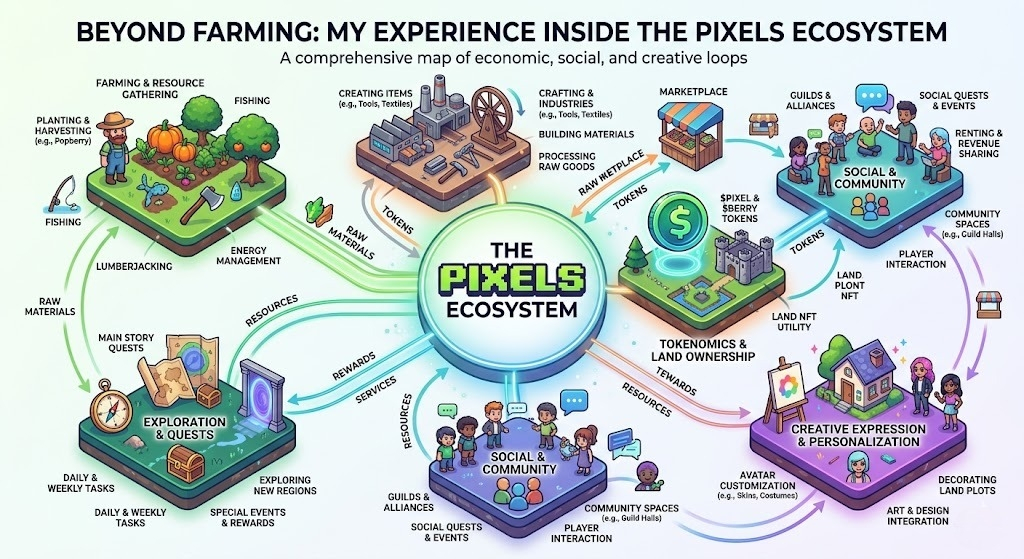
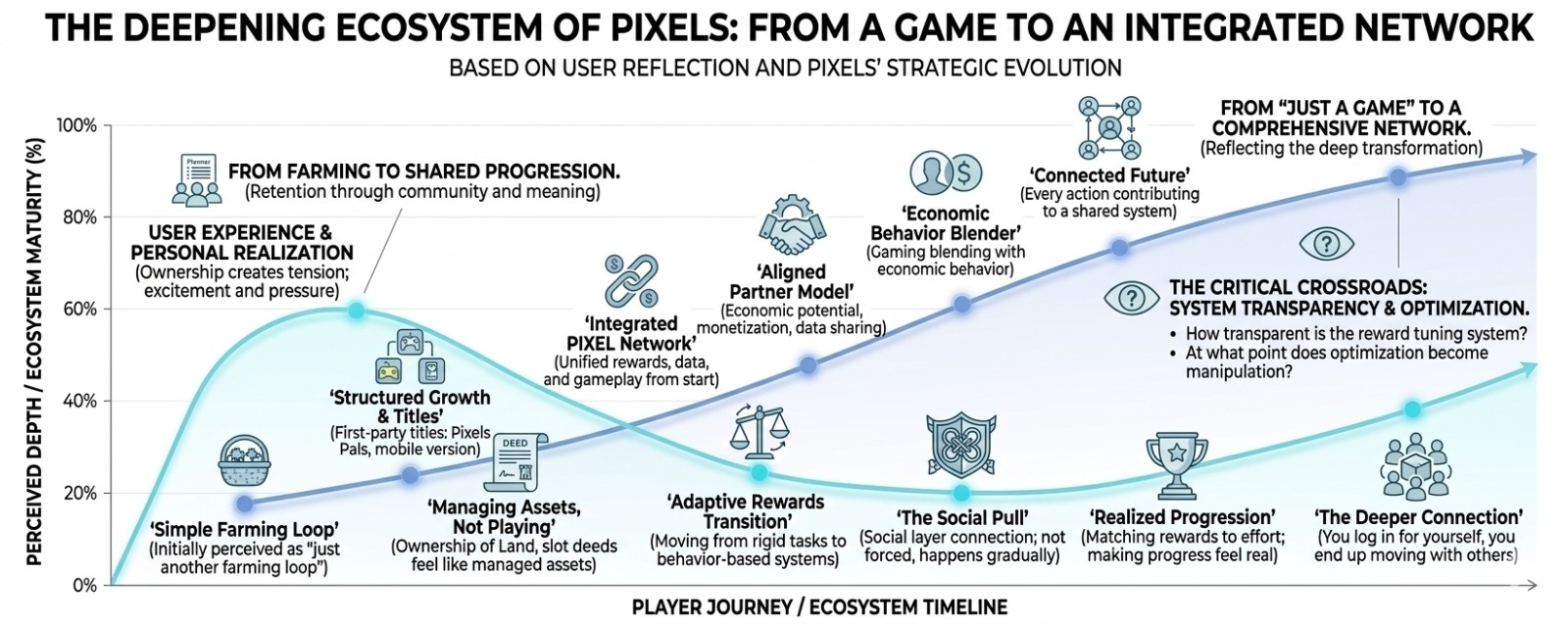
What looks like a casual game is slowly evolving into an ecosystem. With first-party titles like Pixels Pals on the way and a mobile version of the core experience in development, it’s clear this isn’t just about one game anymore, it’s about building a network. The idea that every game integrates PIXEL from the start shows how tightly rewards, data, and gameplay are being connected. It’s not random expansion; it’s structured growth.
And then there’s the partner model. It’s surprisingly strict, games need real economic potential, actual monetization, and even open data sharing. At first, that sounded too technical for a game ecosystem, but now I see why. This isn’t just about adding more games; it’s about aligning them into a shared system where every player action contributes to something bigger.
That’s the part that keeps me thinking: when does a game stop being just a game?
Because inside Pixels, ownership feels different. Land, slot deeds, upgrades, they’re not just features anymore. They feel like assets. You’re not only playing; you’re managing something. A small digital operation that needs time, planning, and consistency. And honestly, that creates a strange mix of excitement and pressure. Logging in isn’t always just for fun, it sometimes feels like responsibility.
But I don’t see that as entirely negative.
There’s an experiment happening here. A real one. Where gaming starts blending with economic behavior. Where your time, decisions, and even playstyle get translated into value.
That’s where systems like Stacked caught my attention too. I used to think fairness meant giving everyone the same tasks. But in reality, that just creates imbalance. A casual player and a grinder don’t experience the game the same way. What Pixels seems to be moving toward, adaptive rewards, behavior-based systems, feels more natural. If someone plays ten minutes versus one and half hours, the system adjusts. That makes progress feel more real.
It also explains why some systems see higher completion rates and better retention. It’s not about giving more, it’s about matching better.
Still, that raises questions. If rewards are constantly being tuned behind the scenes, how transparent is that system? And at what point does optimization start to feel like manipulation?
At the same time, I can’t ignore how the social layer pulls you in. You don’t stay for farming. That part fades. What keeps you coming back is the connection, guilds, shared progress, unlocking things together. And the interesting thing is, it’s not forced. It just happens gradually. Quietly.
You log in for yourself, but somehow you end up moving with others.
So now I’m stuck on this one thought.
Is this still a game… or are we watching the early stages of a new kind of digital economy forming inside games?
I’m not fully sold yet. But I can’t ignore it either.
Let’s see where it goes…
