
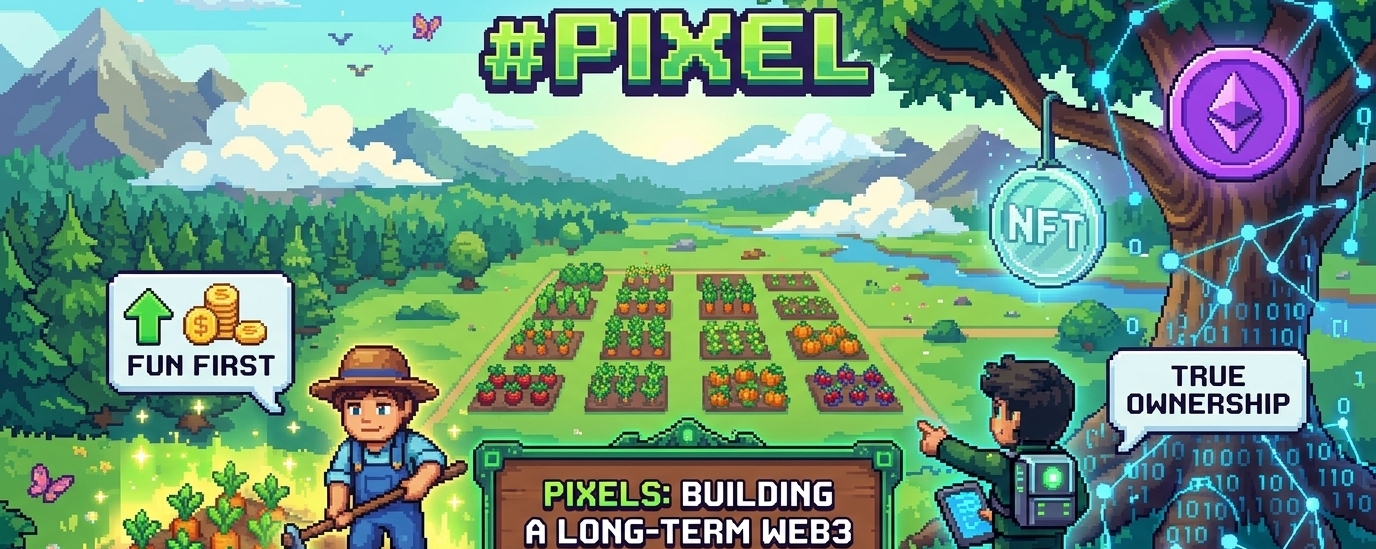
When people talk about Web3 games the conversation often revolves around token rewards, NFTs and farming mechanics. But when I looked deeper into @Pixels I realized something more important: Pixels is not just a farming game it is a complete product built with long-term sustainability in mind.
@Pixels is a social farming MMORPG where players can farm crops gather resources trade items own land, and participate in a player driven economy. At first glance, it feels simple and peaceful, but behind that simplicity lies a carefully designed system that connects gameplay ownership and economic activity into one ecosystem.
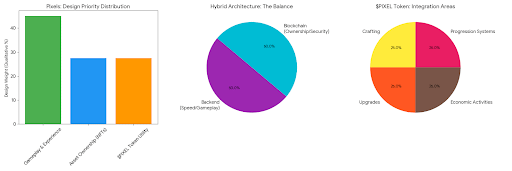
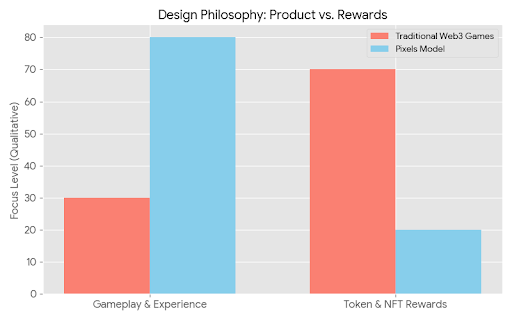
What makes Pixels interesting is its focus on balancing gameplay and rewards. Instead of relying only on short term incentives, the game is designed to provide an experience where players stay because they enjoy playing not just because they are earning.
The product comes first.
The token comes as part of the experience.
This design approach is important.
Players can build farms, complete quests explore the world interact socially and progress over time. The goal is to create long term engagement rather than short reward-driven cycles.
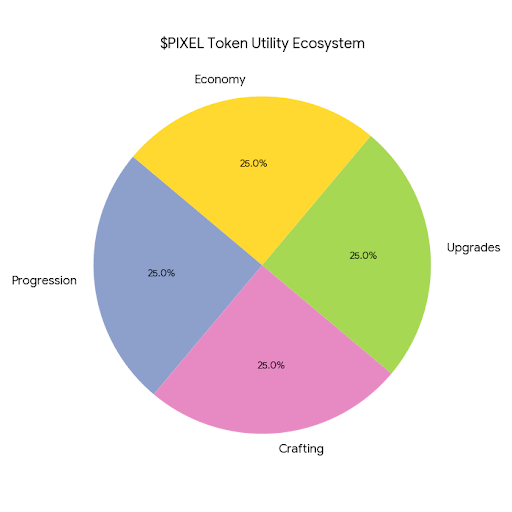
The $PIXEL token plays a supporting role within this ecosystem.
Rather than existing only as a speculative asset, $PIXEL is integrated into progression systems, crafting, upgrades, and in-game economic activities. It becomes part of the player journey, adding utility inside the game experience.
NFT ownership also adds another layer of value.
Land items and in game assets provide players with a sense of ownership and continuity. Instead of temporary progress players are building and controlling assets that remain meaningful within the game world.
One of the most important but often unnoticed aspects of Pixels is its infrastructure design.
If every in game action were recorded directly on chain such as farming movement crafting or trading the experience would likely become slow and inefficient due to network limitations and transaction costs.
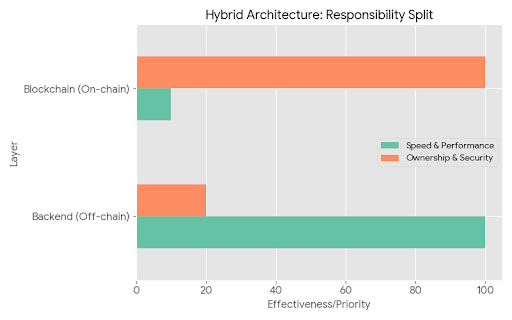
To solve this Pixels uses a hybrid architecture.
The backend handles speed and real time gameplay.
The blockchain ensures ownership transparency and security.
This balance allows the game to support large numbers of players smoothly while still maintaining verifiable digital ownership of key assets and tokens.
It creates a system where gameplay feels fast and responsive while ownership remains secure and transparent.
Of course hybrid systems also raise important discussions around decentralization and control. Whenever part of a system operates off-chain, questions naturally arise about transparency and trust.
However the goal here is not extreme decentralization at the cost of usability.
Instead the focus is balance.
Enough decentralization to secure ownership.
Enough centralization to ensure smooth gameplay.
Pixels appears to be designed with this balance in mind, prioritizing user experience while still maintaining blockchain backed ownership.
Overall, Pixels feels more like a product designed for real users rather than just a short term crypto experiment. The infrastructure remains in the background while players focus on building, exploring, and enjoying the game.
And perhaps this is where the future of blockchain gaming is heading.
Not purely on chain systems built for ideology, but well-designed hybrid experiences where blockchain supports the game rather than replacing it.
Because in the end, players don’t stay just because something is decentralized.
They stay because the game feels engaging, alive, and worth returning to.