


I went in expecting to quit. I came out watching land prices at midnight.
A personal spiral through Pixels, play-to-earn, and a wedding that probably shouldn't have worked but did.
I want to start with something embarrassing.🫣
I almost didn't write this. Not because there's nothing to say there's plenty,but because every time I try to explain what Pixels actually is to someone who hasn't played it, I end up sounding like one of those people who won't stop talking about their farming game. Which is exactly what I've become. I checked land prices at midnight last Tuesday. I didn't plan that. It just happened.
So let me try to explain how we got here...
Just visited the top farms in game , omg when will I reach this level of play ! Incredible .
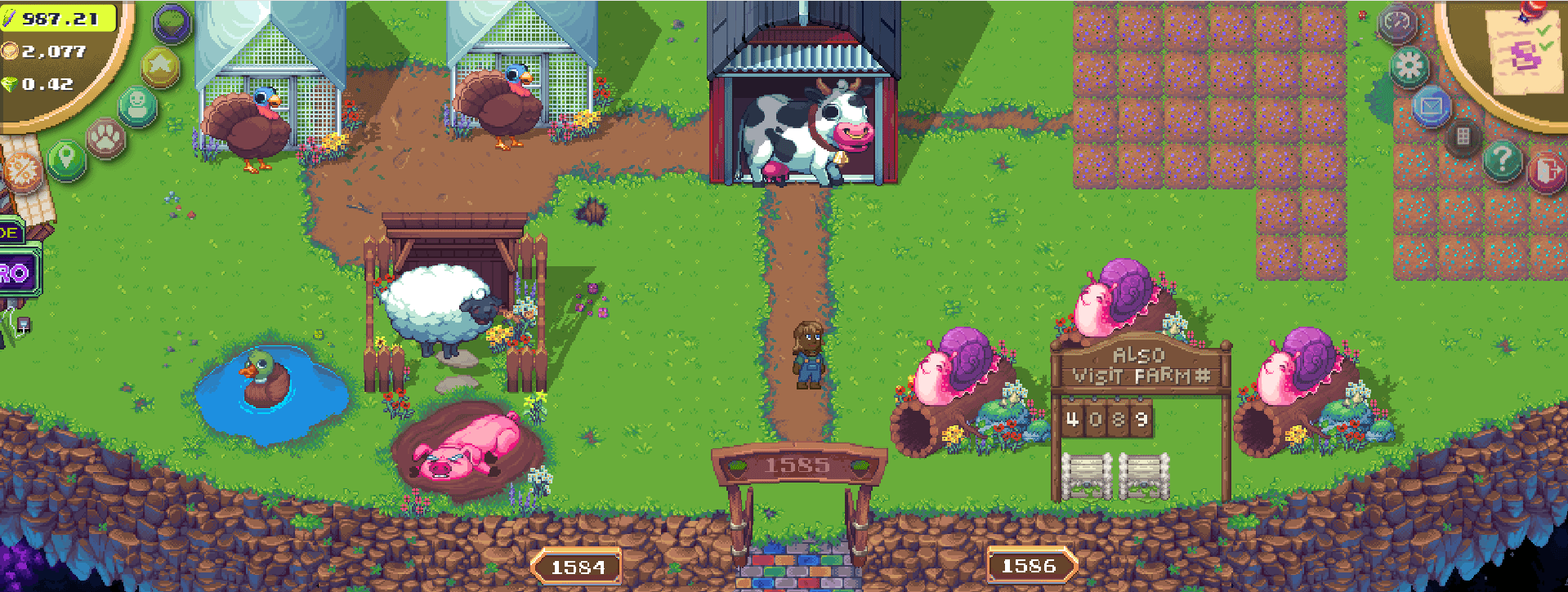
Day one
The first thing Pixels does is not explain itself. There's no APY dashboard, no neat welcome screen telling you what you'll earn if you stay long enough. You start on a small Speck of land and its free, basic, unremarkable , and a guy named Barney just starts walking you through planting popberries.
That's it. That's the onboarding.
And I know that sounds like a criticism, but it really isn't Because after so many hours across different crypto games where the first screen is usually some version of "wallet connected, earnings calculating," having an NPC quietly tell you to water your plants feels almost disarming. Two hours pass and I don't think about tokenomics once. That doesn't usually happen. Usually I'm squinting at a spreadsheet trying to find where the actual game is hiding underneath the yield mechanics.
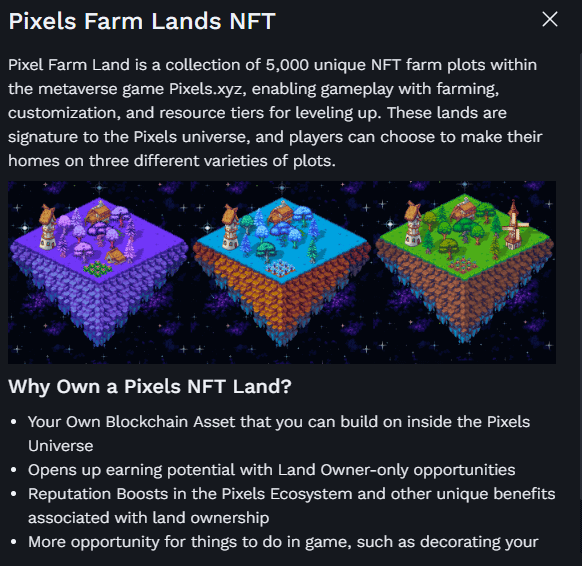
Then Ranger Dale sends you into a plot tutorial and land starts sitting somewhere in your mind without anyone really pushing it there. It just forms on its own, the way certain ideas do when a system is built right.
I checked land prices that night. Not the last time. And the pets price. ...so many things to choose from
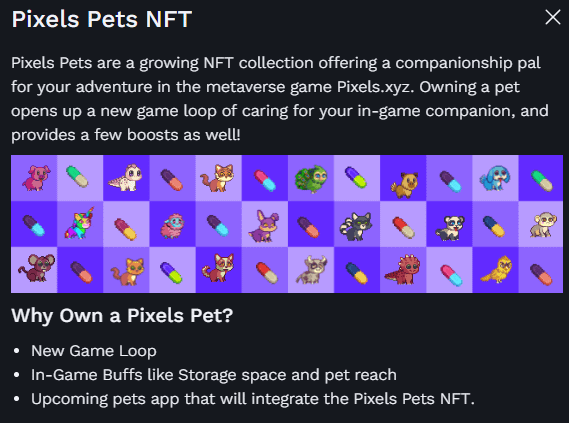
Also dont forget, Pixels is not one trick Poony. There is not only one game in the system. You can play chubkins which is a twhole new fresh play. Or pixel Mines. There are Ronin Games and Pixel games- just letting you know , cause I see everyone writing about "the game" like there is only one of them. There are more.

The thing that feels different and why I can't fully explain it yet
Most play-to-earn games I've seen tend to follow the same arc, even if they don't say it out loud.
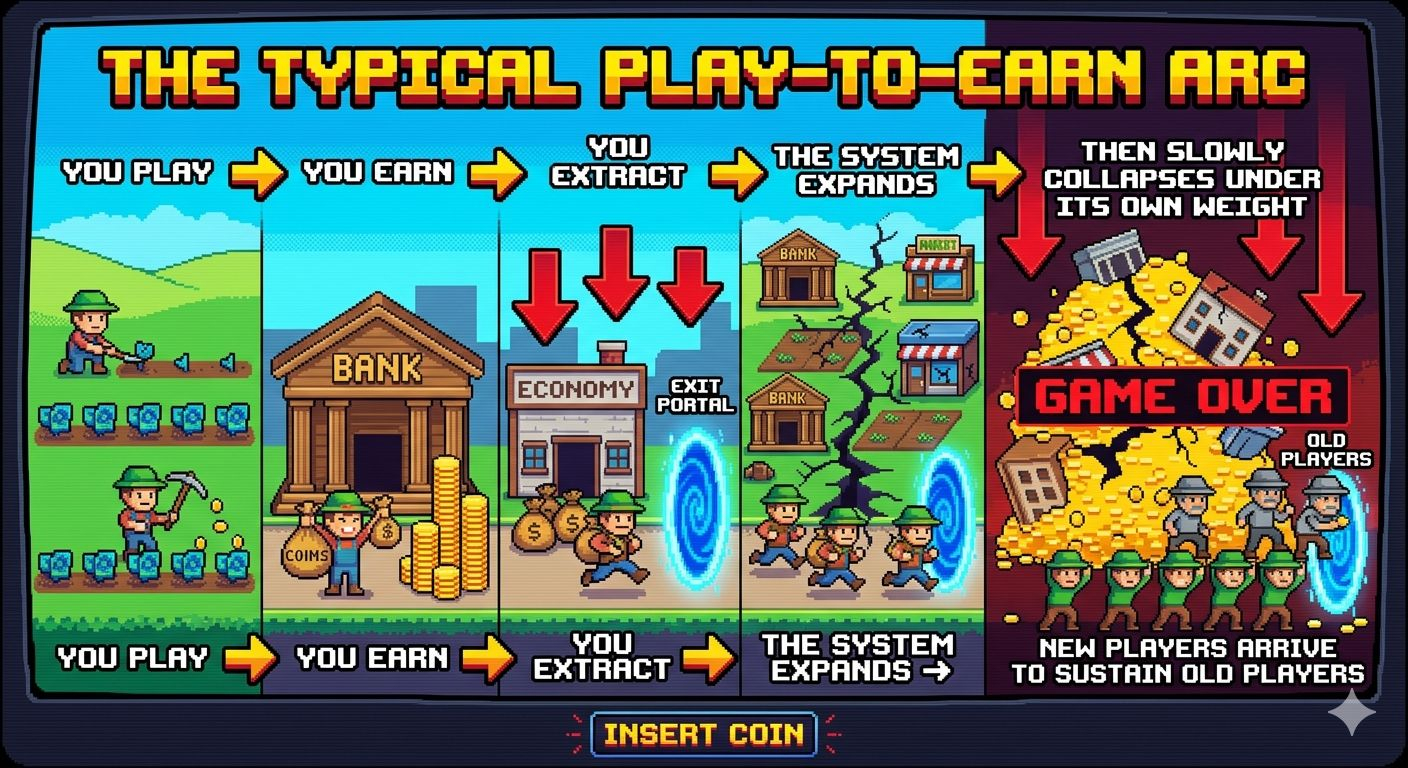
You play → you earn → you extract → the system expands → then slowly collapses under its own weight.
New players arrive to sustain old players. Eventually that balance breaks. Axie was the first time I saw it actually work at scale, back when nobody really knew what that meant yet, and Ronin was where everything started feeling structurally real instead of experimental. Then everything after that started copying the surface without carrying the pressure that made it hold.
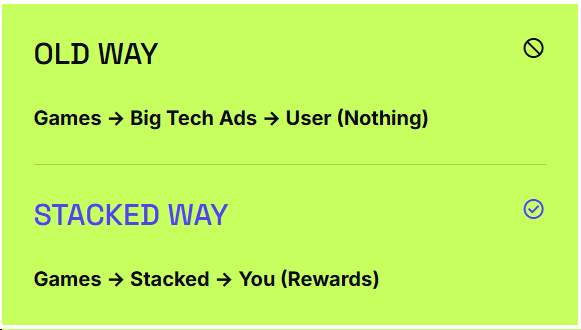
Stacked sits somewhere inside that history, but not as repetition.
What it tries to do, as far as I can tell, is shift away from fixed outcomes and toward something that reacts to behavior itself. Rewards don't just sit there waiting to be taken. They move depending on how you play, how long you stay inside the system, how you interact with it without breaking it apart. No same rewards for everyone, no same missions for everyone.
And the reason I trust this isn't just theory is because Pixels already went through the part most projects don't survive. It scaled, it strained, it broke under pressure, and then it rebuilt itself inside live conditions with real players pushing against it every day.
👉Stacked is what came out of that pressure. 💎
What Stacked actually is or at least how it feels from inside it , is a rewards layer where players can earn cash, crypto, or other value for actions that actually matter inside games. Not passive time. Not filler quests. Not attention farming. There's also an underlying system that adjusts what you see based on how you play, so the experience isn't identical for everyone moving through it.
And I think what makes it hard to pin down is that it doesn't behave like a static system. ..It feels like something reacting, even if you can't always see the rule behind it.
Most studios don't build things like this from scratch because you don't really understand a system like this until it's been stressed for a long time, with real users breaking it in ways you didn't predict. Pixels has already gone through that phase. That's the part you can't fake.
Built in production, not in a deck — that line actually fits here more than it should.
Something I did not expect to read about
I wasn't looking for anything emotional when I started digging into this. I was just trying to understand how the system connects together.
Then I ended up reading about a wedding.
Not a mechanic, not a feature , a real one! The first wedding in Pixels game!
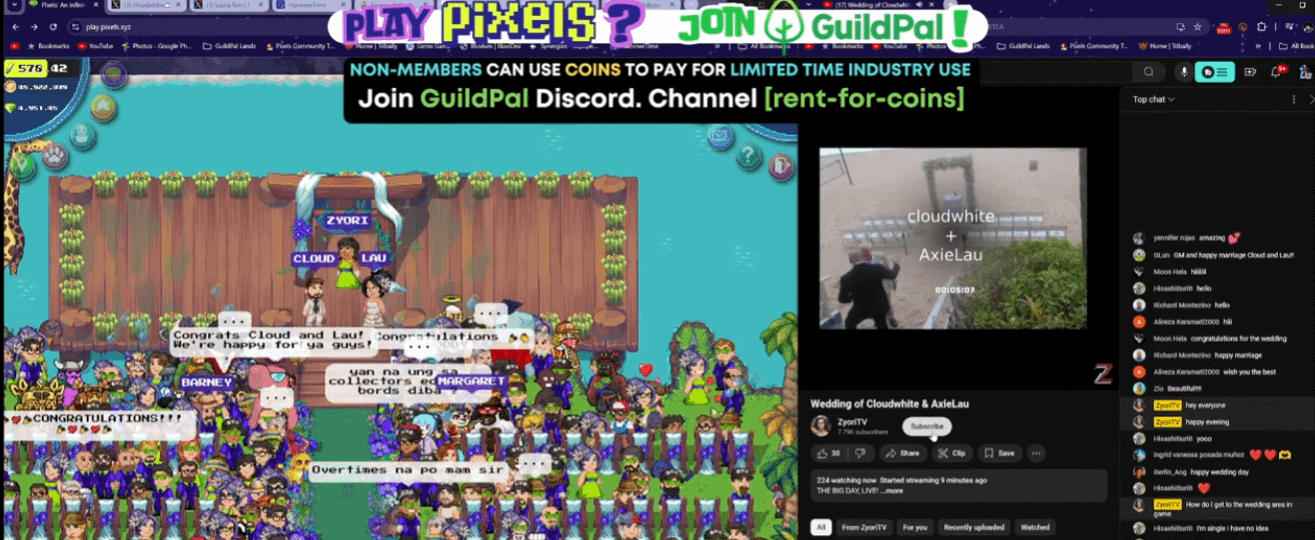
Cloudwhite and Laura got married inside Pixels in September 2024 at Terra Villa Central, while also having a real world ceremony at the same time. They met years earlier at AxieCon in Barcelona, both tied into the same broader ecosystem through Ronin.
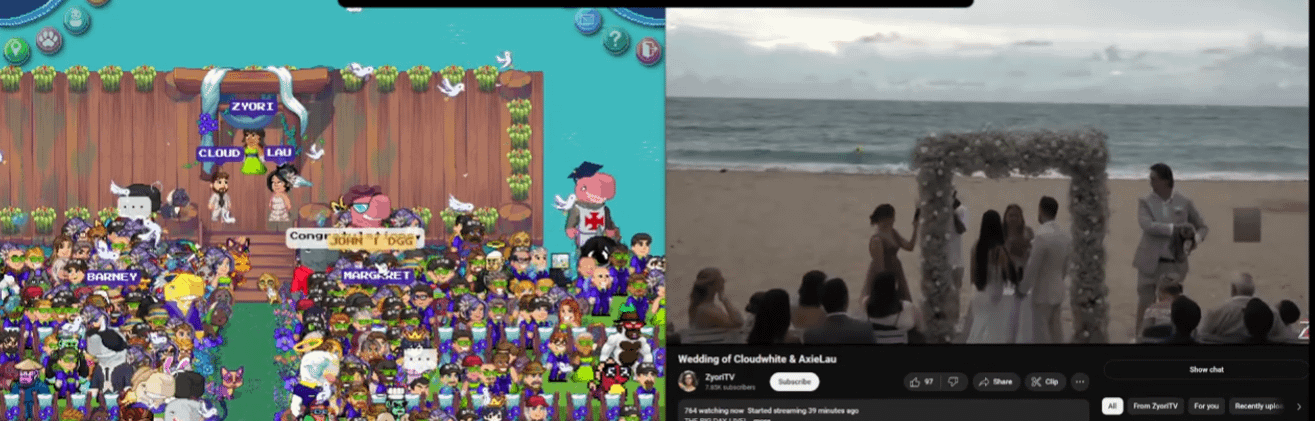
What followed wasn't just in-game participation , it was an actual relationship moving through visas, countries, waiting periods, and eventually a decision to merge both worlds into one event.
They said "I do" in real life and in game at the same time,
he said " I will never leave this game".
And he never did.They are still together in real life and in the game . What a wonderfull way to bring real world and in game love together!
It's all running on Ronin, which makes it feel less like a standalone world and more like something sitting inside a longer chain of games that never really stopped evolving.

3,789 players bought suits. 1,865 showed up in wedding dresses. Someone organized a bachelor party at a bar inside the game called The Drunken Goose. About 3,000 people watched the livestream. Cloudwhite admitted later he was a little jealous of everyone having fun in-game while he was dealing with, you know, the actual wedding.
They are still married.
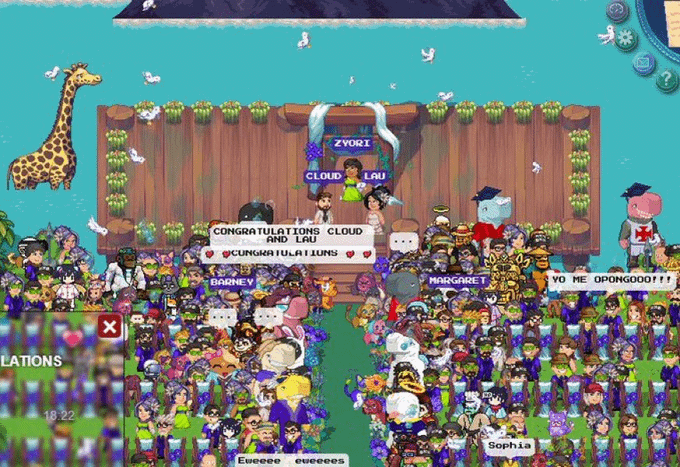
What stuck with me wasn't the scale though. It was the fact that it happened at all inside something I had been thinking of mostly in terms of systems and rewards.
Because nothing about that moment looks efficient. It doesn't feed a loop in any obvious way. It doesn't optimize anything. And yet it exists in the same place where everything else is supposed to be measured, tracked, and adjusted.
That tension is what I keep coming back to.
The part where I admit I still have questions
None of this guarantees anything.
If incentives shift too far, if land concentrates, if external studios plug into Stacked without the same pressure that built it ... I don't know what happens. I'm still watching it. Still renting a plot. Still splitting output with whoever owns the land beneath it. Still checking prices at midnight and convincing myself it's just observation.
But the way I'm watching has changed slightly.
Usually in these kinds of games you watch for the exit. You look for the moment the system stops making sense so you can leave before everyone else notices. Here it's different. Instead of searching for collapse, I keep finding decisions structural ones , that suggest someone already saw those failure modes before and built around them.
It still might break. Everything does eventually.
But it doesn't feel random.
It also doesn't feel fully readable from the inside.
And maybe those two things are exactly the point.
