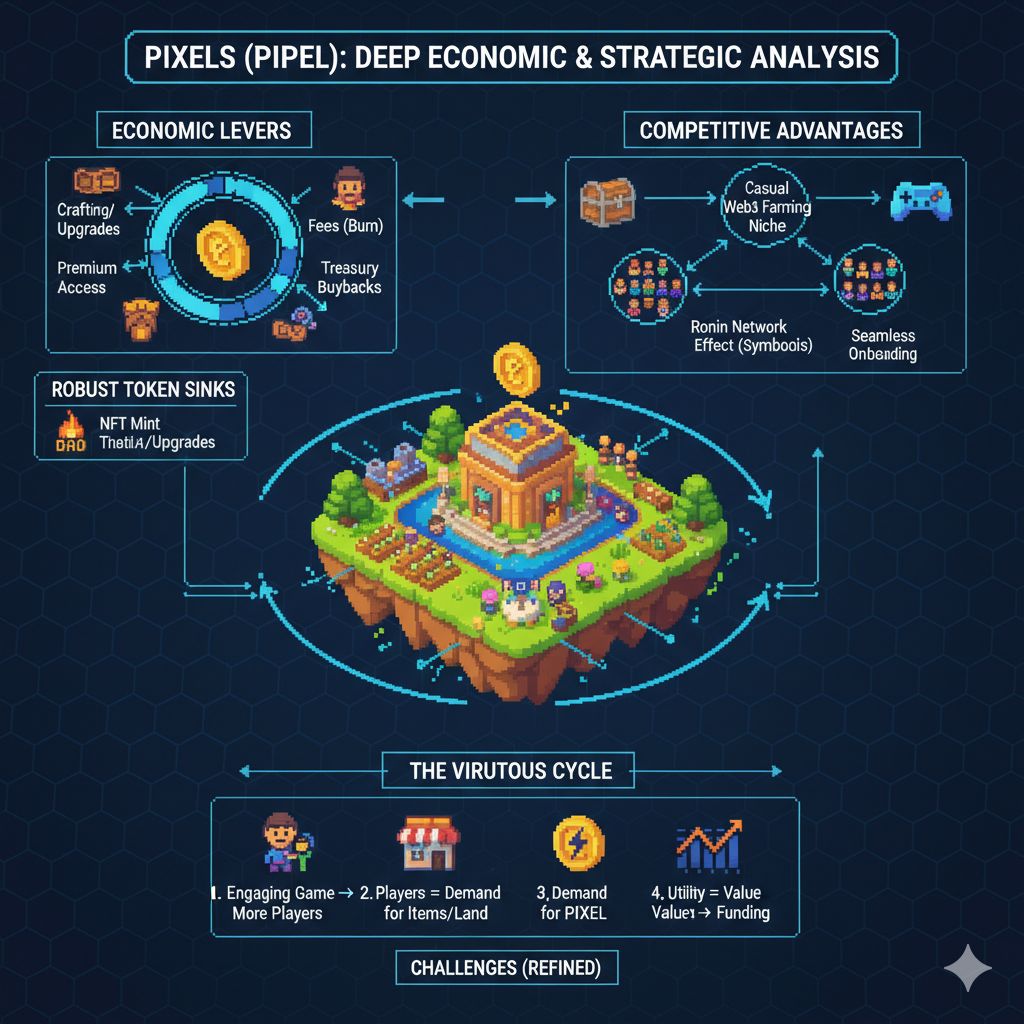
@Pixels The sustainability of a play-to-earn game like Pixels hinges on its economic model. Beyond just earning, it's about demand, supply, and robust token sinks.
Demand Generation for @Pixels :
In-Game Crafting & Upgrades: Many advanced items, upgrades for tools, or even special building materials may require PIXEL. This creates a consistent demand for the token from active players looking to progress.
Premium Features & VIP Access: Future implementations could include premium subscriptions, faster queues, or exclusive access to certain areas/events paid for in PIXEL.
Land Development & Rental: Owning land in Pixels isn't just passive. Developing it, adding structures, or even renting out plots to other players could involve PIXEL transactions, creating a mini-economy within the land system.
Delegated Staking/Yield Farming: While not explicitly detailed, future tokenomics could introduce staking mechanisms where PIXEL holders can earn yield by supporting the network or providing liquidity, thus locking up tokens and reducing circulating supply.
Governance Participation: As the DAO matures, active participation might require holding a certain amount of PIXEL, further incentivizing ownership.
Robust Token Sinks (Burning Mechanisms):
Fee for Advanced Actions: Certain high-level crafting, expedited processes, or specialized services might incur a PIXEL fee, which is then burned (removed from circulation).
NFT Minting/Upgrades: If new NFT items are introduced or existing ones can be upgraded, a portion of the PIXEL used might be burned.
Community Treasury & Buybacks: A portion of game revenue (e.g., from marketplace fees) could be used to buy back PIXEL from the market and burn it, or allocate it to a community treasury for ecosystem development (which indirectly supports the token).
Luxury & Vanity Items: Exclusive cosmetic items or unique in-game decorations that offer no functional advantage but high social status could be purchased with PIXEL and subsequently burned.
Competitive Advantages Reimagined:
First-Mover Advantage in Casual Web3 Farming: While not the first P2E game, Pixels has achieved significant traction in the casual farming simulation niche within web3. This genre has a massive, untapped audience in traditional gaming, and Pixels is effectively bridging that gap with blockchain.
Ronin's Network Effect (Reciprocity): It's not just Pixels benefiting from Ronin; Pixels actively strengthens the Ronin ecosystem. Its success attracts more players and developers to Ronin, creating a symbiotic relationship that benefits both.
Seamless Onboarding: A key advantage is its relatively low barrier to entry for non-crypto natives. The game design itself is intuitive, and the web3 elements are integrated in a user-friendly manner, reducing the complexity often associated with blockchain gaming.
Community-Driven Development Model: While many projects claim this, Pixels genuinely integrates community feedback into its development cycle. This creates a highly resilient project where players feel invested and heard, leading to stronger retention and organic growth.
The Game-Token Interplay (The Virtuous Cycle):
The long-term value of PIXEL is intrinsically linked to the health and growth of the Pixels game.
Engaging Game -> More Players: A fun, well-designed game attracts more players.
More Players -> Increased Demand for In-Game Items & Land: As the player base grows, demand for resources, land, and services within the game increases.
Increased Demand -> More Utility for PIXEL: This drives demand for PIXEL as the currency for these in-game transactions, crafting, and upgrades.
More Utility -> Higher Value for PIXEL: As PIXEL becomes more valuable, it attracts more players looking to earn, creating a positive feedback loop.
Higher Value -> Funding for Development & Innovation: A healthy token value provides resources for the team to continue innovating, developing new features, and marketing the game, restarting the cycle.
Challenges to Keep in Mind (Refined Perspective):
Long-Term Player Retention: The initial P2E boom saw high churn rates once earning potential declined. Pixels must continuously deliver fresh content and evolve its P2E mechanics to keep players engaged beyond just monetary incentives.
Economic Model Stress Testing: As the game scales, the current economic model will face increased pressure. Proactive adjustments, transparent communication, and robust data analytics will be crucial to maintain equilibrium.
Balancing "Fun" vs. "Earn": The sweet spot is to be a genuinely enjoyable game where earning is a bonus, not the sole purpose. Leaning too heavily on "earn" can turn it into a grind, diminishing the fun factor.
In essence, @Pixels is building a self-sustaining digital economy wrapped in an enjoyable game. Its fundamental strength is not just in its individual components but in how these components interact to create a cohesive and valuable ecosystem. The continuous alignment of game development with token utility and community engagement will be the ultimate determinant of its enduring success.