
Pixels doesn’t come in loud. It doesn’t kick the door down with promises of changing gaming or redefining ownership or any of that usual Web3 noise. It just… exists. Quietly. And maybe that’s why it works better than most people expect at first glance.
The whole thing is built around a simple idea: a social casual game where you farm, explore, and create inside an open world. Nothing about that sounds new. In fact, it sounds almost too familiar. But once you’re actually in it, the rhythm starts to matter more than the concept itself. You log in, you tend to small tasks, you move around a world that doesn’t demand too much from you, and strangely enough, that low pressure becomes the hook.
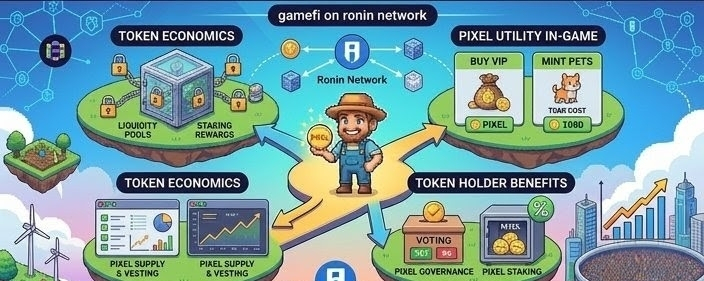
The way I see it, the real backbone here is the Ronin Network. Without it, Pixels probably doesn’t hold together the same way. Fast transactions, low friction, and fewer technical headaches mean you’re not constantly pulled out of the experience. That might sound like a small thing, but it isn’t. Because in Web3 gaming, friction kills immersion faster than bad graphics ever could.

Still, it’s not perfect. Far from it. There are moments where Pixels feels almost too thin, like it’s still figuring out what it wants to be when it grows up. You can feel the edges of repetition if you push too long in one direction. Farming loops can become predictable. Exploration doesn’t always surprise you. And creation, while present, sometimes feels limited by design choices that lean more toward accessibility than depth.
But here’s the interesting part. That simplicity isn’t always a flaw. Sometimes it’s the only reason people stay. There’s no pressure to optimize every second. No overwhelming systems layered on top of each other until you forget why you started playing in the first place. It’s just a loop. A soft one. You step in, you do a few things, you step out. And later, you come back without really planning to.
So yeah, it’s casual. Very casual. But not empty.
Look, most Web3 games try too hard. They overbuild systems, stack mechanics, and chase complexity like it automatically equals depth. Pixels goes the opposite way. It trims things down until what’s left is almost fragile. And that fragility is risky. It could easily collapse into boredom if the pacing slips even a little.
But when it works, it feels oddly human. You’re not grinding for some massive endgame reward. You’re just existing inside a loop that slowly expands as you spend time in it. The progression is subtle. Not loud. Not forced.
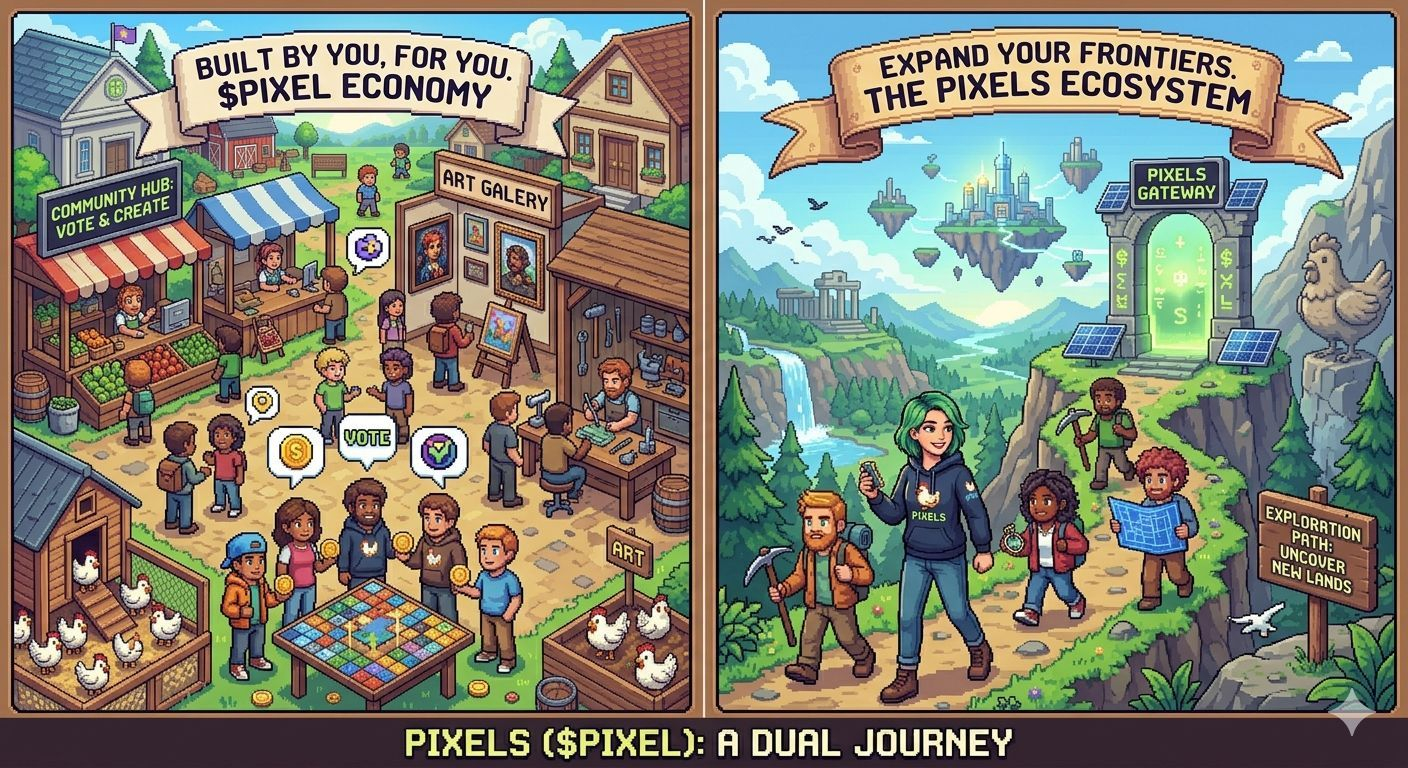
There’s also something about the social layer that matters more than people initially expect. You’re not alone in it, even if the gameplay doesn’t constantly shove other players in your face. That background presence changes the tone. It makes the world feel a bit more alive, even when nothing major is happening.
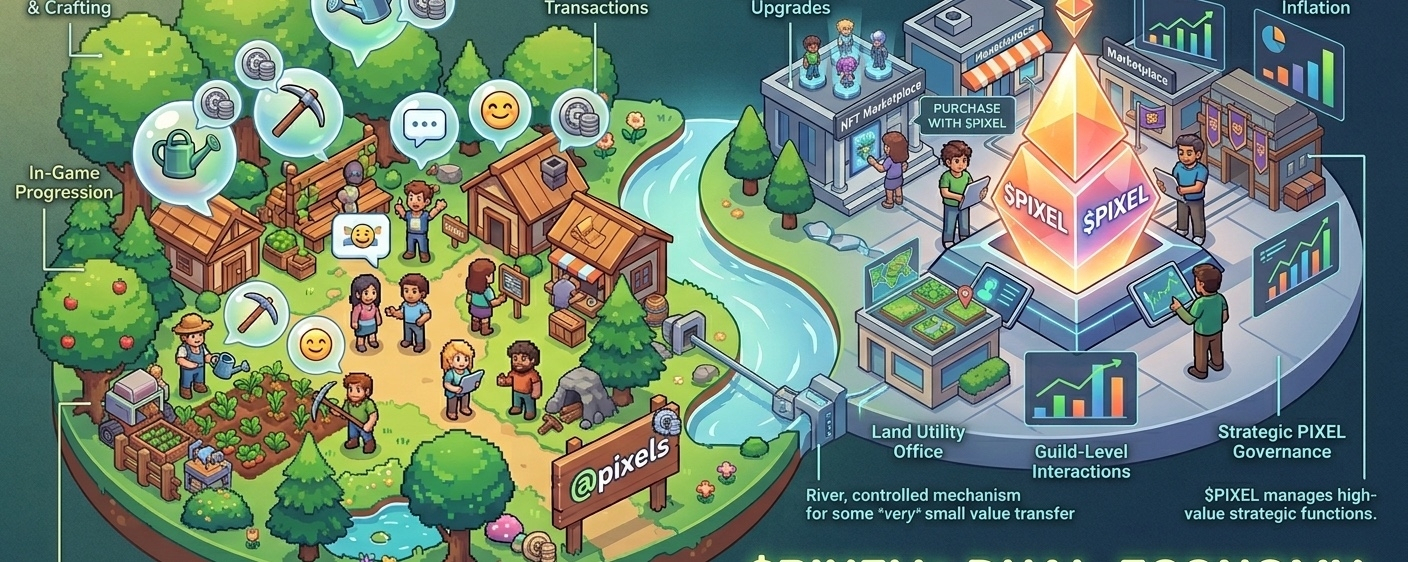
And the PIXEL token side of things sits underneath all of it, quietly influencing how players interact with the system. But it doesn’t dominate the experience in the way tokens often do in other games. That’s important. Because once financial pressure becomes the main driver, the game part usually starts to rot. Pixels avoids that trap better than most, though not perfectly.
There’s still a tension there. You can feel it. Between play and reward. Between staying casual and becoming efficient. That balance is fragile. One wrong push in design direction and it could tip the wrong way.
But right now, it holds.
And maybe that’s the most honest way to describe Pixels. It holds. It doesn’t explode, it doesn’t revolutionize, it doesn’t pretend to be something it’s not. It just sits in this narrow space between game and economy, between chill experience and structured system, and tries to keep both sides alive at the same time.
Some players will bounce off it immediately. They’ll call it shallow. Others will sink time into it without fully realizing why. Both reactions make sense. Because Pixels isn’t trying to convince everyone. It’s just building a place where simple actions repeat in a way that slowly becomes habit.
And habits are powerful. Quietly powerful. Sometimes more than hype ever is.
@Pixels #pixel $PIXEL