
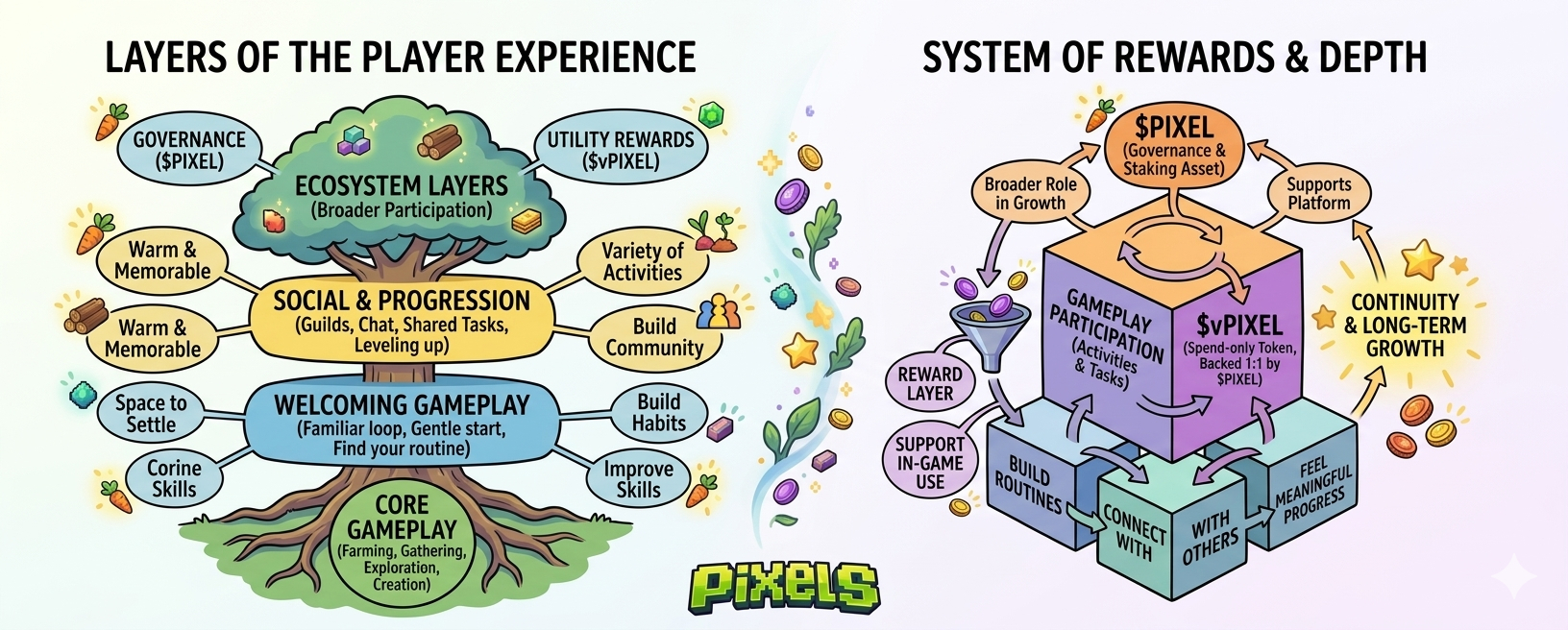

Some games are easy to enjoy for a few minutes.
Pixels feels like the kind of game you slowly make room for.
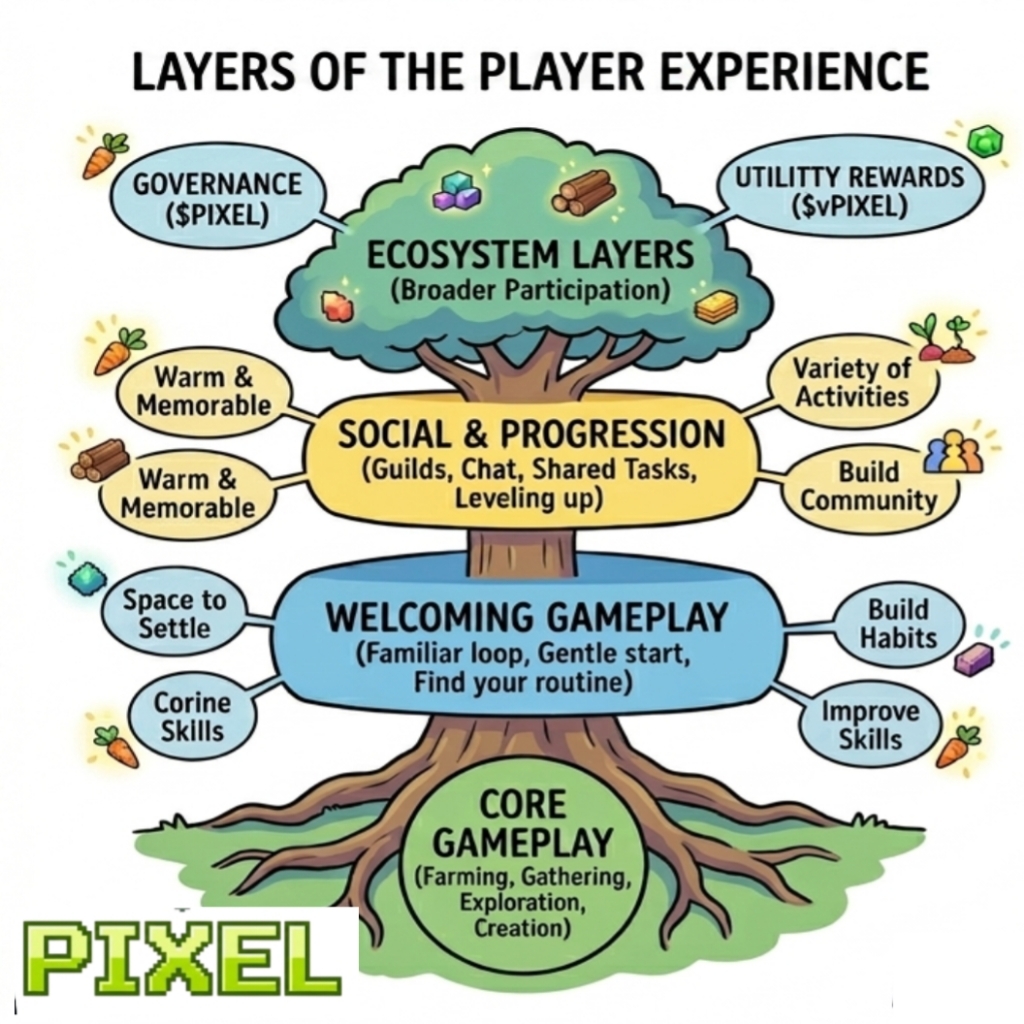
That is what stood out to me when I looked at it more closely. On the surface, Pixels feels light, colorful, and easy to approach. It is built around farming, exploration, creation, and progression, so the experience starts with gameplay that feels familiar. You do not need to figure out everything at once. You can enter the world, understand the basics, and begin at your own pace.
That makes a big difference.
A game feels better when it welcomes players in naturally, and Pixels seems built with that in mind. You can farm, gather resources, explore new areas, and slowly build your own routine. Nothing about that feels forced. It feels like a world that gives players space to settle in instead of pushing them too hard from the start.
But what makes Pixels more interesting is not just that it is easy to enter.
It is that the world feels designed for continuity.
The more time you imagine spending in it, the more it starts to feel like a place where progress can actually mean something. You are not only completing tasks and moving on. You are building habits, improving skills, and becoming more connected to the world around you. That creates a stronger feeling than a simple gameplay loop. It gives the game a sense of life.
And that matters, especially in a social game.
Pixels is not trying to offer only one kind of player experience. Some people will enjoy the calm rhythm of farming and steady progression. Others will be drawn more to exploration, shared activities, and the social side of the world. That variety is one of the game’s strengths. It gives different players different ways to enjoy the same space.
That flexibility makes the world feel more open.
The community side is also a big part of the appeal. Social interaction, guilds, and shared participation help Pixels feel more personal. When players are not just doing their own thing, but also interacting with others, the world becomes warmer and more memorable. It starts to feel less like a place you visit and more like a place you return to.
That human feeling is important.
Pixels also adds another layer through its wider ecosystem. The platform uses $PIXEL as its core governance and staking asset, which gives players a more active role in supporting the ecosystem itself. So participation is not limited to what happens inside the game world. There is also a broader sense of being involved in how the platform grows.
Then there is $vPIXEL, which adds more practical utility to the system. As a spend-only token backed 1:1 by $PIXEL, it is designed to help rewards move more smoothly inside the ecosystem while supporting in-platform use. That makes the overall design feel more connected, because the reward layer is being shaped to support continued engagement inside the platform.
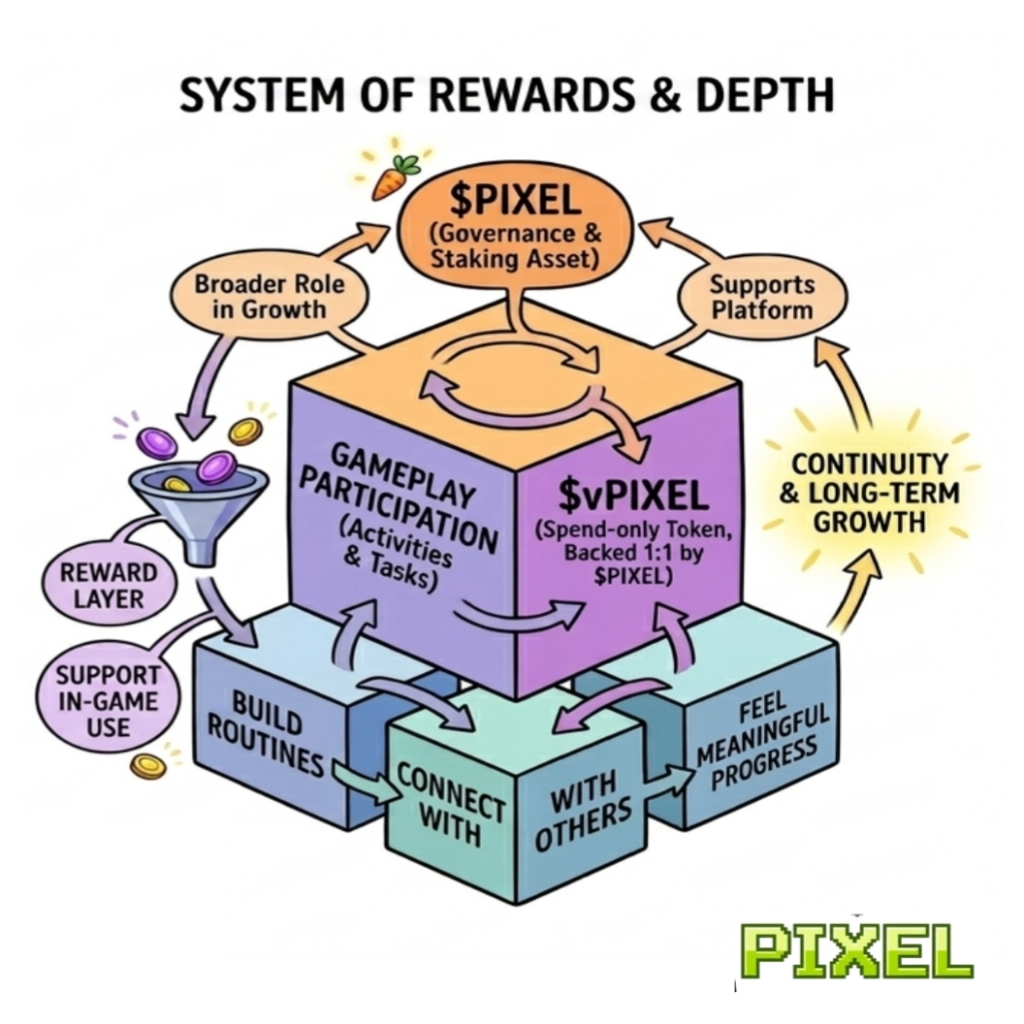
What I find most interesting about Pixels is how naturally these parts fit together.
The gameplay feels familiar. The world feels welcoming. The progression gives players a reason to keep going. The social features make the space feel more alive. And the ecosystem layer adds more depth without taking attention away from the core experience.
That balance is not easy to create.
Pixels feels easy to start, but it also feels like something players can keep growing with over time. It is not just offering activities to do. It is offering a world where players can build routines, connect with others, and feel that their time inside the game actually leads somewhere.
And that is what gives Pixels its charm.
