
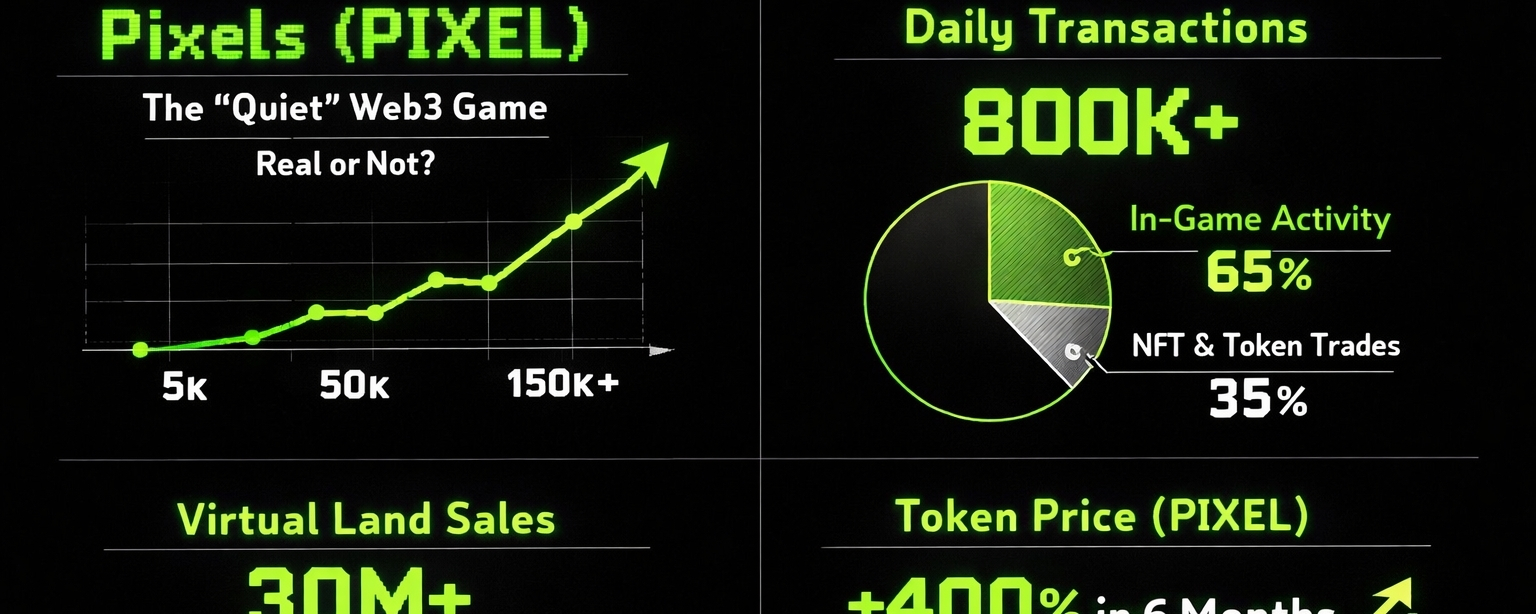

Pixels is one of those projects I don’t immediately know what to do with, and I think that’s the honest starting point. I’m watching it the same way I’ve watched a dozen other Web3 games come and go, not with excitement, more with that tired attention you develop after seeing too many cycles repeat themselves. I’ve seen enough “next big thing in gaming” pitches to know how quickly they usually collapse under their own incentives.

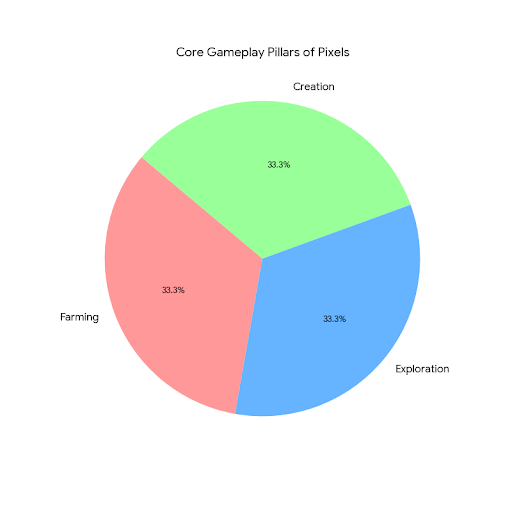
At its core, Pixels is a social casual game on Ronin built around farming, exploration, and creation. On paper, that sounds almost too safe, like it’s avoiding risk by staying simple. But simplicity in this space is never neutral. It either means someone understands what actually keeps people around, or it means the deeper problems are just not visible yet. I’m not sure which one this is.
What keeps me looking is not the promise, it’s the structure. Ronin as a network already filters a certain kind of audience. Not the hype-chasing crowd that jumps from token to token, but the people who have already been through the collapse of earlier game experiments and still stuck around gaming ecosystems anyway. That changes the baseline behavior you can expect, even if it doesn’t guarantee anything.
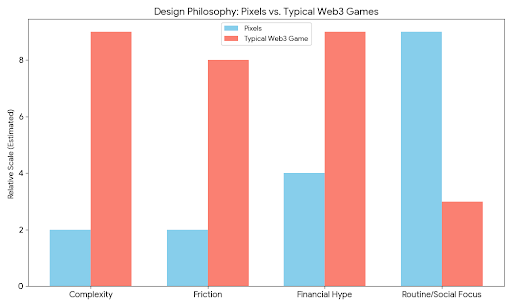
The game itself is deliberately low friction. You farm, you move around, you interact, you build small routines. Nothing about it is trying to overwhelm you with systems or complexity. That restraint is interesting because most crypto games do the opposite. They pile mechanics on top of mechanics, hoping complexity will be mistaken for depth. It rarely works long term.
But I don’t want to mistake “simple and playable” for “sustainable.” That’s where my skepticism stays. Because I’ve seen what happens when even a decent loop meets crypto incentives at scale. People stop playing and start optimizing. The game becomes secondary to extraction. That shift is subtle at first, then it changes everything. Social behavior gets distorted, economies get weird, and suddenly the thing that felt like a world starts feeling like a spreadsheet with avatars.
Pixels is sitting right in that tension. It wants to be a place people return to, but it also exists inside an environment that constantly pushes users toward financial behavior. That contradiction doesn’t go away just because the game looks relaxed on the surface. If anything, relaxed systems are sometimes easier to exploit, not harder.
Still, I keep coming back to one thing: people actually returning without being forced to. That’s rarer than it should be in this sector. Most Web3 games survive on incentives that burn too hot too fast. Pixels at least seems to be trying to build something that can exist between sessions, not just during reward cycles. Whether that holds once the economy matures is a different question entirely.
I’ve learned not to trust early momentum in this space. Early attention means very little. Communities form quickly around expectation, not experience. The real signal shows up later, when the rewards aren’t novel anymore and the only reason to stay is the game itself. That’s where most of these projects quietly fall apart.
So with Pixels, I’m left in that familiar position again. Not impressed, not dismissive, just watching. Waiting for friction to show. Waiting for incentives to either support the experience or slowly overwrite it. It might settle into something stable, or it might slide into the same pattern I’ve seen too many times to romanticize anymore.
For now, it’s just there in the background of everything else, not loud enough to believe in, not weak enough to ignore. And that kind of middle space is usually where the truth eventually shows itself, one way or another.