
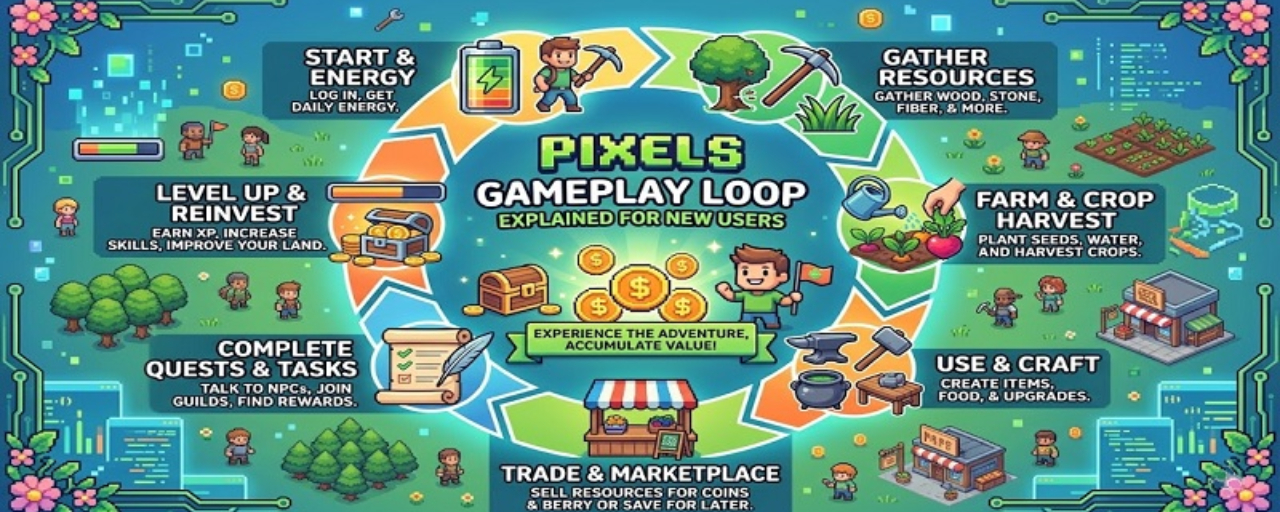
When I first spent some time around Pixels, I didn’t really try to “understand” it in a structured way. It was more like I kept repeating small actions and slowly noticed how everything started connecting.
At the surface, it looks simple. You log in, move around, do a bit of farming, maybe gather resources, maybe check what can be upgraded. But after a while, it doesn’t feel like separate tasks anymore. It feels like a loop that quietly keeps pulling you forward.
There’s this rhythm to it. You plant, you wait, you collect, and then you decide what to do next with what you got. Sometimes you reinvest it back into your land. Sometimes you explore a bit further and see what else is possible. It doesn’t really rush you, but it also doesn’t stop you from optimizing your own path.
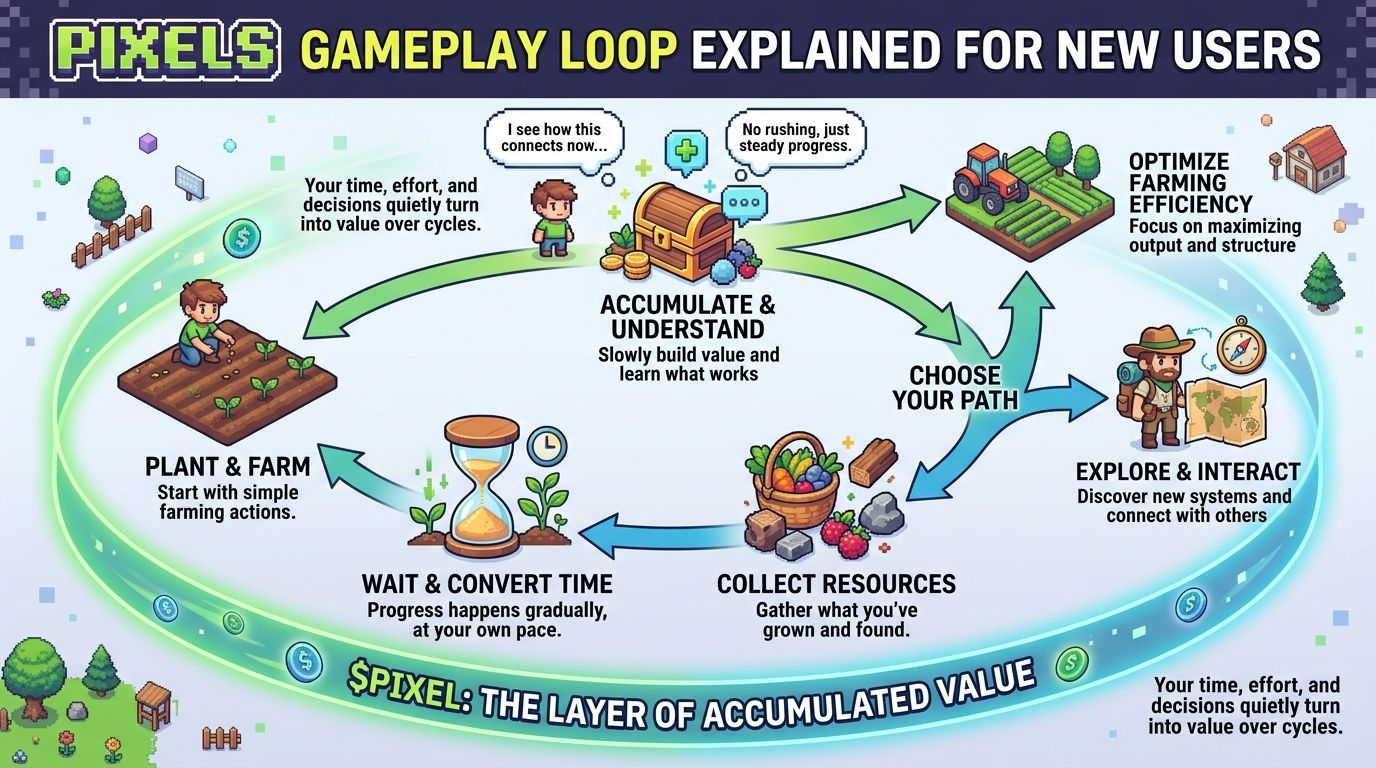
I noticed something interesting when I started paying attention to @Pixels more closely. The game doesn’t push you in one direction. It sort of lets you choose how you want to treat your time inside it. Some people focus on farming efficiency, others just explore and interact with systems casually. Both end up feeding back into the same loop.
That’s where $PIXEL starts to feel more like a layer than a destination. You’re not just playing for a single outcome. You’re moving through cycles where effort, time, and decisions slowly turn into something that holds value within the ecosystem. It’s not instant. It builds quietly.
#pixel and #Pixels communities often talk about progression, but in practice it feels less like “leveling up” and more like gradual accumulation of understanding. The more you repeat the loop, the more you start noticing where time is being spent well and where it’s just habit.
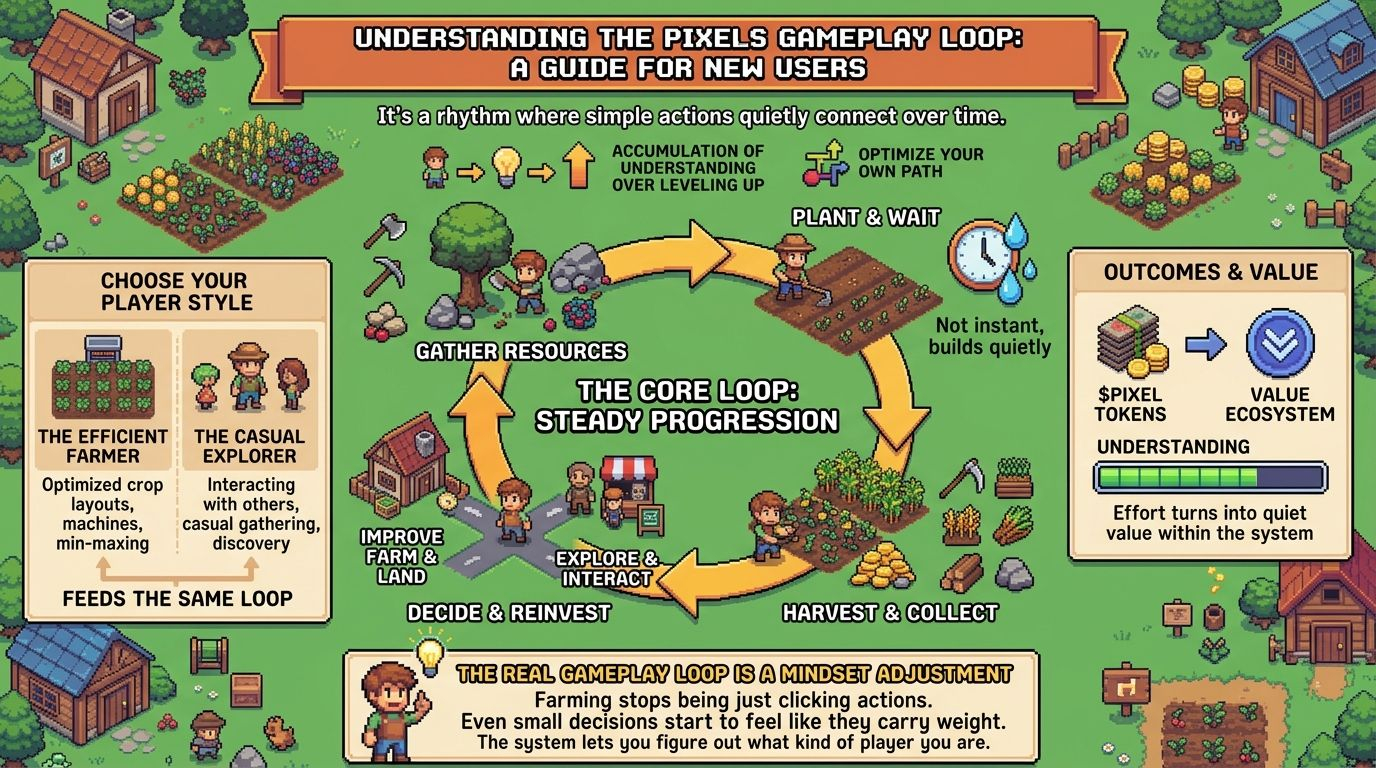
Sometimes I wonder if the real design is not in what you do, but in how you start thinking about what you do. Farming stops being just clicking actions. Exploration stops being random wandering. Even small decisions start feeling like they carry weight because everything is tied back into the same cycle of resources and outcomes.
It’s not always exciting in the loud sense. But it has this steady pull to it. You log in, do a few things, step away, and somehow you already know what you’ll probably check first next time.
Maybe that’s the real gameplay loop. Not just actions repeating, but your mindset adjusting without you noticing it too much.
And maybe I’m wrong, but it feels like Pixels is less about teaching players what to do, and more about letting them slowly figure out what kind of player they are inside the system.
There’s something quiet about that kind of design. It doesn’t ask for attention all at once. It just stays there, waiting for the next loop to begin.
