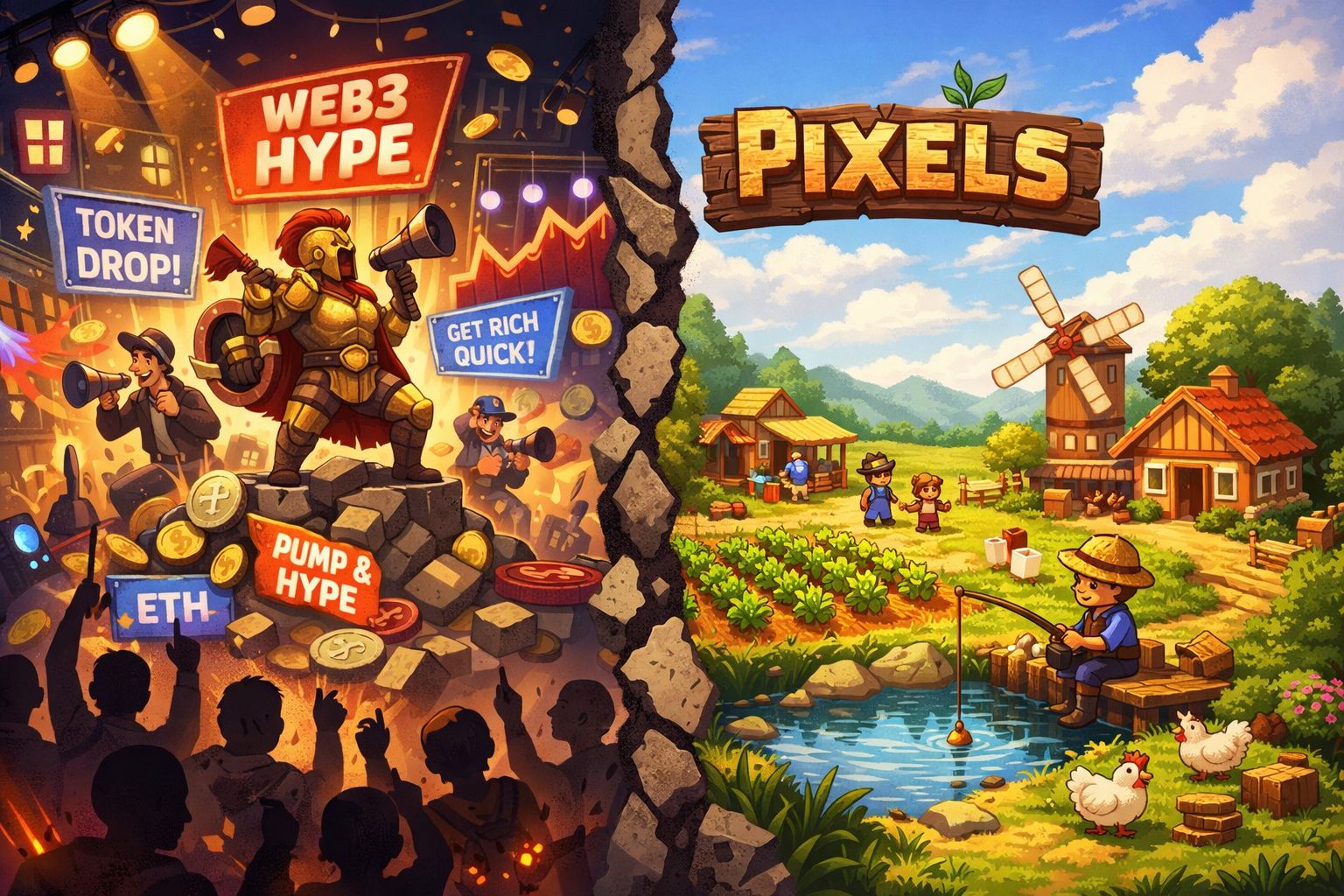
There was a time when Web3 projects stormed into the market like gladiators announcing themselves with thunderous claims and eyecatching campaigns. Every timeline was crowded with promises of instant gains, flashy token drops and influencer driven hype. Communities appeared overnight, attention spiked faster than any real engagement and many projects were judged more by visibility than value.
Amid that chaos Pixels took a different path. It didn’t try to dominate the noise or demand attention. Instead it quietly opened its doors letting players discover its universe naturally at their own pace.
Early on many dismissed Pixels as too simple. Compared to complex DeFi protocols and highspeed chains chasing headlines it seemed almost modest. Yet while others competed for short lived attention, Pixels focused on player experience first. Users could explore, farm, trade and interact without pressure. That seemingly small difference created a profound shift temporary visitors became long term residents.
As Web3 markets wavered through uncertainty the projects built on hype alone started fading. Communities that joined for rewards dwindled once incentives ended. But Pixels continued its quiet expansion. Players weren’t returning for tokens they came back because the world itself felt alive. Social connection, genuine ownership and meaningful progression creates habit that kept people engaged beyond speculation.
Every thriving ecosystem faces skepticism. Critics questioned longevity, competitors attempt mimicry and some doubted whether a low noise approach could survive. Pixels responded calmly. Regular updates, stepwise gameplay evolution and a sturdy infrastructure ensured growth was sustainable rather than sensational. It didn’t fight hype with hype it let consistency speak for itself.
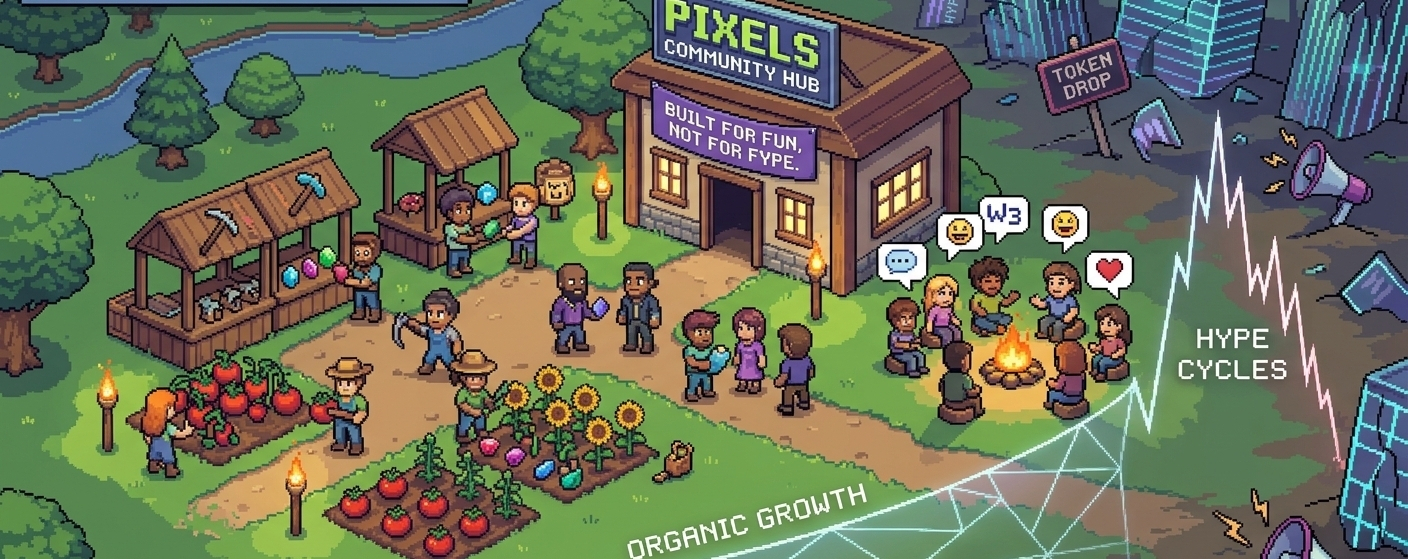
Today, Pixels stands apart because it prioritizes fun before finance. Many Web3 games launch with economic mechanics first, hoping entertainment will follow. Pixels flipped that approach. Fun drove community formation and community strengthened the economy. The result growth that looks less like a volatile spike and more like an organically expanding ecosystem.
Now the conversation in Web3 gaming is shifted from speculation to sustainability. Builders are realizing that long term platforms emerge not from fleeting attention but from worlds where players feel they belong naturally. Pixels embodies this shift a living digital environment where continuity, creativity and trust matter more than hype cycles.
Ultimately the story of Pixels isn’t about outshouting competitors. It’s about enduring the noise long enough for true value to shine through. In a landscape dominated by temporary excitement the quiet resilience of Pixels may prove to be its most powerful advantage. It didn’t race to victory it grew into it. And in a market fatigued by flash that measured patient growth is exactly what sets it apart.