
I Will Be Honest...
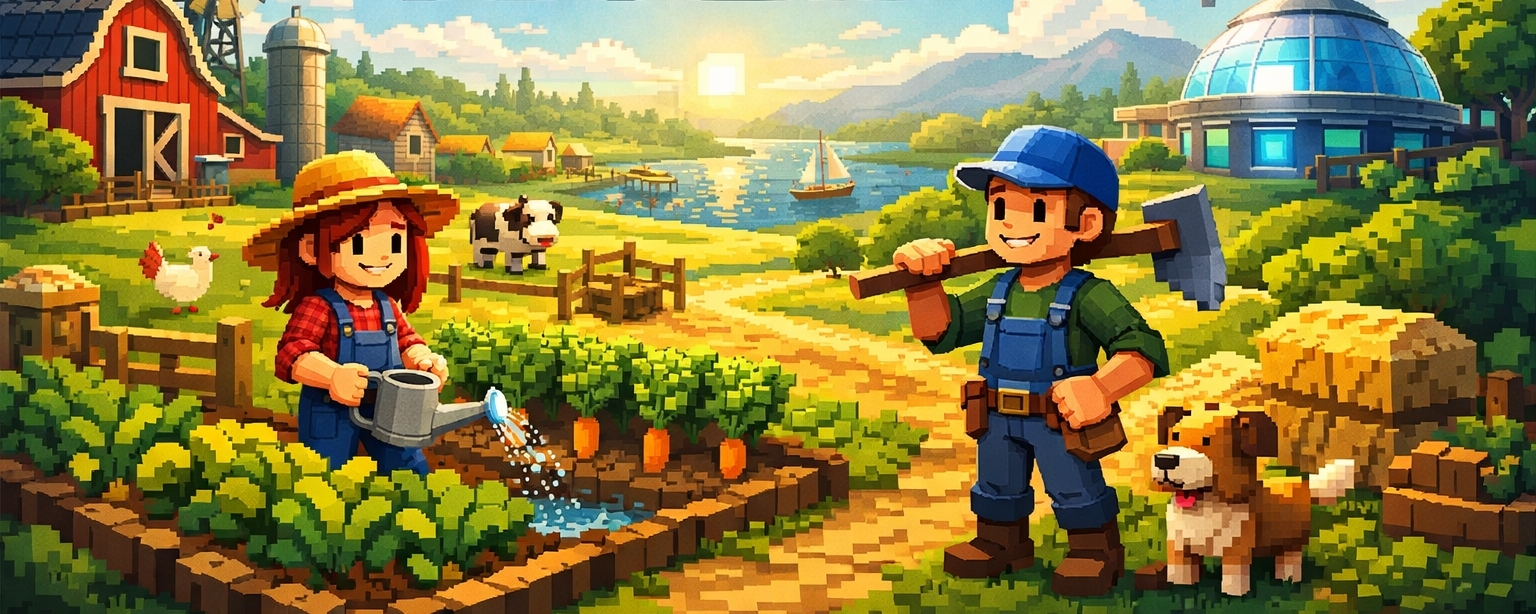
When people talk about popular farming games in Web3 gaming, one name often comes up first: Pixels. On the surface, it looks like a simple farming game where players grow crops, gather resources, decorate land, and complete small daily tasks. But if you look deeper, it becomes clear that Pixels is more than a game. It is a real experiment in how Web3 gaming can reach mainstream users.
I’ve been thinking About something
What makes Pixels interesting is that it tries to combine casual gameplay with blockchain ownership in a practical way. Many Web3 games in the past focused on launching tokens first and building gameplay later. That usually created short hype cycles followed by declining users, weak economies, and fading communities. Pixels appears to have taken a smarter route by focusing first on user activity and engagement, then layering monetization afterward.
One of its biggest strengths is accessibility. A new player does not need deep knowledge of wallets, NFTs, or token systems to start playing. That matters because onboarding has always been one of the biggest barriers in Web3 gaming. If users feel confused in the first few minutes, most leave quickly. Pixels reduces that friction by making the experience feel like a game first and a blockchain product second.
Another strong point is retention design. Farming games are rarely successful because of rewards alone. Players stay because of progress, customization, routine, social interaction, and the feeling of building something over time. Pixels seems to understand this. It is not only trying to create an earn model, but also a stay model. That difference is important.
However, no serious analysis should ignore the economic risks.
Play-to-earn systems are historically difficult to sustain. If too many users join mainly to earn tokens and sell them, heavy sell pressure builds. Token prices weaken, new users lose interest, and existing players begin to leave. This creates the classic downward spiral many blockchain games have already experienced.
For Pixels, the long-term challenge is creating enough utility sinks inside the ecosystem. If players can use earned assets for upgrades, crafting, expansion, cosmetics, progression, or competitive advantages, value circulates internally. If not, rewards simply flow outward into selling pressure. This is where many projects fail. Economy design is often harder than game design.
Another limitation is content fatigue. The gaming market is highly competitive. Players today have endless choices. If gameplay becomes repetitive, updates slow down, or progression starts to feel stale, users move on quickly. Farming games are especially vulnerable because their loops are naturally repetitive. Pixels will need regular events, new systems, seasonal content, and evolving goals to stay fresh.
That said, Pixels also has a hidden advantage: simplicity.
Many Web3 games attempt massive A visions and never fully deliver. Others launch with heavy systems that feel slow or difficult to access. Pixels uses a lighter, more approachable model. It is easier to understand, easier to run, and easier to return to daily. That can be more powerful than flashy graphics. In gaming, convenience often beats complexity.
From an investment or market perspective, many people focus only on token price. That is a shallow way to judge projects like this. More important indicators are daily active users, retention rates, transacteon quality, community strength, update consistency, and whether users are spending time voluntarily. Real ecosystems are built on behavior, not charts.
My honest view is that Pixels is not a perfect project. It still faces economic pressure, genre limitations, reward expectations, and speculative noise like every Web3 title. But it is also true that very few blockchain games have managed to keep real user activity for a meaningful period of time. Pixels has done better than most in that category.
In the end, Pixels should not be viewed only as a farming game. It is a test of whether casual gamers want ownership, whether blockchain mechanics can exist without harming fun, and whether Web2 users can gradually move into Web3 through gameplay rather than finance.
If the team keeps gameplay fresh, manage the economy carefully, and stays focused on users rather than hype, Pixels could become more than a successful game. It could become a reference model for future Web3 gaming.
If not, it could face the same slow decline many reward-driven projects have already seen.
So the reality is simple: success is not guaranted, but Pixels is one of the few Web3 games serious people still have a reason to watch.. 👌