
 The first few sessions in Pixels feel almost intentionally slow. You log in, spend your energy, wander a bit, maybe try a new patch of land or interact with other players. There’s a softness to it. You’re not thinking about outcomes yet—you’re just figuring things out. Curiosity drives everything.
But give it time, and that curiosity starts getting replaced.
Not all at once. Gradually.
You begin noticing patterns. Certain routes feel better. Certain crops seem “worth it.” You realize energy isn’t just a limitation—it’s a constraint you can optimize around. And from that point forward, every decision starts carrying weight. Not emotional weight. Economic weight.
Pixels doesn’t force you into strategy—but it quietly rewards you for thinking like a strategist.
That’s the moment the experience shifts.
Instead of wandering, you plan. Instead of experimenting, you refine. You stop trying things just to see what happens and start repeating what you know works. It’s subtle, but it changes how the game feels. The open world becomes narrower, not because the map shrinks—but because your behavior does.
And honestly, this is where Pixels becomes more than just another Web3 game.
The energy system, resource cycles, and land dynamics all start interacting in ways that feel less like design and more like an economy reacting in real time. Landowners get structural advantages. High-demand materials create invisible competition. Even your login timing can start to matter depending on what you’re trying to do.
It gets sharper.
More intentional.
A bit more serious.
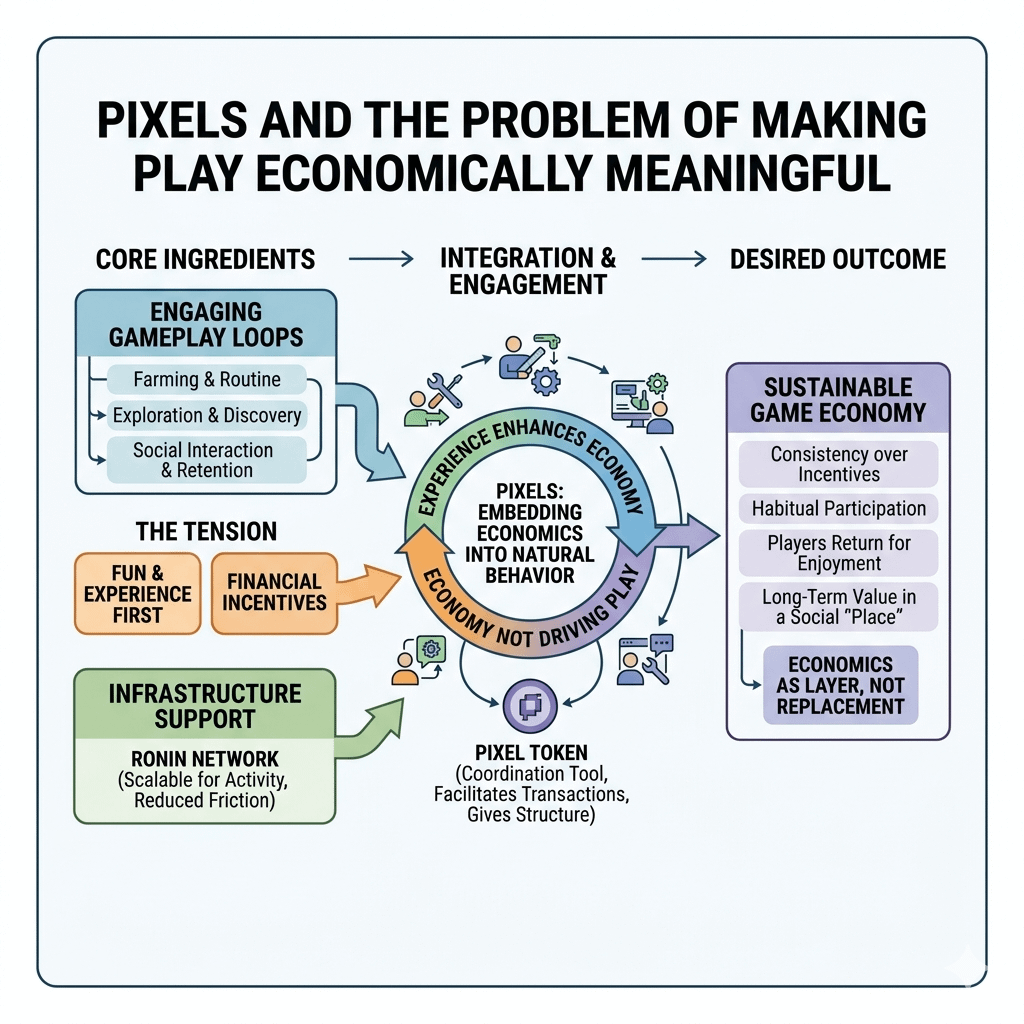
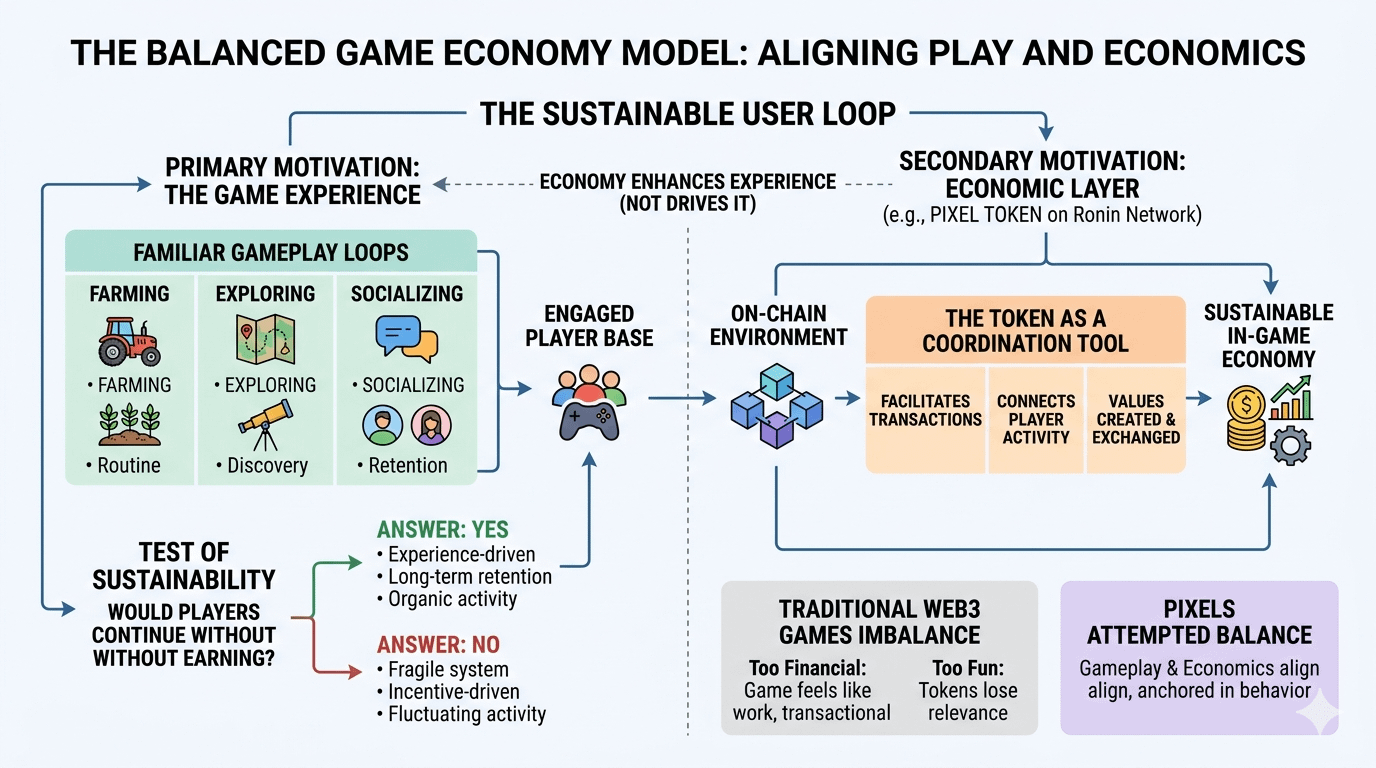
And that’s where the tension sits.
Because strategy makes systems efficient—but it doesn’t always make them fun. When every action starts feeling like it should be optimized, the space for randomness, curiosity, and discovery begins to shrink. You feel it in small ways. You hesitate before trying something new. You question whether it’s “worth it.”
That hesitation doesn’t come from the game.
It comes from the system.
$PIXEL plays a big role in that shift. It connects your actions to outcomes that exist beyond your personal progression. You’re not just farming anymore—you’re participating in something that reacts, moves, and responds to collective behavior. That makes everything feel more meaningful.
But it also makes everything feel more calculated.
The interesting part is that Pixels doesn’t break because of this.
It evolves.
The experience becomes less about what the game tells you to do and more about how you choose to interact with the system it creates. Some players lean fully into optimization. Others resist it and play slower, more casually. Both exist in the same world.
That coexistence is what keeps it balanced—for now.
Because the real question isn’t whether strategy belongs in the game.
It’s whether strategy eventually replaces curiosity entirely.
If that happens, Pixels becomes efficient—but predictable.
If it doesn’t, it stays alive.
And right now, it’s still walking that line.