
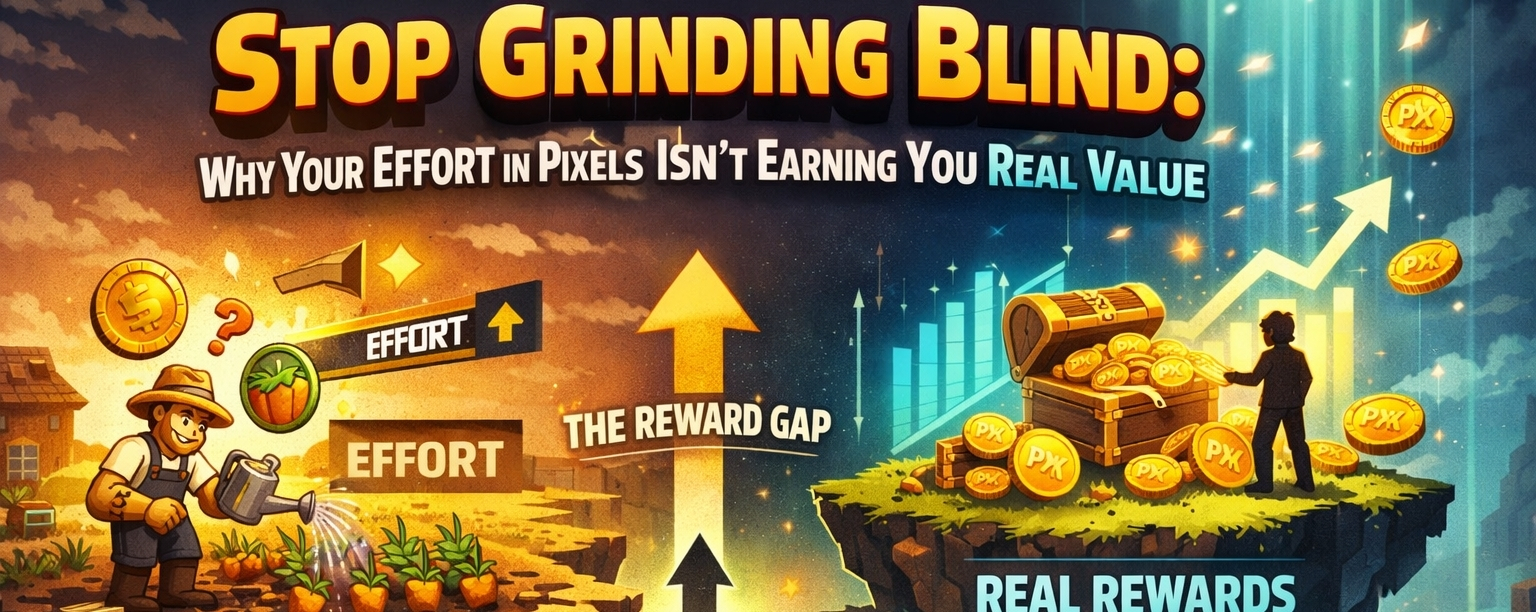
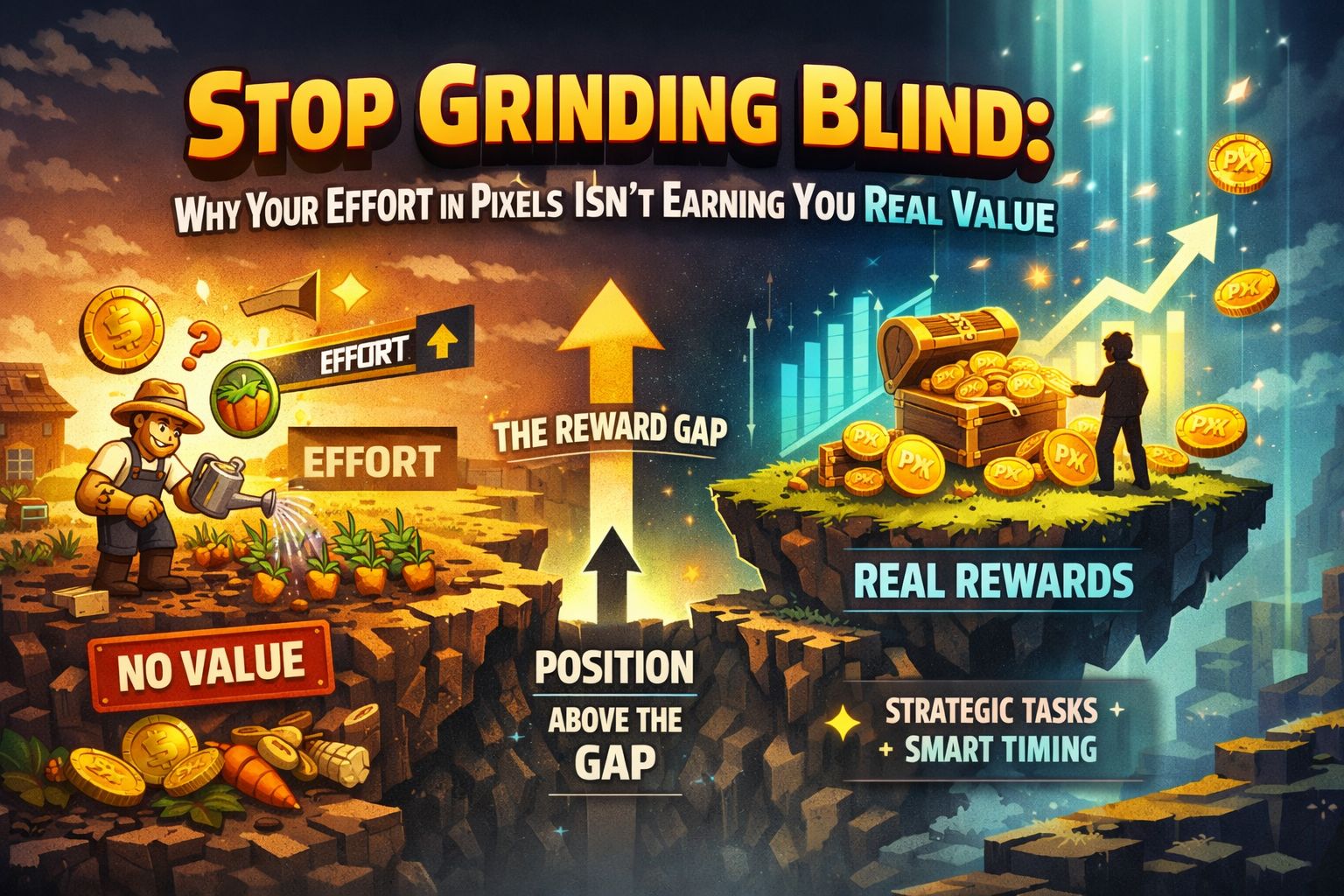
At first, I thought my earnings in Pixels depended directly on how much I worked. The more I farmed or completed tasks, the more I should earn. That’s how most games work, so I assumed it was the same here.
But it’s not that simple.
After spending more time in the game and watching how rewards actually work, I realized something important. The value doesn’t come from what I produce. Instead, it comes from how well I’m positioned when the system decides to distribute rewards.
That’s a big difference.
When I farm crops, complete tasks, or use energy for crafting, I’m not creating PIXEL tokens directly. I’m just putting myself in line to receive a share of rewards that the system was already going to release.
My effort is real. My time is real. But the rewards don’t increase the same way as my effort.
I noticed this when I had sessions where I worked very hard but didn’t earn much more than in normal sessions. At first, I thought I was doing something wrong. But later I understood—the limit wasn’t based on my effort. It was controlled by the system.
Pixels is designed this way on purpose.
In many games, players can earn more and more by grinding harder. But this often leads to problems. Players find the most efficient ways to earn, flood the market with rewards, and the token loses value.
Pixels avoids this by controlling how much value is released to players.
The system looks at the whole game—how many players are active, how much is being spent, and how the economy is balanced. Based on that, it decides how much reward to release.
This means your effort alone is not enough.
If many players are active, your reward depends more on what you’re doing than how much you’re doing. Some actions connect directly to real PIXEL rewards, while others only keep you busy without giving real value.
Many players don’t realize this.
Spending energy doesn’t always mean earning value. What matters is using your energy in the right places, at the right time, in actions that actually connect to rewards.
Once I understood this, I changed my approach.
Instead of just working harder, I started paying attention to the system:
Which tasks give real rewards
Which actions lead to actual value
Which activities just keep the game running without benefit
Yes, there is still grinding in Pixels.
But the rewards don’t come from grinding alone. They come from how close you are to where value is being distributed.
That gap—between what it feels like you’re doing and what actually determines your rewards—is the most important thing to understand.
And most players realize it much later than they should.