
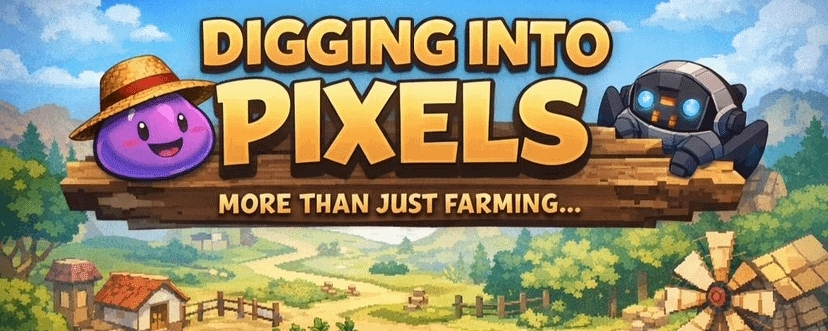
The current rapidly evolving Web3 gaming environment is full of a number of projects that claim to be innovative yet have a hard time sustaining both long-term and short-term value creation. One such platform that is obviously standing out of the crowd is @Pixels . What is unique is not only the gameplay, but how it incorporates an organized and scalable economic layer on top with its Stacked ecosystem. This solution turns $PIXEL into a fundamental pillar of a sustainable digital economy, instead of just a token of reward.
One of the key drawbacks of the classical models of GameFi has been the use of short-term incentives. The users tend to join when it is profitable and drop out when it becomes non-profitable. This forms a dynamic cycle which ultimately destroys the ecosystem. The Stacked model tries to solve this problem by promoting ongoing involvement over rapid extraction. The game encourages players to develop, reinvest, and streamline their in-game strategies to establish a loop that will encourage long-term interest.
In the center of this system is $PIXEL . Its purpose is so much more than mere rewards. It has been deeply embedded in the ecosystem in terms of gameplay, asset upgrades, and transactional flows. Due to this reason, the token is always relevant and its demand is automatically related to user activity and not just speculation. This is one of the main reasons why the ecosystem seems to be more balanced and resilient than many of its competitors.
One more factor which makes this project unique is that it is devoted to real player experience. It creates a high-quality gameplay system rather than imposing tokenomics into a poor game. The Stacked ecosystem then further adds levels of strategy and decision-making to that experience. Players do not only accomplish tasks but are controlling resources and scheduling upgrades, as well as making decisions that have a direct effect on their progress.
Such a design results in much better user retention. Instead of a short-term rush of players seeking rewards, the system forms an atmosphere in which users desire to remain and develop. Growth is purposeful, and each act leads to a significant economic system. This is what makes this ecosystem play-to-earn to play-and-grow, and it is what makes it so strong in the long run.
Another key consideration is scalability. The Stacked design makes it possible to add new features and mechanics without disrupting the system balance. This modular design will make sure that the ecosystem can continue to develop over time without losing its stability. It also paves the way to future expansions, collaborations, and increased economic interactions.
Finally, the difference that is unique about this project is that it is possible to integrate fun, strategy, and economic depth into one unified experience. The Stacked ecosystem also makes sure that the relevance of the application (as well as the financial incentive) is maintained, and the gameplay maintains the interest of the users. In case this model is developed further, it can transform the way sustainable GameFi ecosystems are created.
This is a solid example of how intelligent design and practical use can build sustainable value in a place where hype is frequently the order of the day. #pixel