
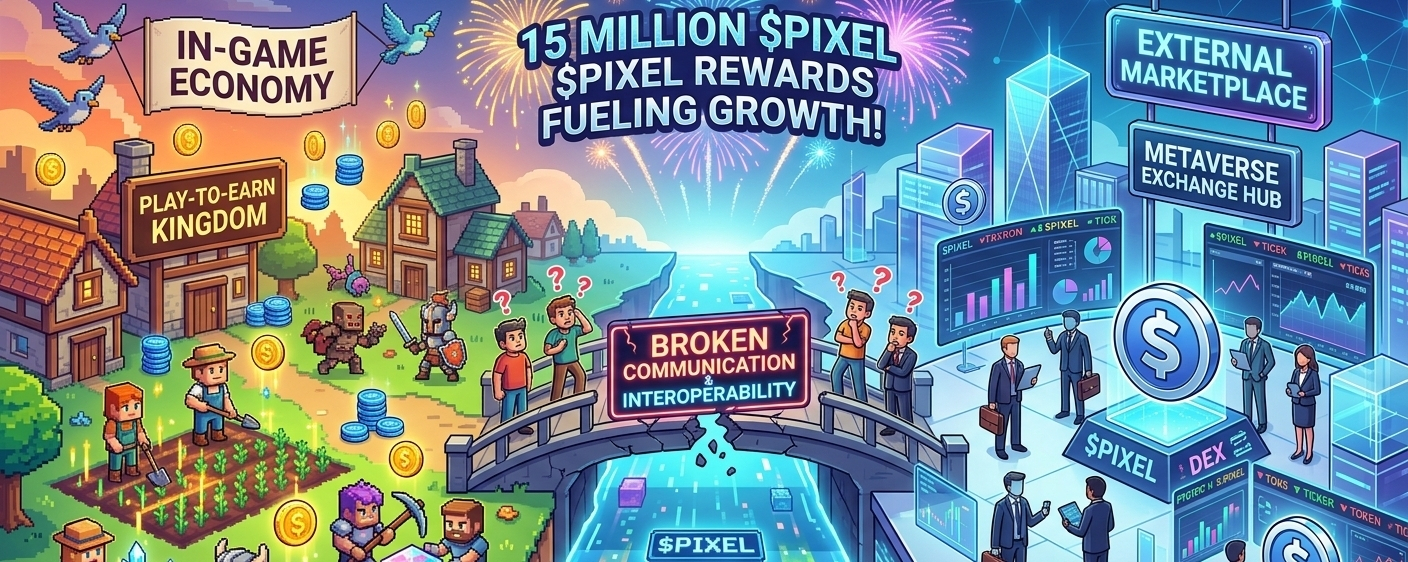
The latest 15 million $PIXEL reward wave is doing exactly what it was meant to do bringing players back, increasing activity, and making the world of Pixels feel alive again. Farms are active, markets are moving, and participation is rising across the board. On the surface, it looks like a strong return of momentum.
But underneath that growth, there’s a deeper structural gap that hasn’t fully closed yet.
Right now, Pixels operates with two parallel economies. One is the player-driven economy farming, crafting, trading, and reacting to supply and demand. This is where the game actually feels alive, where decisions matter, and where players shape outcomes in real time. The second is the reward-driven economy, fueled by token emissions and incentives designed to drive engagement.
The issue isn’t that either system is weak it’s that they aren’t fully synced.
When rewards exist slightly outside the natural gameplay loop, they can boost activity without strengthening the core economy. You get more movement, but not always more meaning. This is where many play-to-earn models started to break down. The moment incentives feel separate from gameplay, the experience starts to shift from playing a game to optimizing a system.
And players notice that shift quickly.
What makes Pixels interesting is that it’s closer than most to solving this. The foundation is already there. The gameplay loop is strong, and the economy reacts in real time. The next step isn’t more rewards it’s better alignment.
If those two economies fully connect, every action won’t just earn it will matter.
That’s when it stops being just another GameFi loop… and starts becoming something sustainable.