
I used to think progression in most Web3 games was mostly about time. The longer you stayed, the more you earned, and it didn’t really matter how you played or what decisions you made along the way. As long as you were active, the system rewarded you.
Progress felt linear, predictable, and often disconnected from actual impact.
So when I first looked at @Pixels , I assumed it would follow that same idea—play consistently, complete tasks, and gradually move forward. At that point, progression felt like something you simply accumulated over time.
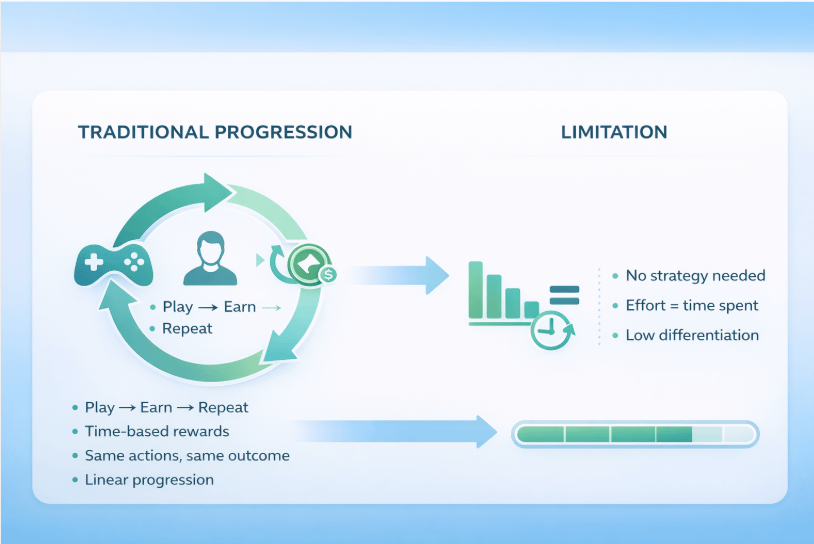
But the more I paid attention, the more I started to see a different pattern forming—progression shaped by positioning, not just activity. In most systems, progression is tied to repetition. You perform the same actions, improve slightly, and repeat the cycle, and the difference between players usually comes down to how much time they invest.
That creates a structure where effort is measured in volume rather than in decision-making. But Pixels introduces something more layered, where your position within the system begins to matter. What you choose to produce, when you choose to produce it, and how you interact with the economy around you all influence your progression.
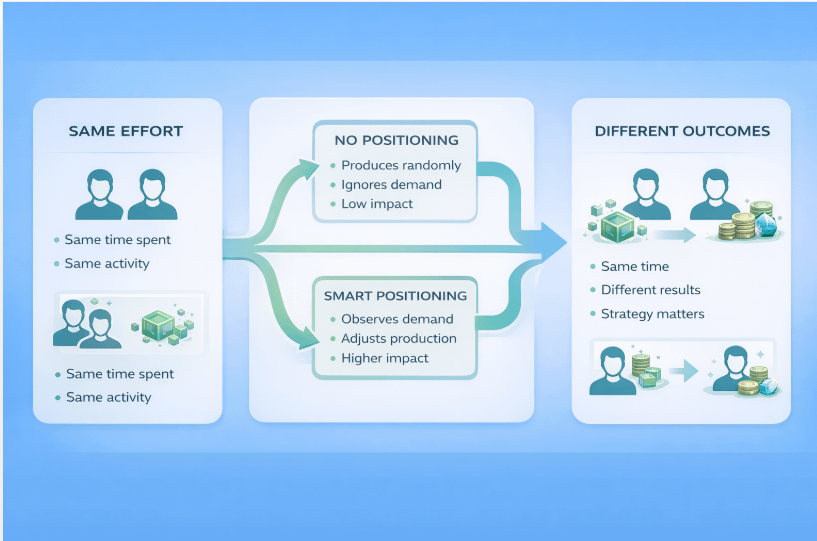
Take a simple scenario. Two players spend the same amount of time farming. One produces resources without paying attention to what others need, while the other observes demand, adjusts production, and focuses on what is actually useful within the ecosystem.
Over time, their outcomes begin to diverge, and the difference isn’t effort—it’s positioning. That shift changes how progression feels, because now moving forward isn’t just about repetition, it’s about awareness. It’s about understanding how the system works and finding where you can contribute most effectively.
Once that becomes part of the experience, the game starts to feel less linear and more dynamic. Instead of following a fixed path, players create their own direction based on how they engage with the system. Some may focus on consistency, others on timing, and others on specialization, and each approach leads to different results.
That’s where the feature becomes powerful, because it introduces variation without forcing it. Two players can spend the same time in the game and still have completely different trajectories simply because they approached the system differently.
Another layer to this is how it encourages learning. In many games, once you understand the basic loop, there isn’t much more to figure out. The system becomes predictable, and progression becomes mechanical. But when positioning matters, the system stays engaging because you begin to pay attention to patterns.
What resources are in demand? What roles are under-supplied? Where is activity increasing or decreasing? These questions start to influence your decisions, and those decisions begin to influence your outcomes.
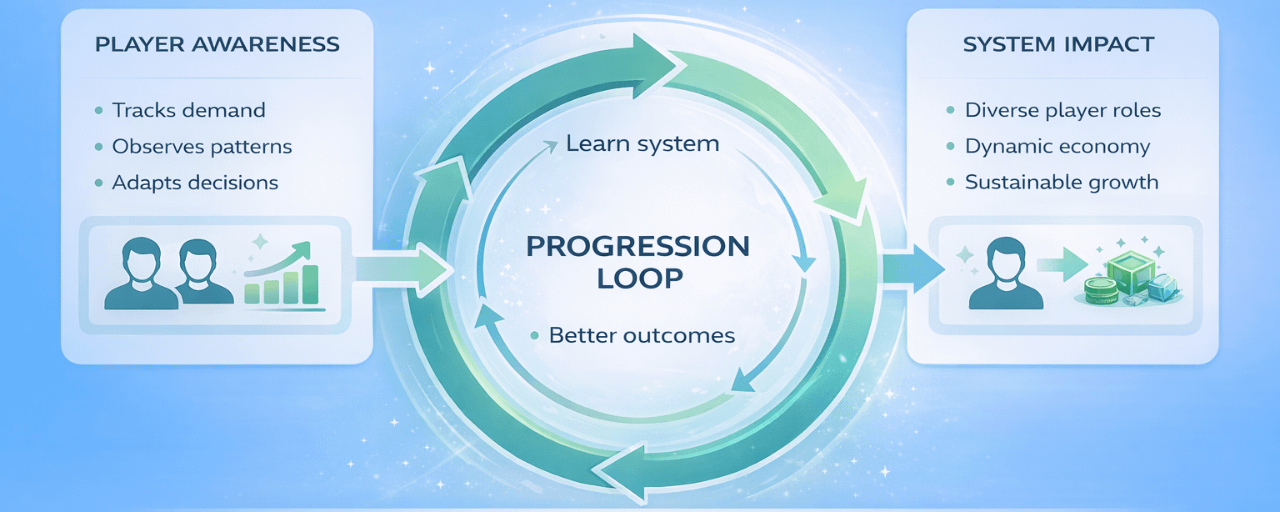
Over time, this creates a feedback loop between understanding and progression.
The more you learn, the better you position yourself, and the better you position yourself, the more you progress. This leads to a more thoughtful kind of engagement, where players aren’t just repeating actions but adapting to what’s happening around them.
That adaptability is what gives the system depth, because it allows progression to evolve rather than remain fixed.
From a broader perspective, this kind of design also supports long-term sustainability. When progression depends only on time, systems tend to become saturated, and everyone eventually reaches similar levels, making differentiation harder. But when progression depends on positioning, variation remains. Players spread out across different roles, strategies, and approaches, and that diversity keeps the system active. It also makes the experience more personal, because instead of following a predefined path, players build their own.
Looking at it now, I don’t see progression in Pixels as something you simply accumulate anymore. It feels more like something you navigate—a system where movement depends not just on how much you do, but on how you choose to engage.
Awareness matters, decisions matter, and positioning matters. It’s not a dramatic shift at first glance, but over time it changes how the entire experience unfolds, because it moves progression away from repetition and closer to strategy.-
And maybe that’s what makes it interesting. Not just the idea of progression itself, but the way it evolves based on how you approach the system. Because in the end, it’s not just about moving forward—it’s about where you choose to stand within it.
