
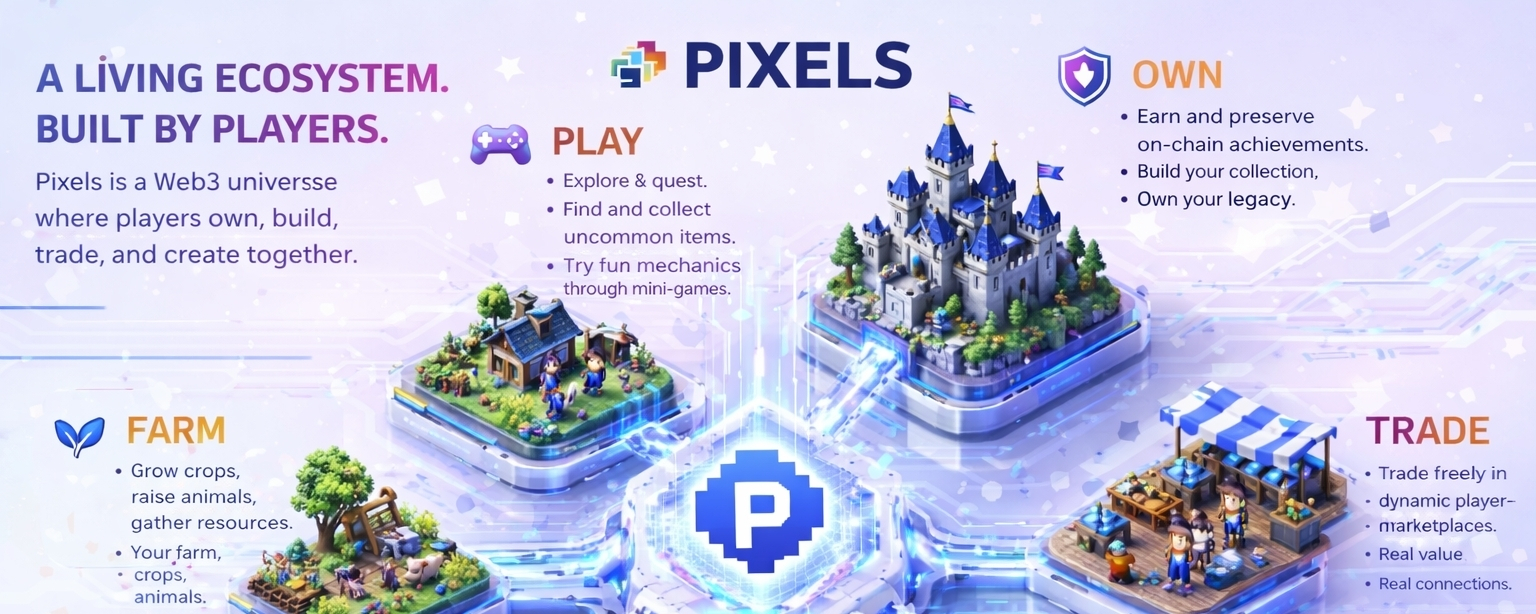
My first experience with the breeding system in Pixels didn’t feel like a typical game moment It felt closer to watching a small economic system in motion, where actions mattered later, not instantly.
That difference changes how you read the game.
Over time, I’ve started separating activity from actual retention in Web3 games.
Spikes in dashboards, wallet growth, and trading volume often look like engagement.
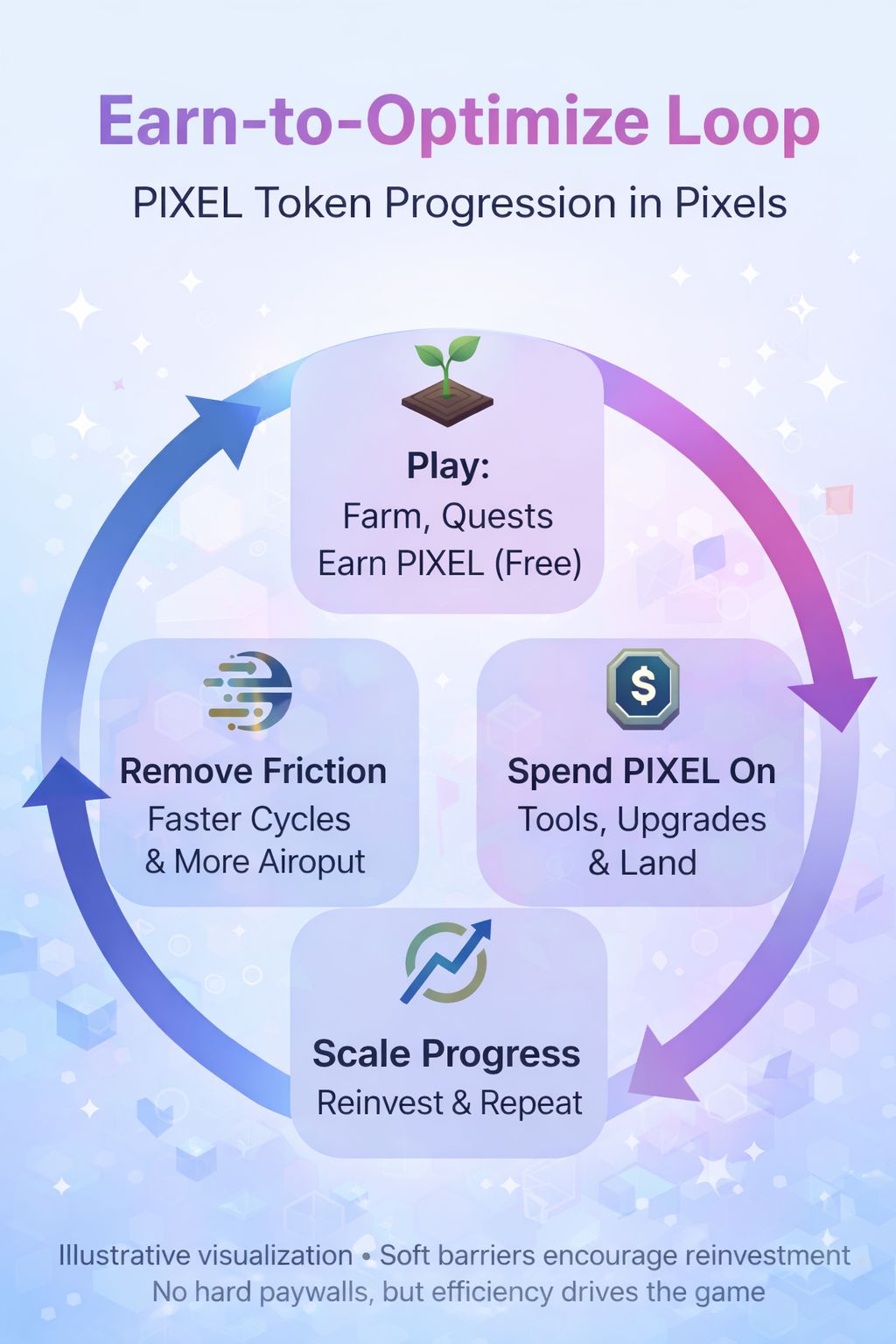
But real adoption only shows up when incentives fade and behavior continues anyway.
Pixels, at its core, is built on continuous loops rather than one-time achievements. Farming, exploration, and progression are designed to repeat.
The Animal Care update adds structure to that loop through pets that need feeding, care, and eventually breeding.
Breeding isn’t instant. It runs on cycles feeding, cooldowns, staged progression. You don’t complete it in one action. You return to it.
When I used it, the noticeable change wasn’t complexity it was repetition.
Progress came from showing up multiple times for small steps, not executing one big move.
That design quietly pushes the experience away from transactions and toward routines.
In simple terms, it tests whether players will keep showing up when nothing exciting is happening.
That’s where retention either forms or breaks.
If players continue without relying on rewards, the system starts to feel like real gameplay.
If they only engage during events or incentives, then participation is still external and temporary.
The breeding loop becomes a controlled test of habit.
Looking at PIXEL as an ecosystem, the numbers can be misleading. Trading volume and holder count look strong, but on-chain activity mixes speculation with actual gameplay.
High volume doesn’t always mean real engagement.it can just reflect positioning around updates.
Even pet markets can be driven more by flipping than by interaction.
This creates a tension between liquidity and retention. A system can look financially active while gameplay remains shallow.
At the same time, a strong loop can fail if incentives are misaligned or too slow.
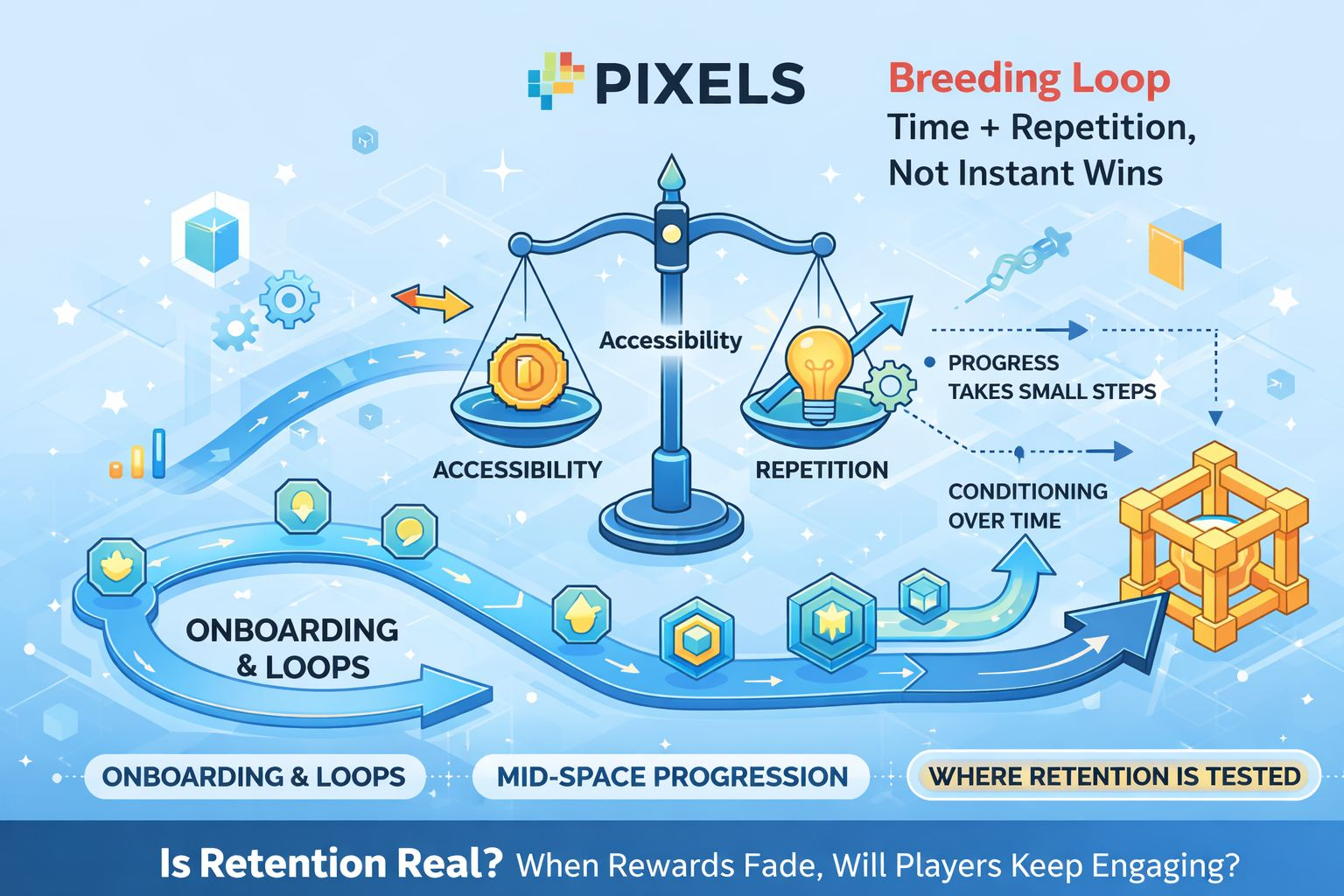
Breeding systems sit right in the middle of that tension. They depend on time, patience, and repetition.not instant rewards.
There are also distortions: bots, optimization strategies, shifting reward models.
If rewards dominate, players optimize instead of engage. If progression slows too much, they drop off.
It’s not just game design it’s ongoing economic calibration.
What stands out is that Pixels still feels like an experiment. Systems are being adjusted
staking, rewards, incentives. That flexibility helps iteration, but it also makes long-term behavior harder to judge.
The breeding loop, in that sense, is a small but meaningful test.
It asks a simple question: will players keep doing routine actions when rewards stop being the main reason?
If yes, it points toward a sustainable system.
If not, it confirms the behavior is still incentive-driven.
In the end, the real signal isn’t what happens during hypebut what remains when attention .