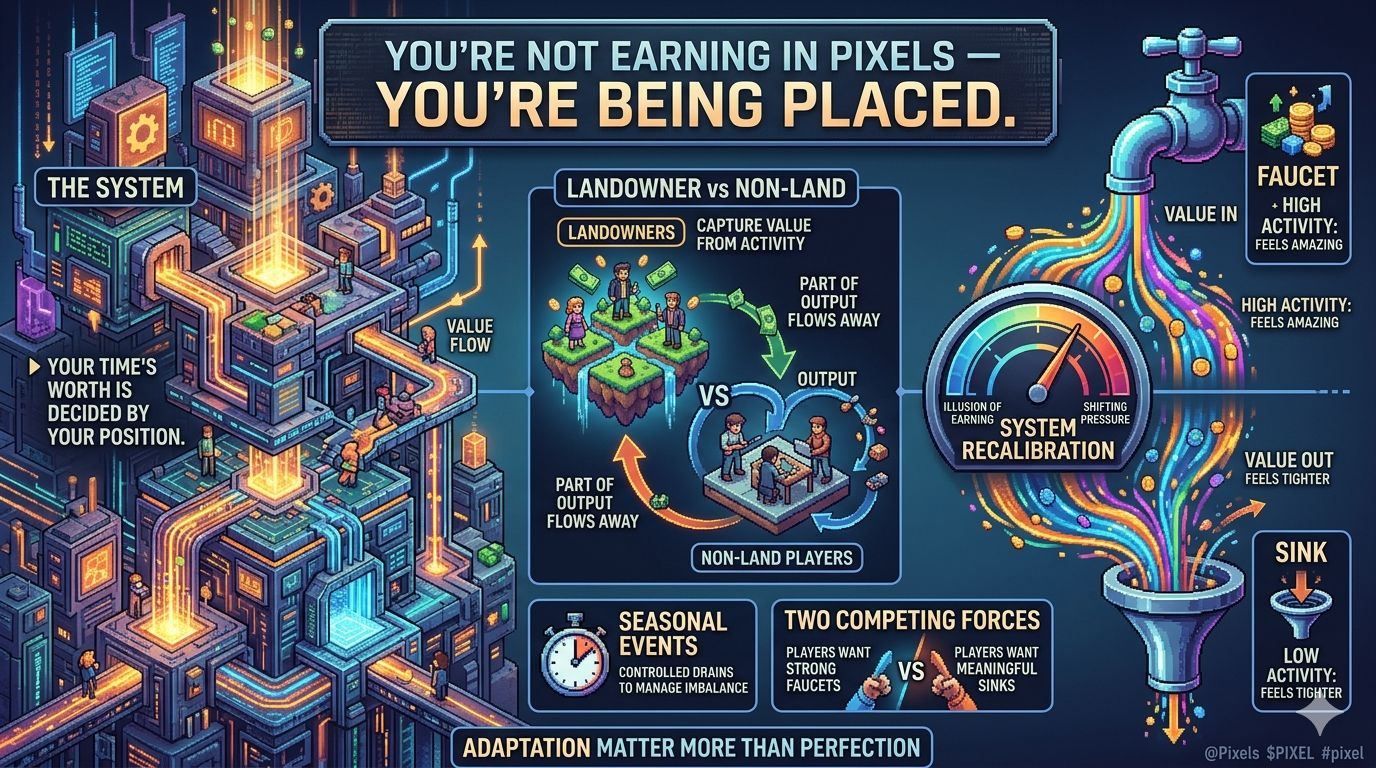
You think you’re earning in Pixels.
You’re not.
You’re being positioned inside a system — and that position quietly decides how much your time is actually worth.
At the start, it feels simple.
You play, you earn, you progress. Numbers go up, and it feels fair.
That’s the illusion.
Because what feels like “earning” is actually the result of how value is moving around you — not just what you’re doing.
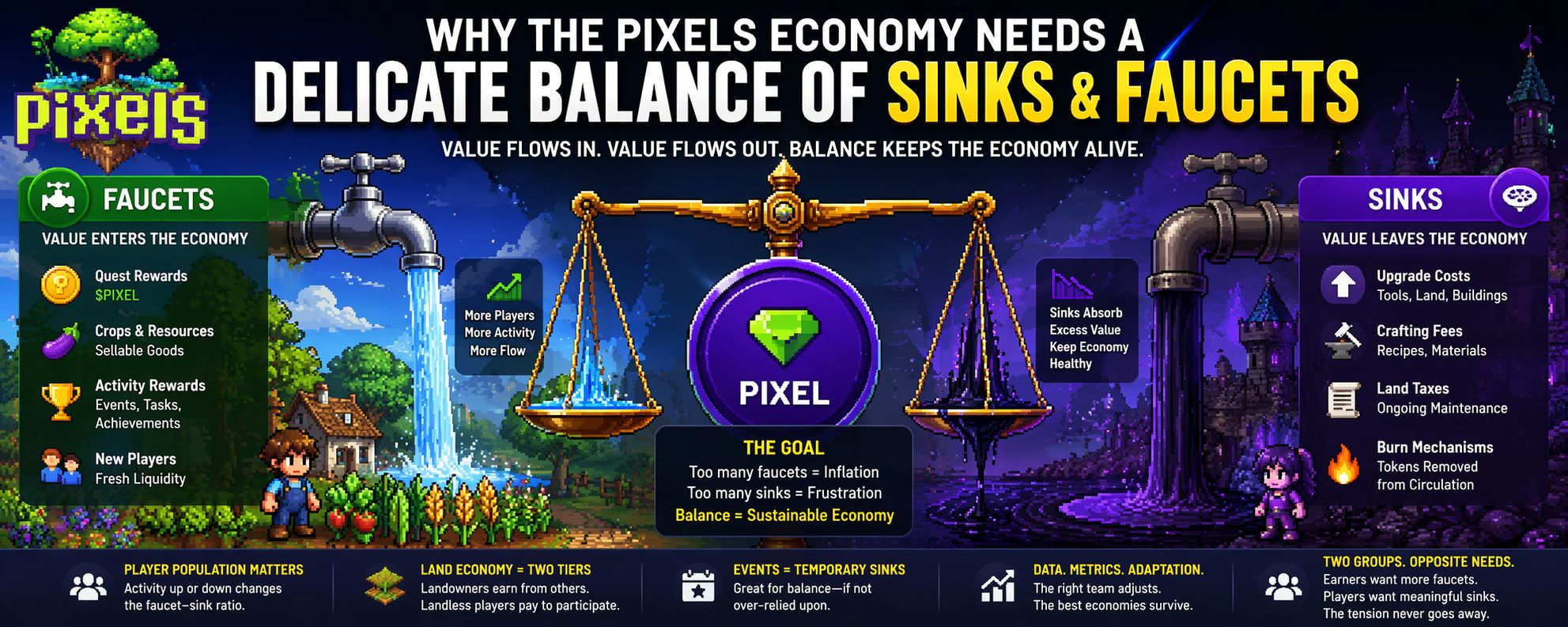
Underneath, the entire economy is balancing two forces most players never notice.
Faucets push value in.
Sinks pull value out.
If faucets dominate, rewards feel amazing — until they slowly lose meaning.
If sinks dominate, the system stays stable — but progress starts to feel like effort without reward.
There’s no perfect balance.
Only shifting pressure.
And that pressure changes with player behavior.
When activity was high, the system worked smoothly because volume was carrying it. More players meant more production, more spending, more absorption.
But when that activity drops, nothing “breaks.”
It just starts to feel different.
Rewards feel tighter. Progress feels slower. The same actions don’t hit the same way.
That’s not random.
That’s the system recalibrating.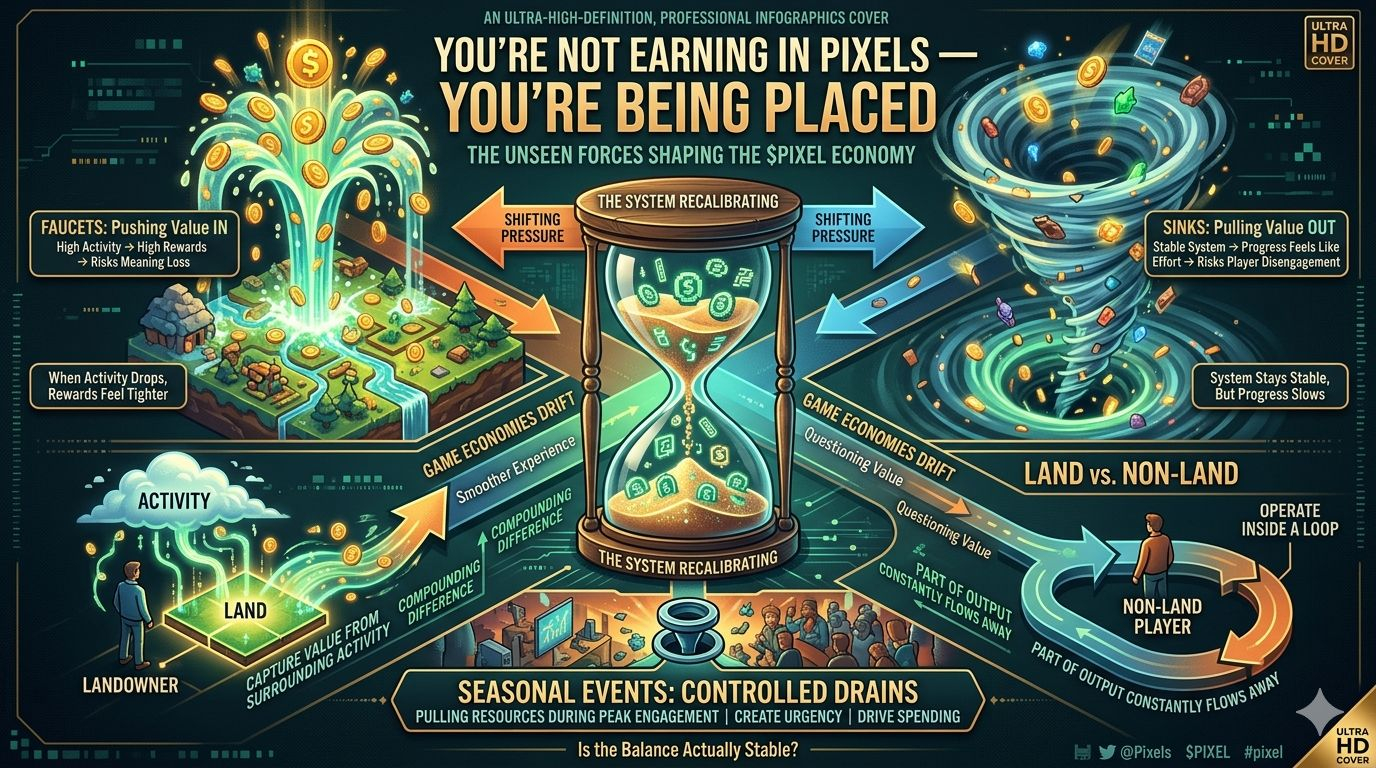
Game economies don’t collapse overnight.
They drift — until the experience changes enough that players start questioning it.
Now look at land.
Some players earn from the system.
Others earn within it.
Landowners capture value from activity happening around them.
Non-land players operate inside a loop where part of their output constantly flows away.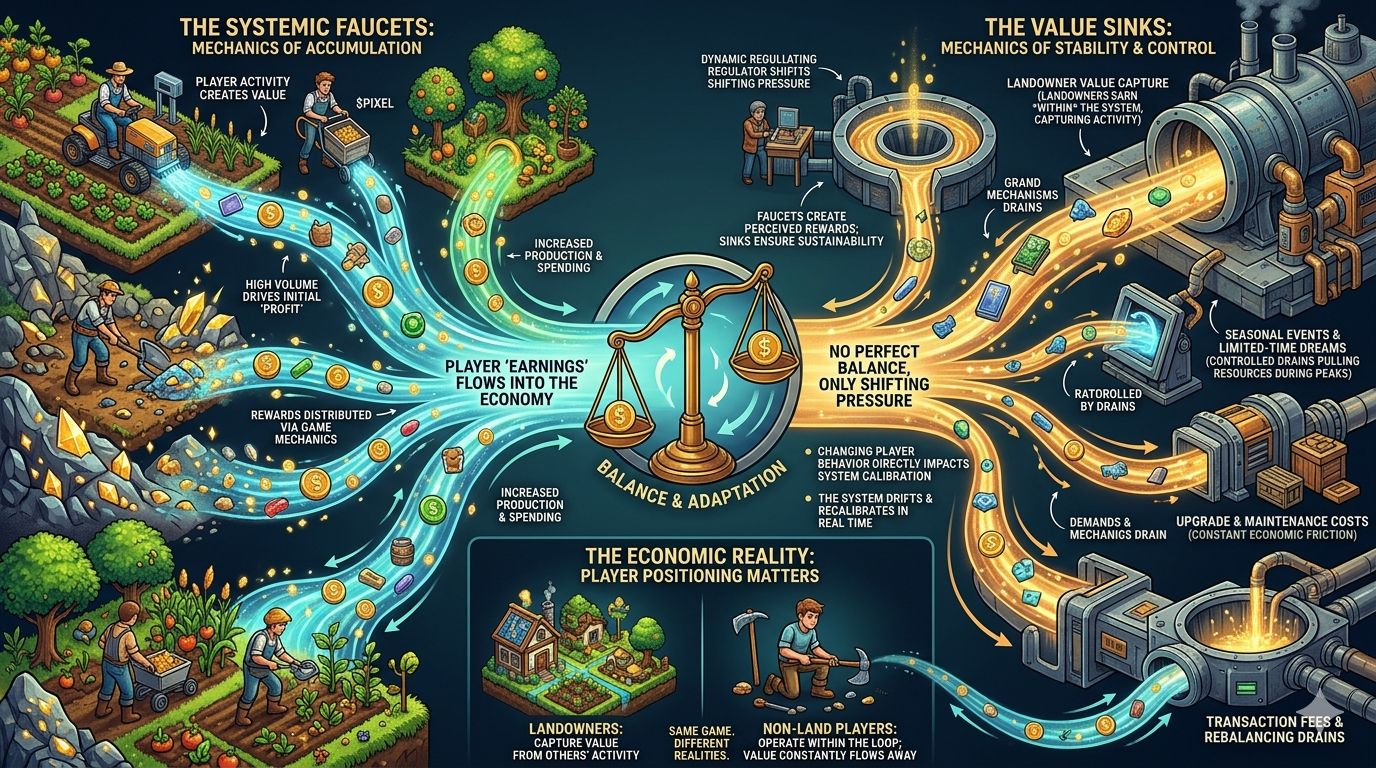
Same game.
Different economic reality.
And that difference compounds over time.
Seasonal events try to manage this imbalance.
They act like controlled drains — pulling resources out during peak engagement, creating urgency, driving spending.
Smart design.
But it also raises a harder question:
If the system needs constant events to stay balanced… is the balance actually stable?
Because at its core, Pixels is dealing with a problem no game has fully solved.
Players who want to earn need strong faucets.
Players who want to play need meaningful sinks.
Those two forces don’t align.
They compete.
If faucets consistently win, Pixels won’t suddenly fail.
It will slowly lose value — and most players won’t notice until their time feels less worth it.
If sinks win, the economy holds — but players quietly disengage.
That’s the line this system is walking.
Pixels isn’t perfect.
But it’s one of the few actually trying to adjust in real time instead of pretending the problem doesn’t exist.
And in this kind of economy, adaptation might matter more than perfection.