
Here’s a short, simple, human-style version of your article:
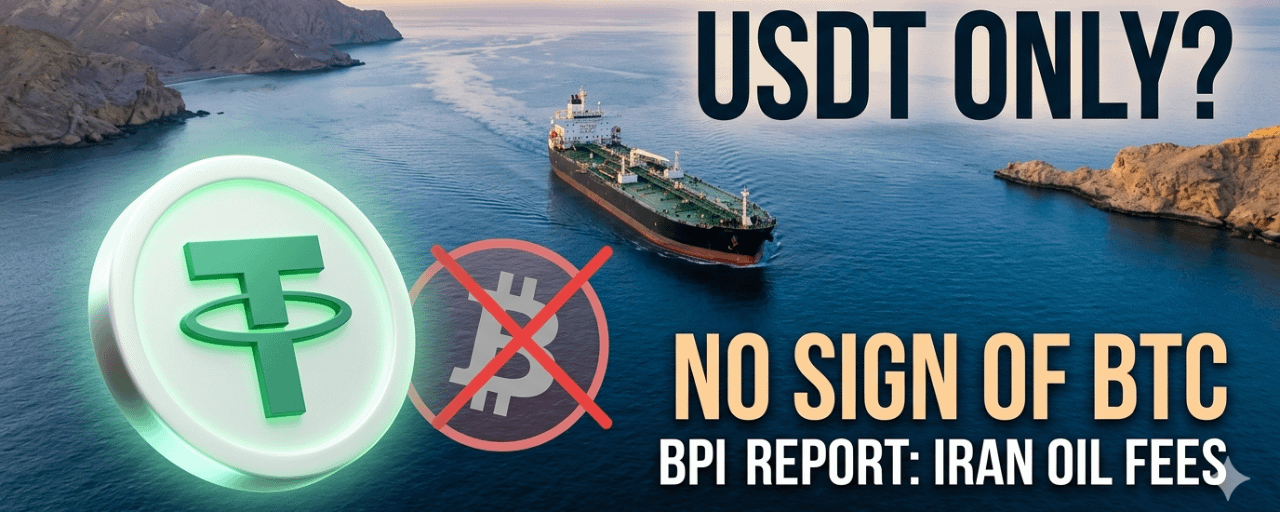
Most oil tanker fees around the Strait of Hormuz are still being paid using USDT (Tether), not Bitcoin.
The Bitcoin Policy Institute (BPI) says public blockchain data does not show Bitcoin being used at the scale needed for tanker payments. Instead, USDT on the Tron network is the main settlement method right now.
Iran recently approved a plan to charge tolls on ships passing through the strait. Reports suggest this could generate up to $20 million per day, with a single large oil tanker paying around $2 million per trip.
Even though some officials mention Bitcoin, there is no clear on-chain proof that Bitcoin is actually being used for these payments. Analysts say companies prefer stablecoins like USDT because their value is stable and better for invoices.
Data also shows Iran has already built strong usage around stablecoins:
Around $507 million in USDT linked to Iran’s central bank
About $3 billion in crypto activity tied to IRGC since 2023
This shows a bigger trend: stablecoins are being used for real payments, while Bitcoin is still more of a strategic or reserve asset.
So the key takeaway:
USDT = real-world payments (right now)
Bitcoin = long-term strategic asset (still debated)
There’s still a chance Bitcoin could play a bigger role in the future, but for now, the actual data points to stablecoins dominating these transactions.