
 The first few days in Pixels don’t feel competitive at all. You log in when you want, spend your energy, wander a bit, maybe miss a cycle or two and not think much of it. The game feels flexible. Forgiving, even. It lets you engage at your own pace without punishing you for inconsistency.
Then routine starts to matter.
Not in an obvious way. No leaderboard pops up telling you that you’re behind. No warning that you’re losing out. But the system quietly begins to reward players who show up the same way, at the same times, with the same discipline.
Pixels doesn’t announce competition—but it builds it through consistency.
That’s when the tone changes.
You begin to notice that logging in at certain intervals feels more efficient. That missing an energy cycle isn’t just a delay—it’s lost opportunity. Players who stick to tighter routines start progressing differently. Not dramatically at first, but enough to create a gap you can feel.
And once you notice it, it’s hard to ignore.
The game hasn’t told you to optimize your schedule.
But the system makes it clear that routine compounds.
This is where Pixels shifts again—from flexible play to structured participation. Your time isn’t just spent; it’s organized. You start planning around cooldowns, energy regeneration, and activity windows. The experience becomes less about what you want to do in the moment and more about when it makes the most sense to do it.
It’s subtle, but it reshapes behavior.
Players who embrace routine begin to move through the system more smoothly. Their actions stack efficiently. Their output becomes predictable. Over time, that predictability turns into an advantage.
Not because they’re better players.
Because they’re more consistent participants.
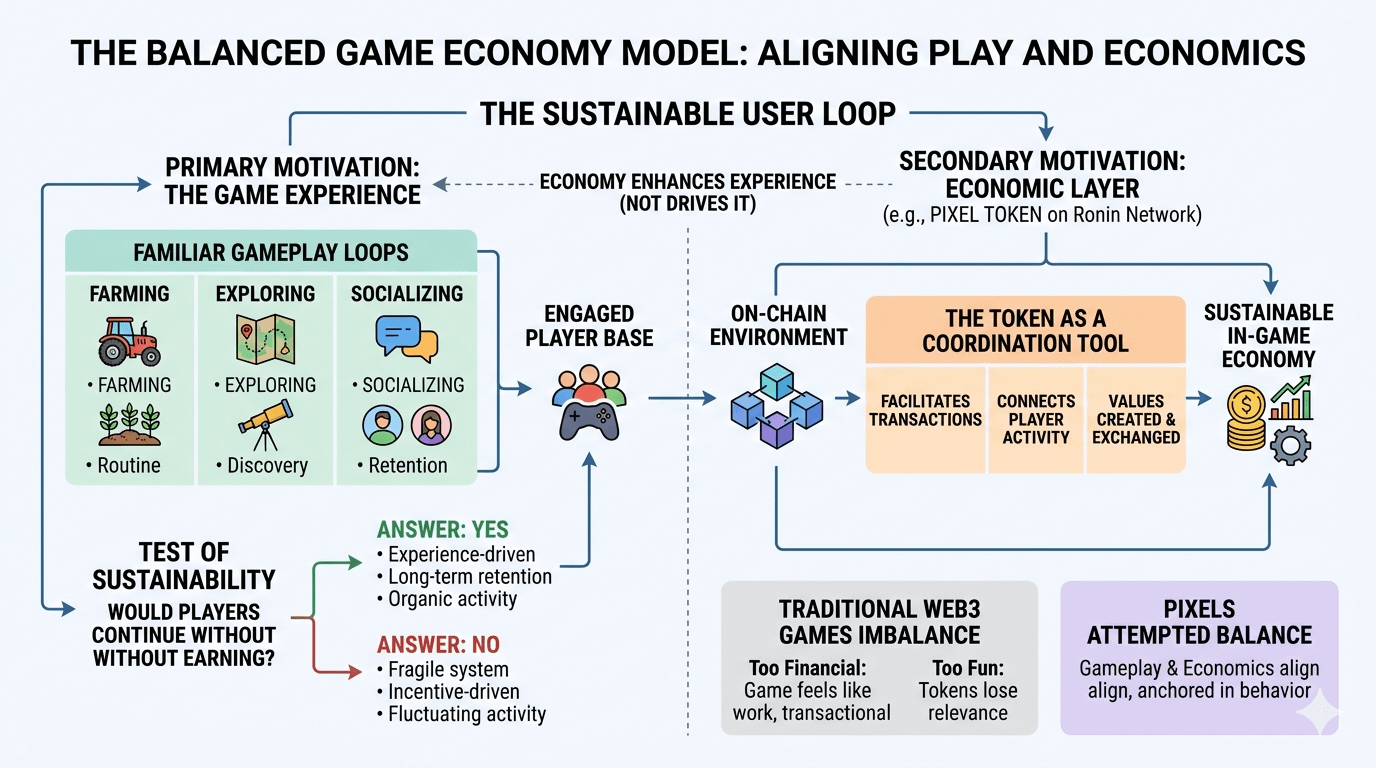
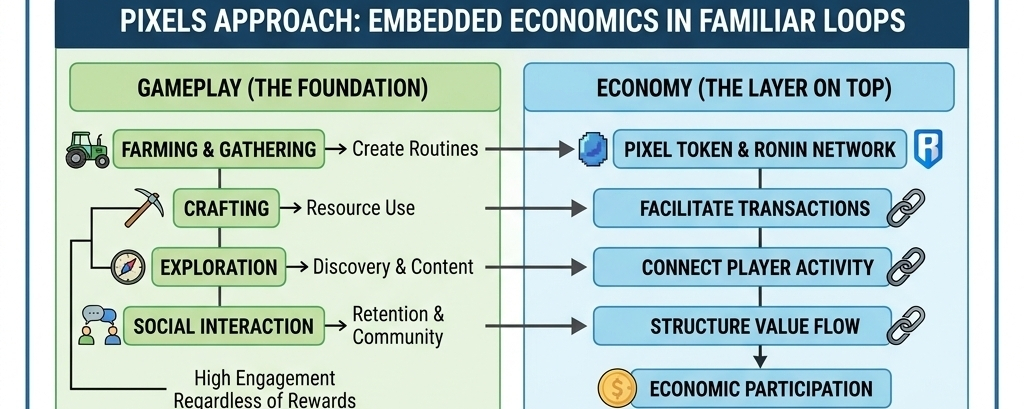
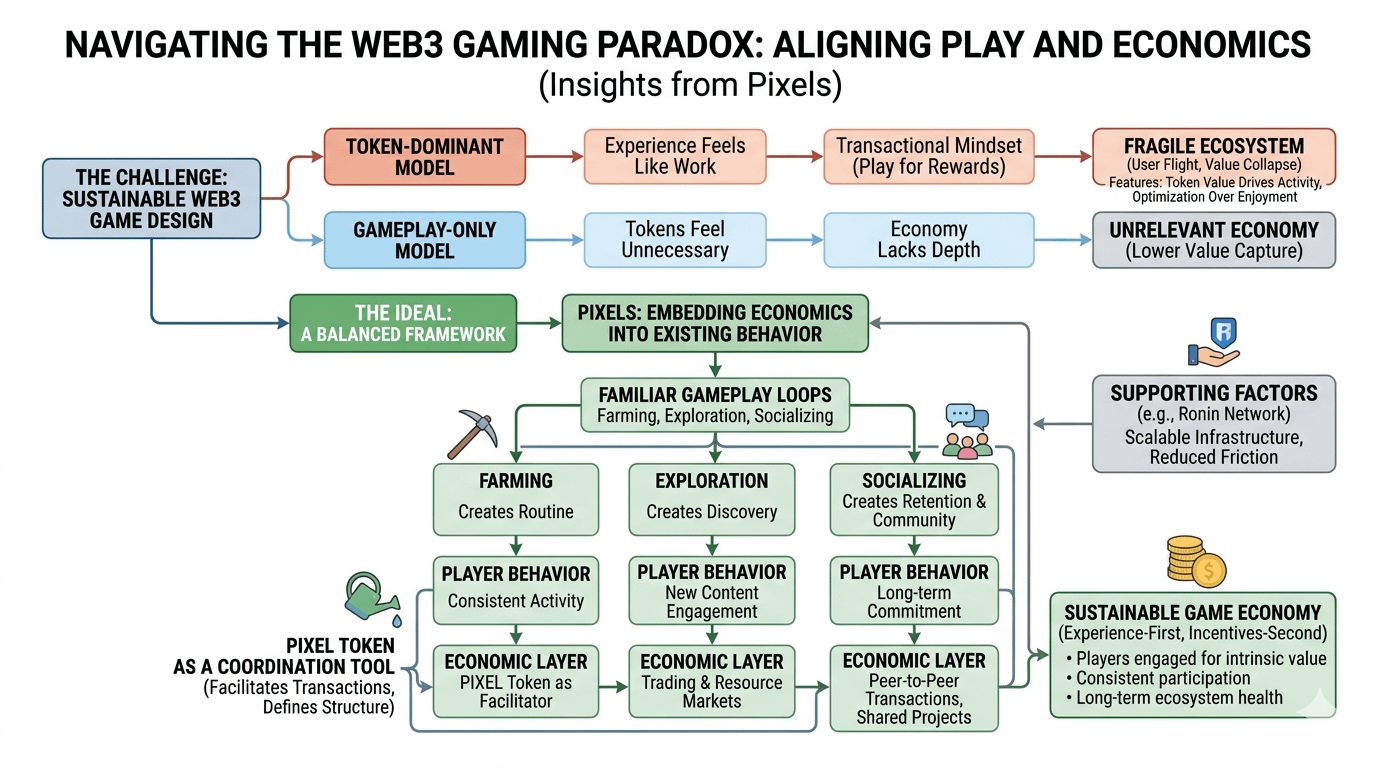
And this is where $PIXEL reinforces the shift. By connecting actions to value, it gives weight to that consistency. Repeated behavior isn’t just progression—it becomes structured contribution to the system. The more disciplined the routine, the more stable the output.
That changes how the game feels.
Casual play is still possible, but it starts to feel different. Less optimal. Slightly disconnected from the rhythm that more consistent players are following. The gap isn’t forced—it emerges naturally.
That’s the interesting part.
Pixels doesn’t demand routine.
It rewards it.
And over time, rewards shape behavior more effectively than rules.
The tension here is familiar.
Routine creates stability, but it can also create repetition. When the game begins to feel like a schedule, the line between engagement and obligation becomes thinner. You log in not just because you want to, but because it makes sense to.
That’s when players start asking a different question.
Not “what do I feel like doing?”
But “what should I be doing right now?”
Pixels is not unique in creating this dynamic.
But it handles it quietly.
There’s no pressure on the surface.
Just a system that slowly aligns players toward consistency.
Whether that consistency strengthens the experience or turns it into routine-driven play will depend on how players respond to it over time.
For now, the shift is clear.
Pixels isn’t just rewarding activity.
It’s rewarding rhythm.
And rhythm, once it forms, is hard to break.