

I remember sitting in a café back in early 2024, watching another play-to-earn token spike on my screen while the guy across from me kept saying, “this one’s different.” You’ve probably heard that line before. I have too. Most of the time, it isn’t. But then Pixels started popping up everywhere, and I’ll admit, I didn’t ignore it. When something pulls over a million daily wallets like it did around May 2024 after moving to Ronin, you at least take a closer look. That kind of activity doesn’t just happen by accident.
So here’s the thing with Pixels. On the surface, it actually looks like a game people want to play. Farming, trading, building, social loops not just clicking buttons for tokens. That’s already a step ahead of most play-to-earn stuff we’ve seen since 2021. Back then, people weren’t playing games, they were running little token farms. Get in, grind, cash out, move on. Pixels is trying to slow that cycle down. You can see it in how they’ve built the ecosystem around resource gathering and player interaction instead of just reward extraction.
But let me ask you something. Why do most of these projects fall apart even when they start strong? It’s not the graphics. It’s not even the token at first. It’s retention. Always has been.
Here’s the retention problem in simple terms. People come for the rewards, not the game. When rewards are high, users show up. When rewards drop, they leave. Sounds obvious, right? But the impact is bigger than most people think. If a game can’t keep players without constantly paying them, it’s basically renting its user base. And that gets expensive fast.
Pixels actually ran into this with their earlier token model. Their in-game currency, $BERRY, had around a 2% daily inflation rate at one point. Think about that for a second. Two percent per day. That’s not small. That means the supply keeps growing quickly, and unless demand grows even faster, the price has to come down. Now combine that with players farming resources and selling them. What do you get? Constant sell pressure.
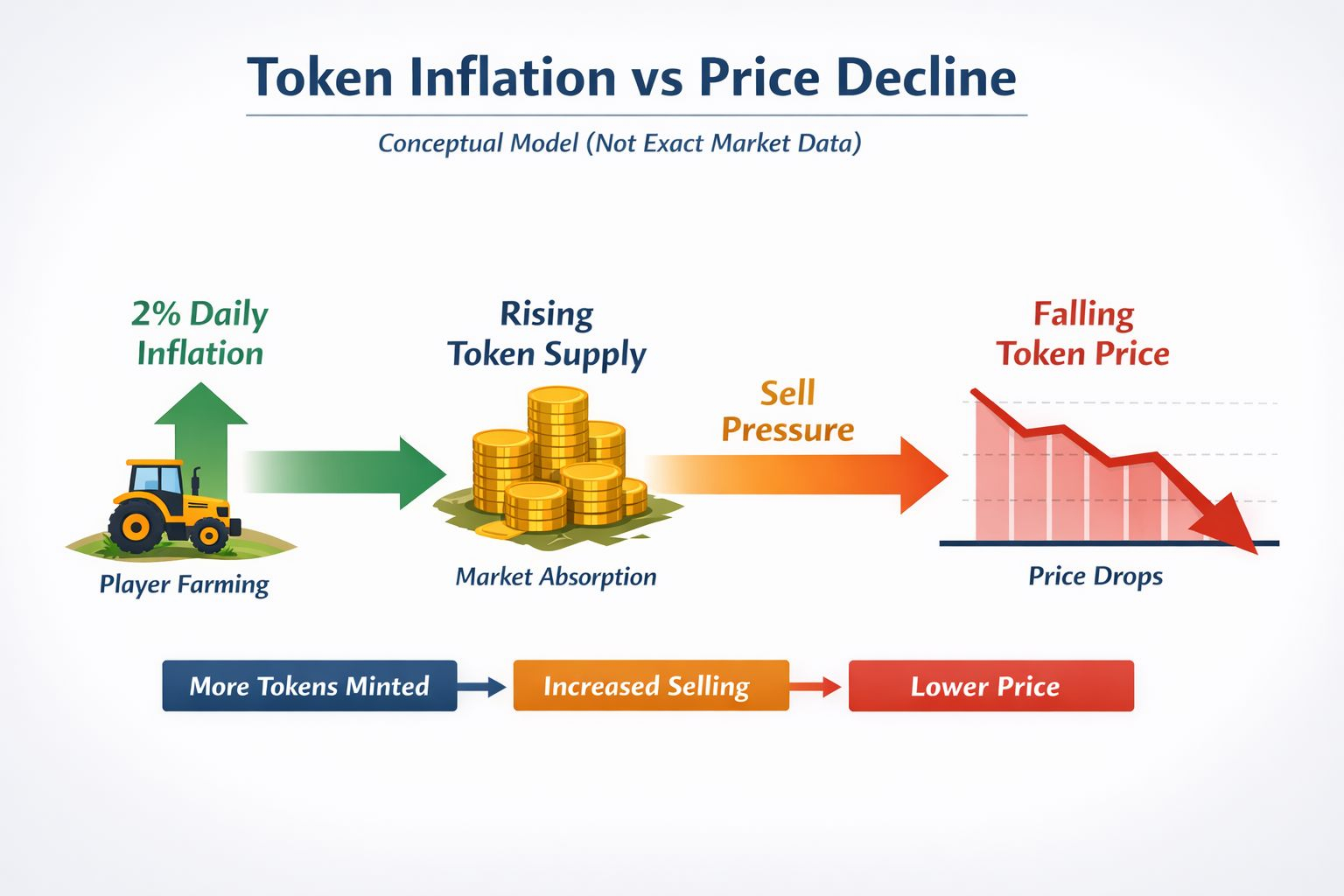
And when people notice the price slipping, what do they do? They sell faster. That’s how the loop breaks. Not suddenly, but slowly. First, fewer people stick around. Then liquidity thins out. Then the chart starts drifting. You’ve seen that chart before.
Pixels seems aware of this, which is why they started shifting away from $BERRY and restructuring the economy. They introduced $PIXEL as the main token and even moved some of the in-game economics off-chain with Coins. They also reduced the ability for players to just farm and dump endlessly. That’s a good move. It shows they’re not ignoring the core issue.
But here’s where I stay careful. Fixing token mechanics doesn’t automatically fix retention. You can slow down inflation, sure. You can redesign rewards. But if players aren’t logging in because they actually enjoy the game, the problem just comes back later in a different form.
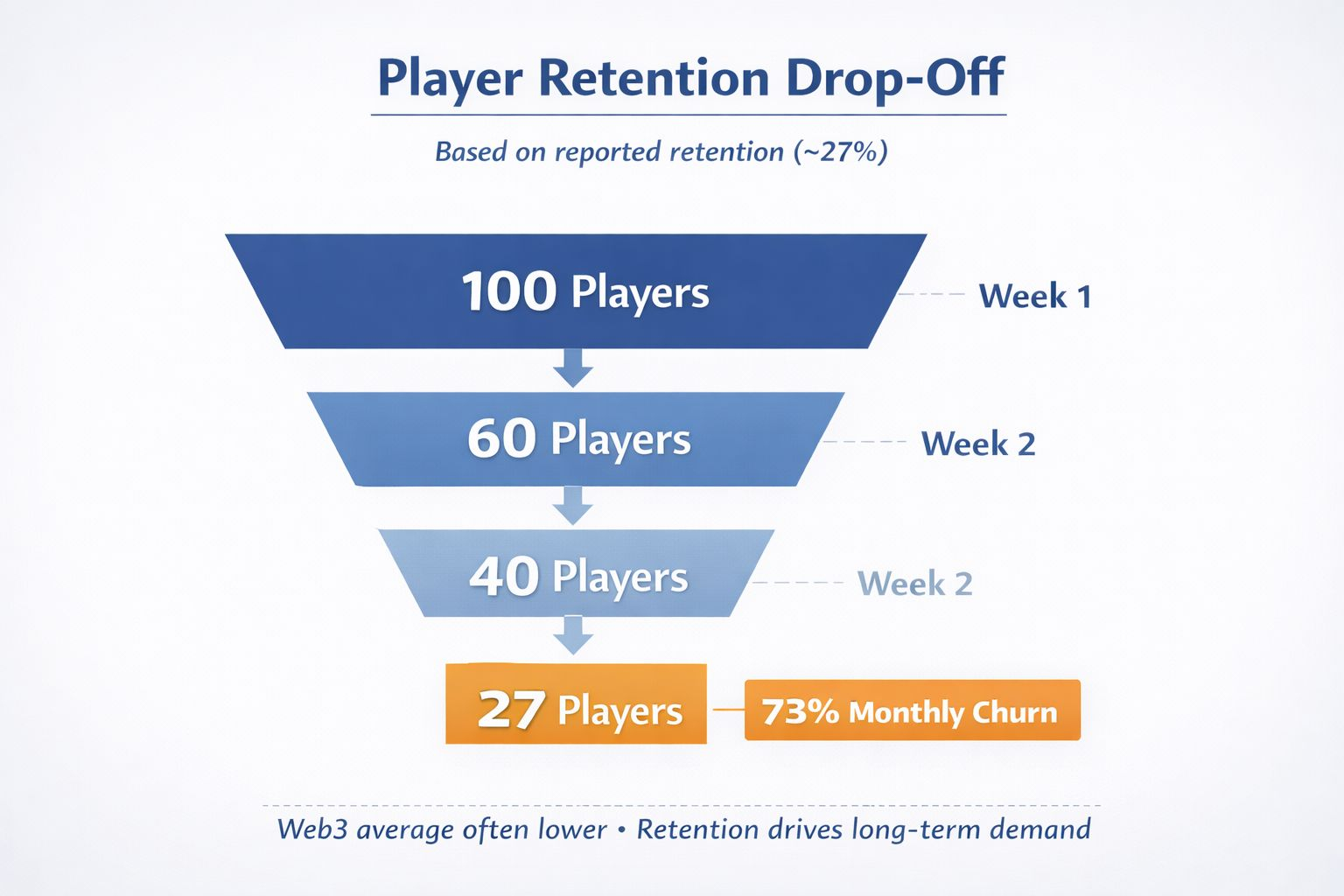
Let’s look at some numbers. At one point, Pixels reported a retention rate around 27% over a monthly period. In Web3 gaming, that’s not bad at all. Honestly, it’s better than most. But think about what that means in practice. Out of 100 players, about 73 are gone within a month. That’s still a heavy drop. So the question becomes, can the remaining 27 carry the ecosystem long term? Or do you constantly need new players coming in to replace the ones leaving?
And that leads to another risk people don’t always talk about. Growth dependency. If a project relies too much on new users to keep things stable, it starts to look a bit like a treadmill. You’re always running, but not really moving forward. The moment growth slows down, everything feels it activity, token demand, market sentiment.
Now, to be fair, Pixels isn’t in a bad spot compared to others. The $PIXEL token has been floating with a market cap somewhere around $25–30 million recently, with billions of tokens already in circulation out of a 5 billion max supply. That tells you something important. A big chunk of supply is already out there. This isn’t one of those early-stage tokens where you can blame future unlocks for everything. At this stage, usage matters more than hype.
So what does all this mean if you’re looking at it like a trader? For me, it comes down to one thing. Are people staying because they want to, or because they’re being paid to?
If Pixels can actually build a loop where players log in without thinking about the token first, then yeah, it has a shot. Not guaranteed, but a real shot. But if the activity is still tied too closely to rewards, then it’s just a more polished version of the same old play-to-earn cycle.
I’ll be honest with you. I don’t hate it. In fact, I think it’s one of the more interesting attempts in this space right now. But I’m not blindly trusting it either. I’d keep watching it, especially how user activity holds up over time without aggressive incentives. Because that’s where the truth always shows up.
So yeah, I’m watching Pixels. Not chasing it. Just watching.