
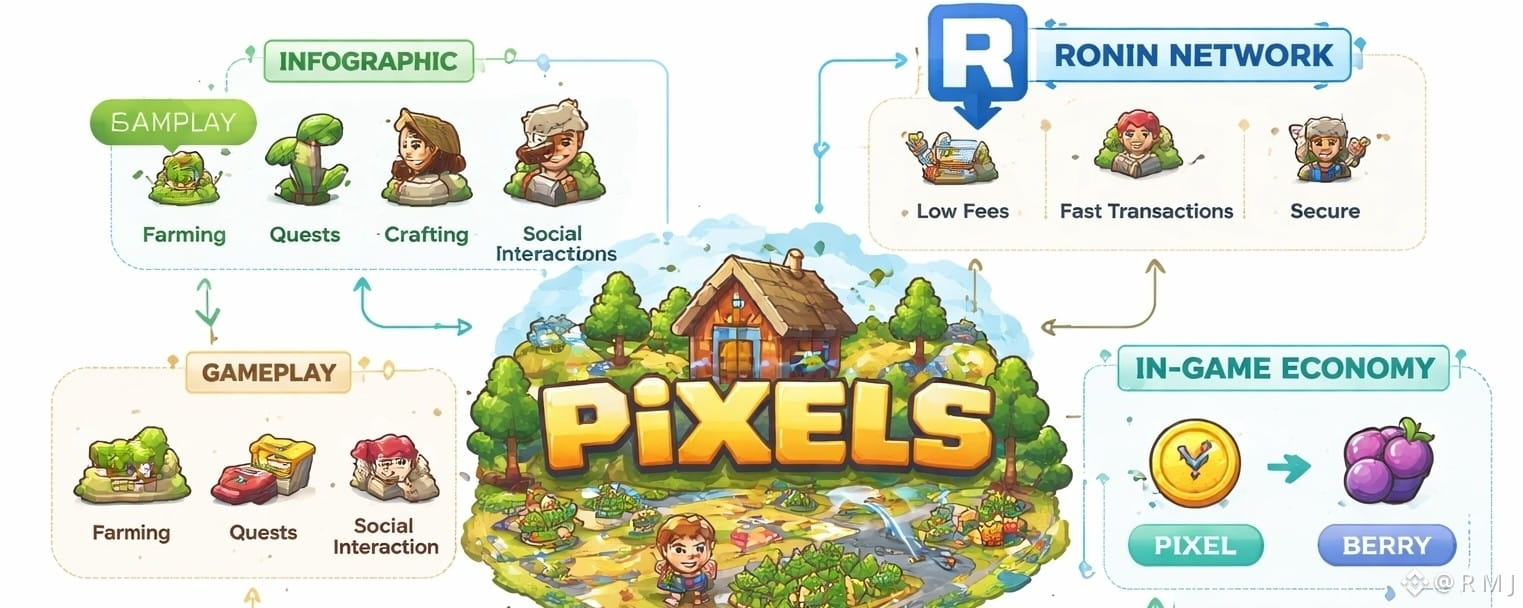
Not because it’s flawless—it isn’t. Not because it has solved digital ownership, token design, or online economies it hasn’t. What makes it worth paying attention to is something more grounded: it feels like a team that recognized a core systems truth early on—weak products don’t get saved by strong infrastructure. That pattern has played out repeatedly. You can have polished tokenomics, marketplaces, chain migrations, wallet integrations, and ambitious roadmaps, but none of that creates a world people actually care about. It only makes failure more elaborate.
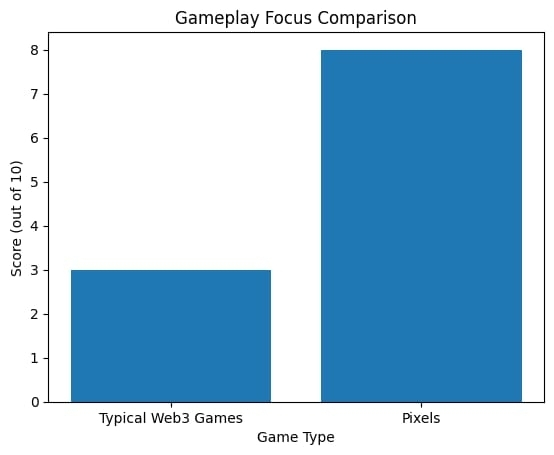
What sets Pixels apart is that it begins with a game loop people instantly understand. Farming. Gathering. Crafting. Moving through a shared space. Interacting with others. Repeating simple actions until they turn into habit. That simplicity might sound unremarkable, but in a space that spent years dressing financial speculation up as gameplay, it’s quietly important.
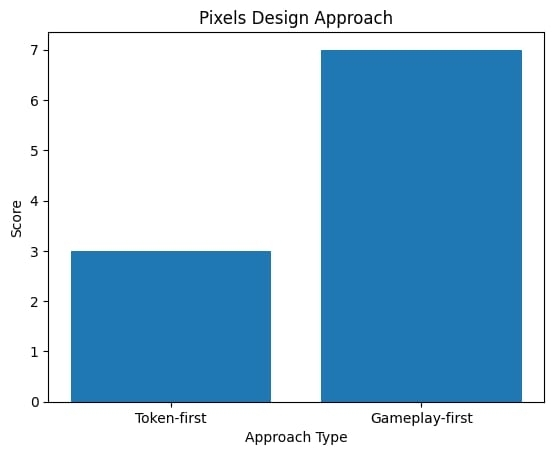
That’s what makes it stand out. The game doesn’t lead with ideology. It doesn’t demand that players care about tokenomics before they care about the experience. Instead, it gives them something to do, somewhere to exist, and just enough structure to make coming back feel natural. From a systems perspective, that order matters. Experience comes first. Infrastructure follows. Markets come last—if they need to exist at all.
Most Web3 projects reversed that sequence.
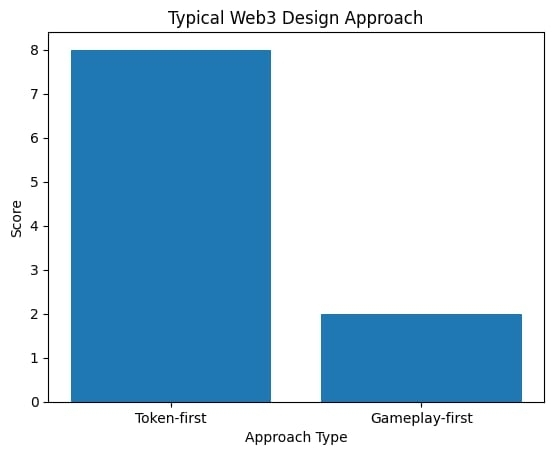
The familiar approach is easy to recognize: start with ownership, introduce scarcity, promise interoperability, layer in incentives, and hope a community forms as a byproduct. It rarely works. What you usually get is a spreadsheet disguised as a game—users arrive for financial reasons, not because the environment holds any real appeal. When rewards decline or token emissions slow, the system empties out just as quickly as it filled.
Pixels, at least from the outside, seems aware of that trap. Its farming, questing, and social mechanics aren’t groundbreaking, but they function in a way that matters. They create a stable loop. And stability is underrated. In any persistent system—whether a game, platform, or collaborative tool—habit isn’t a side effect. It is the product. Durable engagement doesn’t come from promoting infrastructure. It comes from building something intuitive, low-friction, and worth revisiting.
That’s also why its move to Ronin made sense.
Ronin needed to evolve beyond being tied to a single breakout success. Platforms anchored too tightly to one defining moment often accumulate narrative pressure—everything new gets compared to the past, and growth starts to feel constrained. Pixels gave Ronin a different kind of anchor: lighter, more accessible, easier to grasp. A browser-based, socially driven experience that users can understand within seconds.
That isn’t just branding—it’s structural design.
Systems that are easy to understand tend to scale more cleanly. Not necessarily faster, but with fewer points of friction. When the mental model is simple, onboarding becomes easier. When interaction patterns are predictable, the system can support complexity behind the scenes—whether that’s wallets, assets, or transactions in games, or authentication, data layers, and permissions elsewhere. The principle is the same. Users will tolerate sophisticated infrastructure, but only if the surface remains calm. Once the experience becomes noisy or overwhelming, they disengage.
Pixels seems to operate with that awareness—more so than many of its peers.
That doesn’t mean the economics are straightforward. They never are.
The moment a project introduces a public token, it effectively creates a second product. The game becomes one layer, while the market narrative becomes another. They overlap, but they rarely align perfectly. Players want progression, fairness, and continuity. Markets want volatility, liquidity, and timing. Combining both within a single system introduces friction.
Many teams underestimate that tension. Tokens are often framed as extensions of the product, but they frequently reshape it instead.
Pixels has faced that reality as well. Once PIXEL became tradable, the audience expanded beyond players to include speculators, short-term traders, airdrop participants, and automated actors. This isn’t unique—it’s simply what happens when in-game value becomes external and liquid. The challenge is that external markets don’t prioritize balance or player experience; they prioritize tradeability.
That’s where many Web3 games begin to break down.
Internal economies are built around engagement and progression. External economies revolve around timing and extraction. Those incentives don’t naturally align. Over-reward activity and you attract exploitation. Restrict too much and you reduce participation. Open the system completely and automation begins to dominate. These aren’t trivial design problems—they’re structural constraints.
Pixels has had to navigate those same pressures: scale, automation, reward optimization, and distinguishing real engagement from synthetic activity. Any system that attaches measurable value to repeatable actions will be tested. If something can be automated, it will be. If rewards can be optimized, they will be. If metrics can be inflated, they will be. That isn’t pessimism—it’s how systems behave under incentives.
Because of that, headline user metrics alone don’t say much without context. High activity could indicate genuine engagement, or it could reflect large-scale farming behavior. Often, it’s a mix of both. The more relevant question is whether the system is designed with that awareness.
Pixels appears to be.
Its direction suggests a recognition that broad incentives don’t create stable communities—they create traffic. And traffic isn’t the same as sustained use. Long-term engagement comes from loops that remain meaningful even when rewards diminish. That’s a far more difficult problem than distributing tokens, and far less attention-grabbing.
Ownership is another area where Pixels shows a more measured approach, though cautiously so. Digital ownership only matters when the underlying system gives those assets ongoing relevance. Items, land, currencies, cosmetics—none of them gain value simply by existing on-chain. Too often, portability is mistaken for utility.
Pixels works better here because ownership seems tied to participation. Assets matter because the world itself remains active. They influence progression, efficiency, or identity within a system people already engage with. That’s a healthier direction, even if it still carries risk.
Equally important, ownership doesn’t appear to be required for entry. That’s a critical design choice. Systems that demand financial commitment upfront limit their audience immediately. Healthy ecosystems need different levels of participation—casual users, regular players, dedicated participants, traders, collectors. If every path begins with a purchase, the system becomes fragile.
Pixels feels more flexible because it allows those gradients to exist. That flexibility shapes whether a system can develop culture or remain confined as a financial layer.
The social aspect also plays a larger role than it might seem.
Many blockchain-based games technically support multiplayer interaction, yet still feel empty. Shared space doesn’t automatically create community. Real presence comes from repeated interactions, visible routines, and environments where users can exist without constant objectives. That’s difficult to design intentionally.
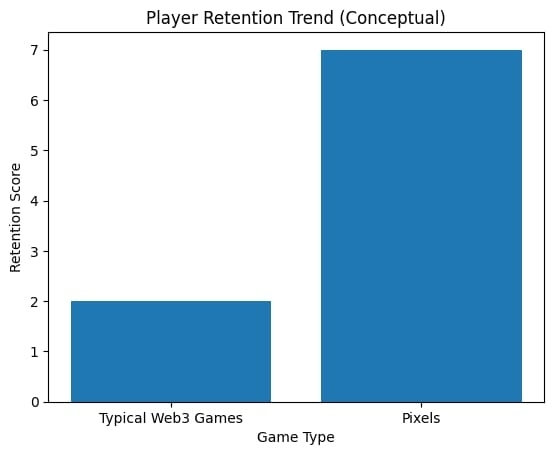
Pixels seems to support that environment. Its visual simplicity, slower pacing, and low-pressure design reduce friction. These aren’t just stylistic decisions—they lower cognitive load and make it easier for users to remain engaged over time. In practical terms, the experience is more forgiving.
That’s why it continues to stand out.
Not because it reinforces common narratives around Web3, but because it challenges them. It suggests that blockchain infrastructure becomes useful only when it stops trying to dominate the experience. When it behaves like infrastructure—quiet, supportive, and largely invisible.
That’s how mature systems operate.
Infrastructure isn’t meant to be the highlight. It’s meant to function reliably in the background. Wallets, asset ownership, transaction systems, identity layers—these are valuable, but only when they support something meaningful. Without that, they don’t strengthen a product—they simply add complexity.
Pixels hasn’t solved these challenges. No Web3 game has.
The space is still balancing competing forces: open economies versus fairness, liquidity versus stability, markets versus design coherence. These tensions aren’t going away. Any system that claims to resolve them completely likely hasn’t been tested long enough.
Even so, it’s more interesting to watch teams that treat infrastructure as a foundation rather than a centerpiece. Pixels seems closer to that approach than most. It isn’t relying on the idea that technology alone guarantees success. Instead, it’s building a world and testing whether the infrastructure beneath it can make that world more resilient, adaptable, and perhaps more player-driven over time.
That’s a more meaningful direction than what much of the industry has pursued.
And in the long run, it’s probably the only question that really matters.
