
Something about $PIXEL (@Pixels ) land feels… too quiet for what it’s supposed to represent.
You’d expect land in a player-owned economy to feel alive, chaotic even. But when I look closer, it behaves more like a controlled surface. Almost sterile. Players come, they farm, they leave. And somehow, value routes back to the landowner as if nothing unpredictable ever happened in between.
That loop is clean. Too clean.
If you strip it down, a PIXEL NFT isn’t just “land.” It’s more like a programmable checkpoint where player activity gets captured and redirected. Every action someone performs on your plot—farming, crafting, interacting—gets partially absorbed and translated into yield. Not randomly. Not socially. Mechanically.
It’s less like owning land… and more like owning a rule.
And that rule only works if behavior keeps flowing through it. That’s where things start getting weird.
Because now ownership isn’t about scarcity or location. It’s about whether you can sustain human attention on your plot. The NFT doesn’t produce anything by itself. It just sits there, waiting for people to pass through it. If they do, it pays. If they don’t, it becomes dead weight.
So the real question isn’t “how valuable is this land?”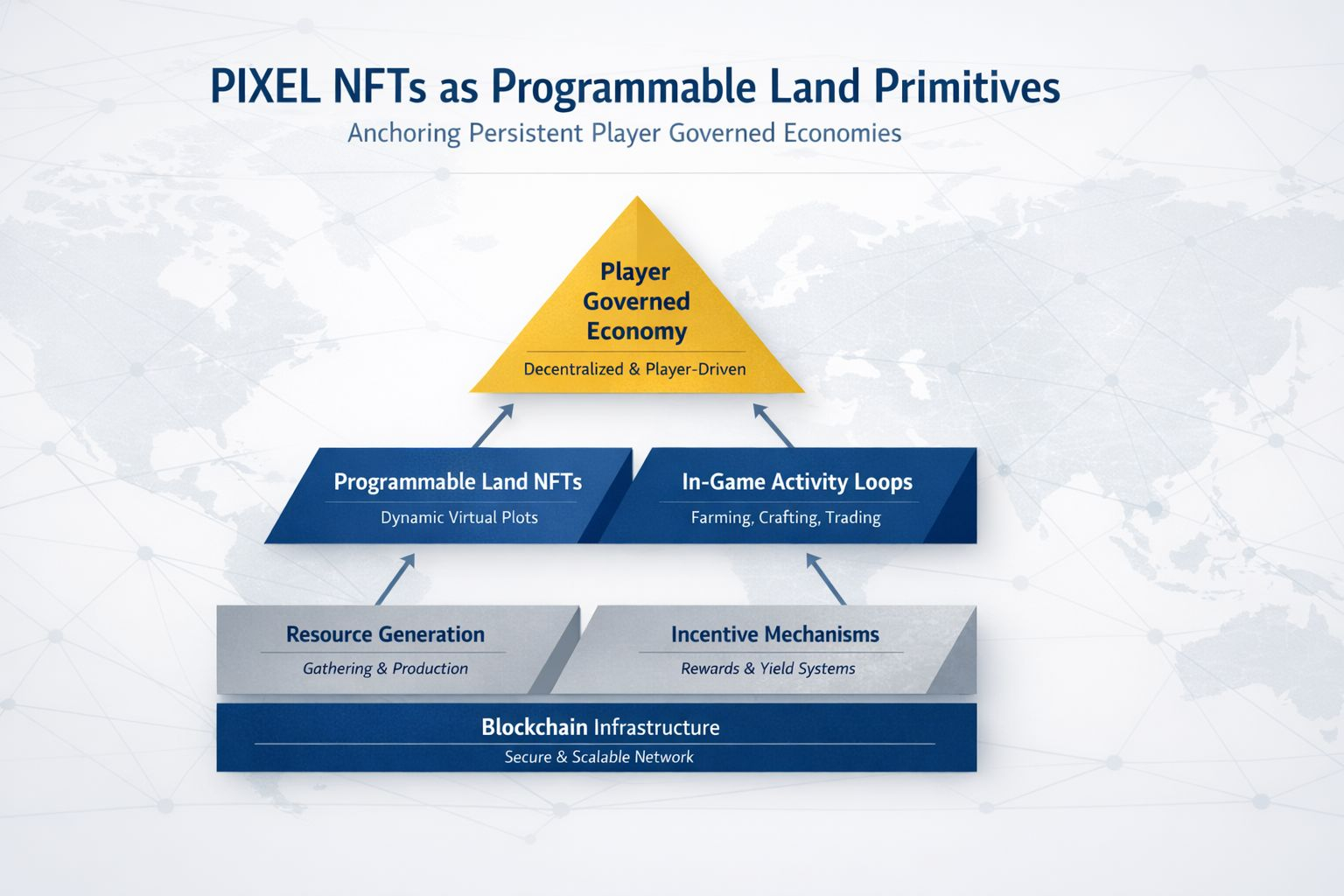
It’s “how do you keep people coming back here?”
That shift matters more than it looks. Because once yield depends on player behavior, the system quietly starts shaping how players behave. You don’t just own land—you start thinking like a host. You optimize layout. You make it efficient. Maybe even predictable. Not because the game tells you to, but because the incentives push you there.
And suddenly, the game stops being a game in certain areas.
It becomes infrastructure. I keep thinking about this part. If enough landowners optimize for maximum throughput—fast farming, low friction, repeatable loops—what happens to exploration? To randomness? To the parts of the game that don’t directly convert into yield?
They start disappearing. Or worse, they become irrelevant.
The system doesn’t explicitly remove them. It just stops rewarding them. That’s the first tension I can’t shake: the same mechanism that creates a player-owned economy also compresses player behavior into narrower patterns. You’re free to play however you want… but only certain behaviors actually matter.
And players notice that fast.
There’s also something else happening beneath this. Something less visible. The land isn’t just capturing activity—it’s standardizing it.
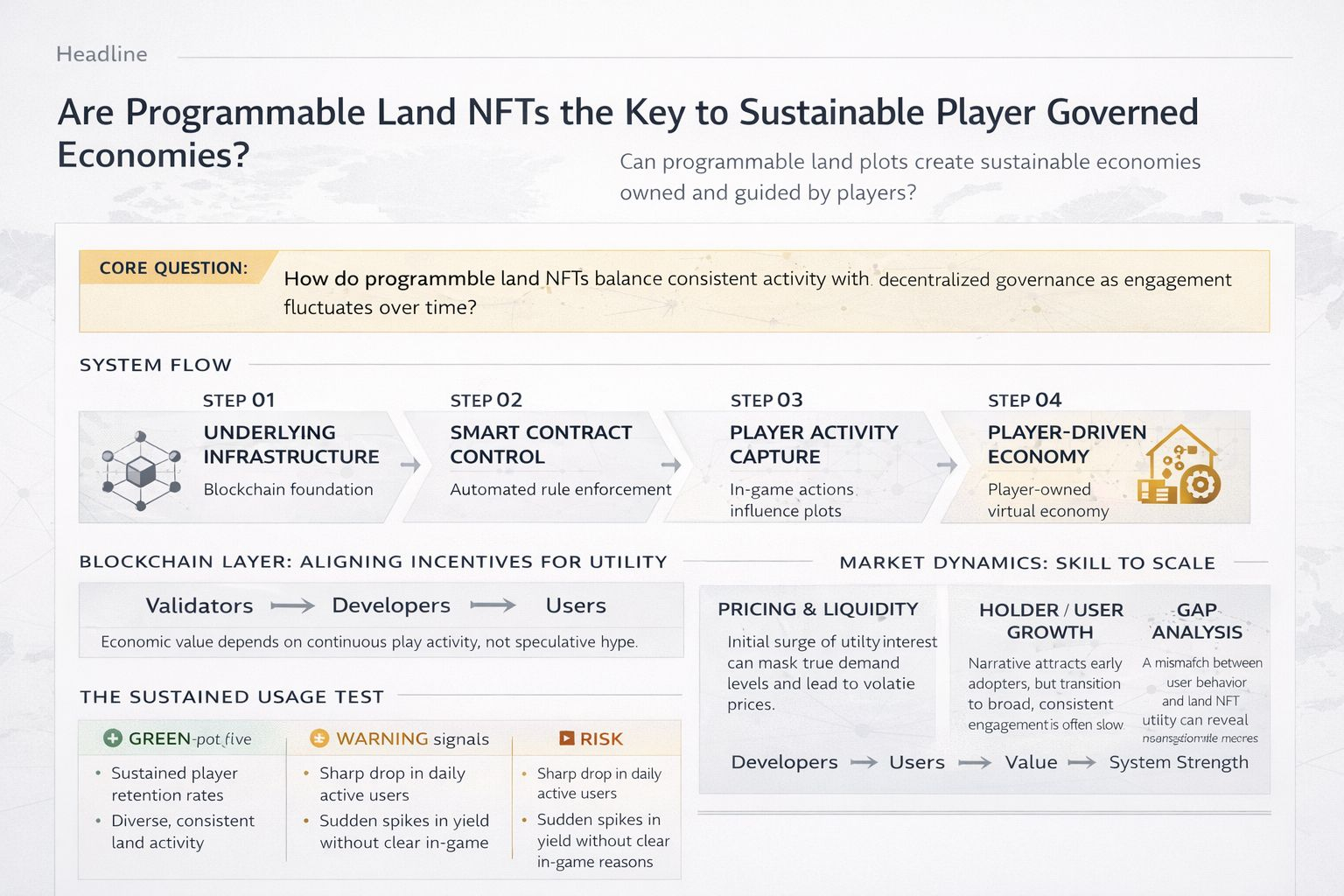
Every player interaction gets flattened into a measurable unit that can be redistributed. Which means the system doesn’t really “care” what players are doing, only that they are doing something that fits the loop. Farming becomes less about the experience and more about maintaining the cycle.
It starts to feel like a spreadsheet wearing a game’s skin.
And here’s the part that messes with me: if the value of land depends on sustained activity, then landowners aren’t just participants in the economy—they’re dependent on it in a very specific way. They need consistent traffic. Not bursts. Not hype. Consistency.
That’s hard. Because players are not consistent.
They churn. They get bored. They move on. So now the entire structure leans on something unstable: human attention. And not just attention, but repeated, predictable engagement.
Which raises another uncomfortable question—does the system eventually start over-incentivizing behavior just to keep itself alive?
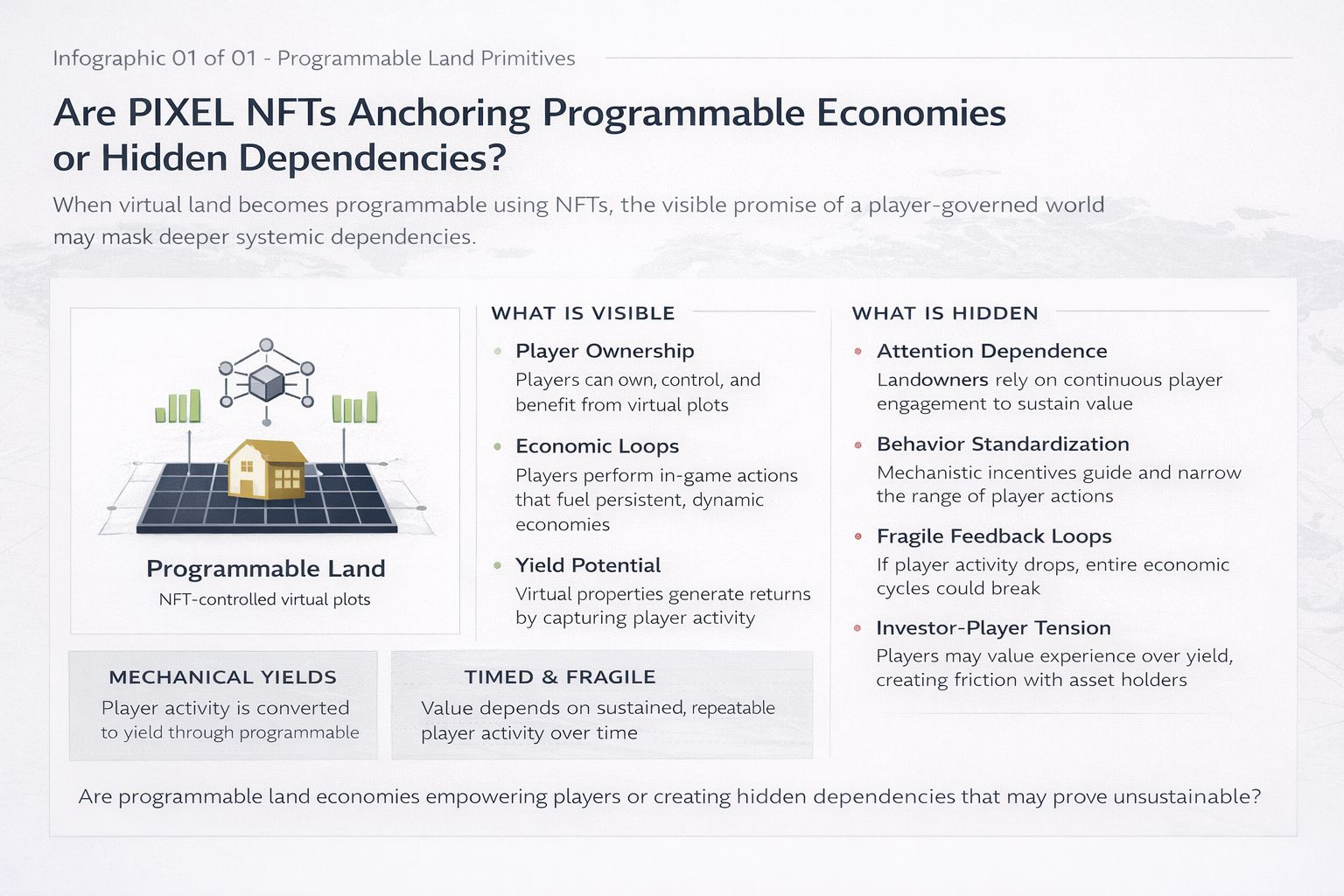
Because if activity slows down, yields drop. When yields drop, land becomes less attractive. When land becomes less attractive, fewer players engage. And that feedback loop can reverse just as cleanly as it works forward.
There’s no built-in chaos to catch it. Everything depends on flow. And flow depends on people choosing to stay.
I also can’t ignore the subtle psychological shift this creates. When players know their actions are feeding into someone else’s asset, even indirectly, it changes how those actions feel. It’s not purely self-contained anymore. There’s always a layer of extraction in the background.
Some players won’t care. Some might even like the structure.
But others? They might start asking why they’re optimizing someone else’s land instead of their own experience.
That question doesn’t break the system immediately. But it sits there.
Quietly. And the longer I think about it, the more #pixel land feels less like ownership and more like responsibility without control. You can set the rules, but you can’t force behavior. You can optimize the surface, but you can’t guarantee flow.
So what are you really holding? An asset… or a dependency?
I’m not sure yet.
