

One token, many validators sounds abstract until you realize it’s really about who gets to decide what matters. When I first looked at @Pixels staking model, what struck me wasn’t the mechanics, it was the quiet shift in power underneath it. Instead of validators confirming transactions, you have players and capital deciding which games deserve attention. That’s not just infrastructure, that’s taste, incentives, and direction all wrapped together.
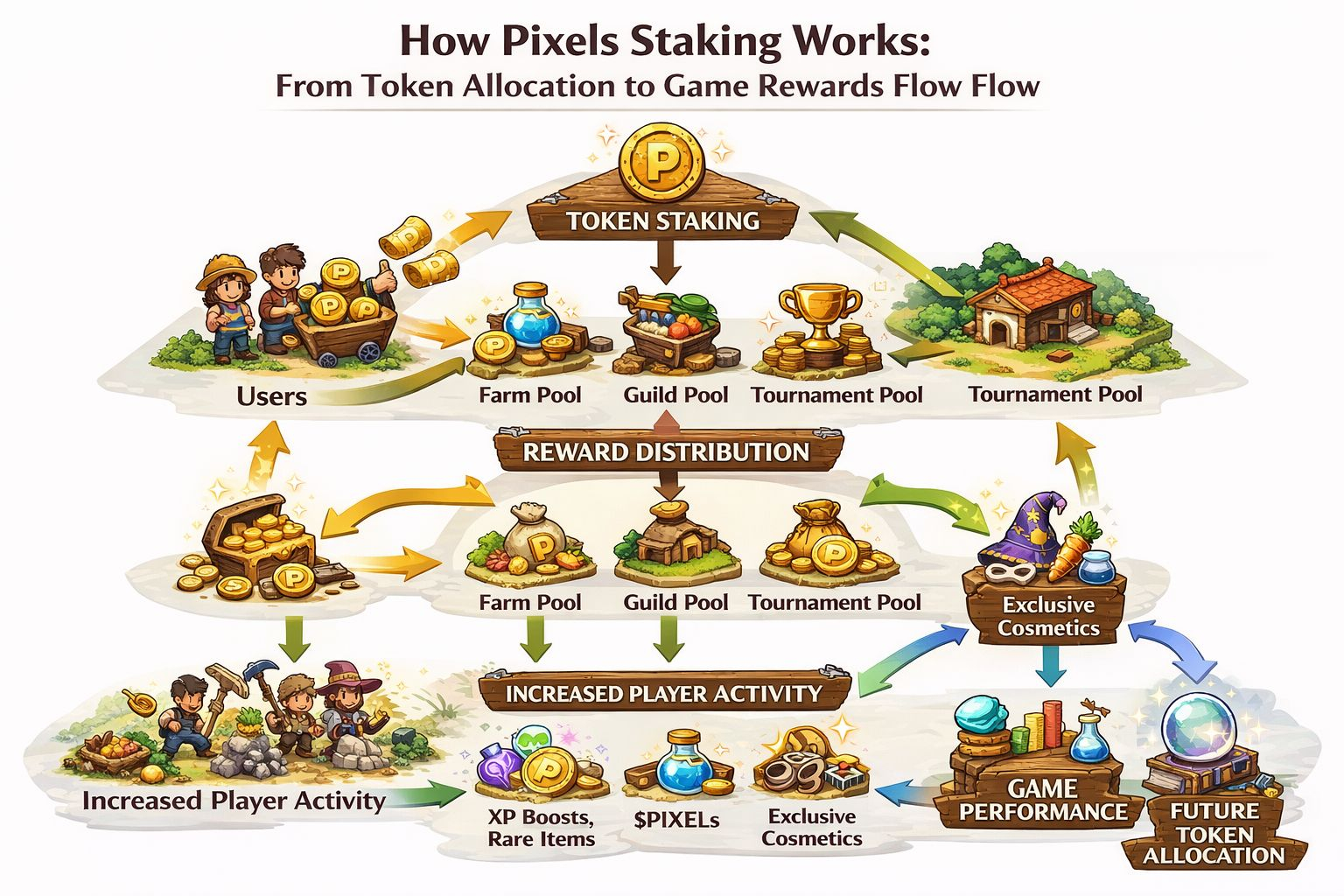
On the surface, staking into a game pool looks familiar. You lock tokens, you earn rewards. But underneath, the rewards aren’t just emissions pulled from a fixed schedule. They reflect how well a game performs inside the ecosystem. If a pool yields, say, 12% over a cycle while another sits closer to 4%, that gap isn’t random. It’s a signal. It tells you where players are spending time, where developers are shipping updates, where engagement is actually happening.
Understanding that helps explain why this feels different from traditional proof of stake. In most systems, validators secure the chain and earn based on uptime and stake size. Here, your allocation is closer to a bet on product market fit. You’re not just securing a network, you’re underwriting a game’s ability to hold attention. That adds texture to the idea of yield. It’s no longer just passive income, it’s a reflection of cultural gravity inside the ecosystem.
That shift creates another effect. Developers now compete not only for players, but for stake. If a game can attract 5% of total staked tokens, that share directly influences how many resources and incentives it receives. More stake means more visibility, more rewards to distribute, and more reasons for players to stay. It becomes a feedback loop. Good games attract stake, stake amplifies rewards, rewards attract more players, and the cycle continues.
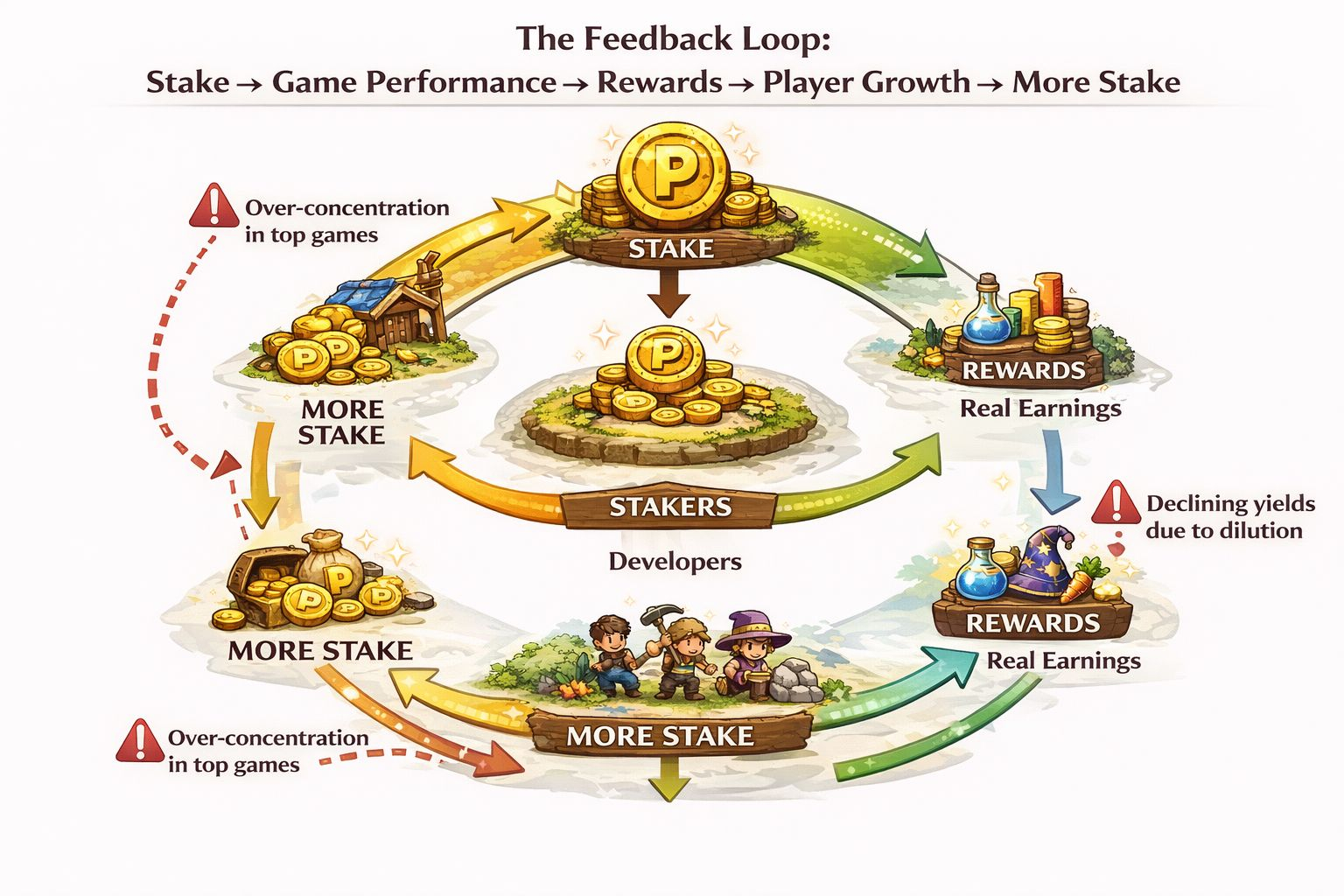
But loops like that cut both ways. If early attention clusters too heavily around a few titles, smaller or newer games may struggle to break through. Diversification is the obvious answer, and Pixels leans into that by encouraging users to spread stake across multiple pools. Still, if 60% of total stake ends up concentrated in the top three games, which is a pattern we’ve seen in other ecosystems, then the long tail becomes harder to sustain. The system rewards conviction, but it also risks reinforcing early winners.
Meanwhile, the broader market context matters. Right now, capital is rotating back into gaming tokens, with some segments seeing 20% to 30% increases over the past month. That momentum spills into ecosystems like Pixels. Higher token prices mean higher nominal rewards, which draws in more stakers. But if those price gains aren’t matched by actual player growth, the foundation can feel thin. You get yield chasing yield, rather than yield backed by usage.
What I find interesting is how this model ties security to usefulness. In a typical blockchain, security is measured by how expensive it is to attack the network. Here, security also depends on whether games are worth supporting. If a game stops delivering value, stake can move. That mobility acts as a kind of discipline. It forces developers to keep earning attention, not just launch and coast.
Of course, there’s risk in that fluidity. Rapid shifts in stake can destabilize smaller games, especially if rewards drop sharply from one cycle to the next. A pool yielding 10% might fall to 3% if stake doubles without a matching increase in performance. For participants, that means returns are less predictable. You’re managing exposure more like a portfolio than a savings account.
What this reveals, if you zoom out, is a broader pattern in crypto. Systems are moving away from abstract security toward models where value comes from actual use. Whether it’s games, social platforms, or creator economies, the question is no longer just “is the network safe” but “is the network alive.” Pixels is one of the clearer examples of that shift.
If this holds, staking stops being a background activity and becomes a form of participation. You’re not just locking tokens, you’re shaping which experiences get built, funded, and sustained. That’s a heavier role than most people are used to, and it comes with more responsibility.
The interesting part is that the validator didn’t disappear. It just changed form. It’s now the collective judgment of players and stakers, constantly updating, never fixed, and always tied to what actually holds attention.
