
At first, @Pixels felt very simple to me. A social casual Web3 game on Ronin, focused on farming, exploration, and creation. Nothing too complex. Just log in, plant crops, walk around, interact with others, and relax. It had that light, easy vibe—something you don’t have to think too much about.
And honestly, that’s exactly why I liked it.
But after spending more time in it, I started noticing small things. Not big updates or obvious changes—just patterns. The way I played didn’t feel as random anymore. The activities I focused on started showing up more often. The longer I stayed, the more the experience seemed to adjust around me.
At first, I ignored it.
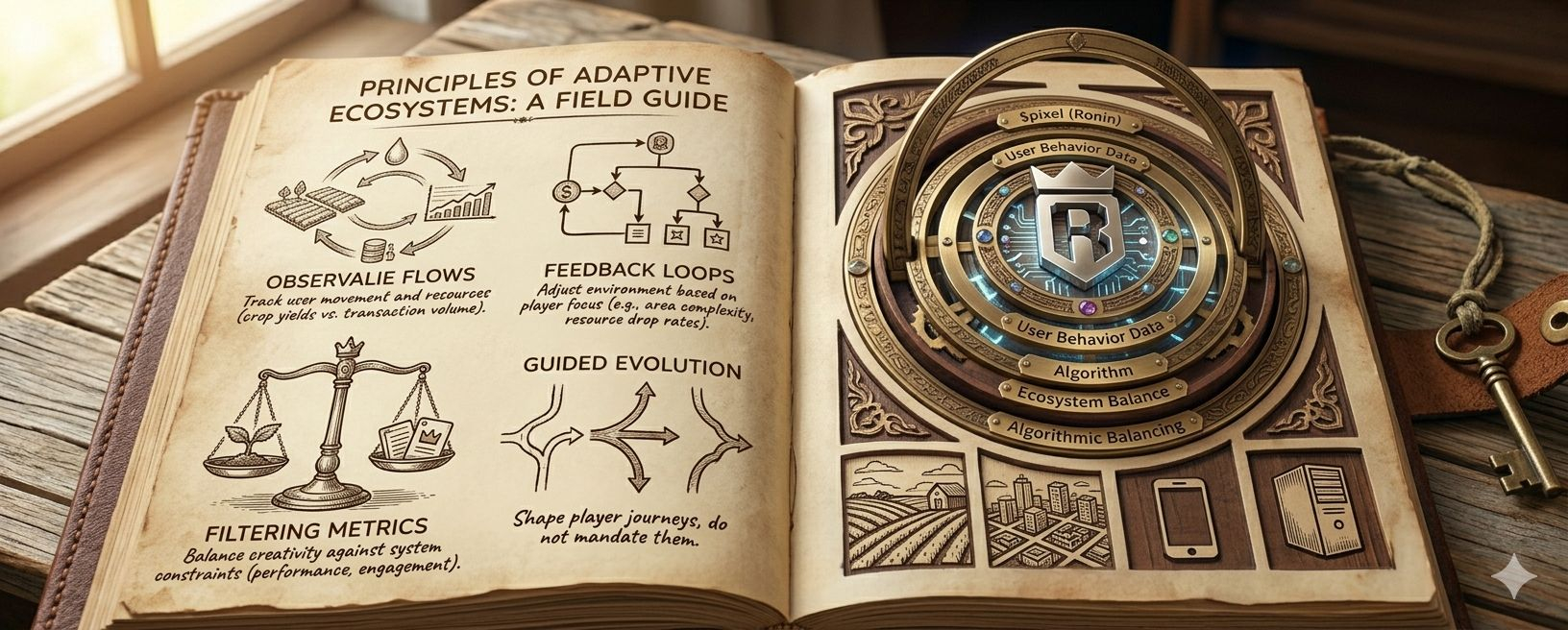
I thought maybe I was just getting used to the game. But the feeling didn’t go away. If anything, it became clearer. It started to feel like the game wasn’t just running in the background—it was responding. Quietly observing how I play… and then shaping what I see next.
Not forcing anything. Just guiding.
That’s when my perspective changed.
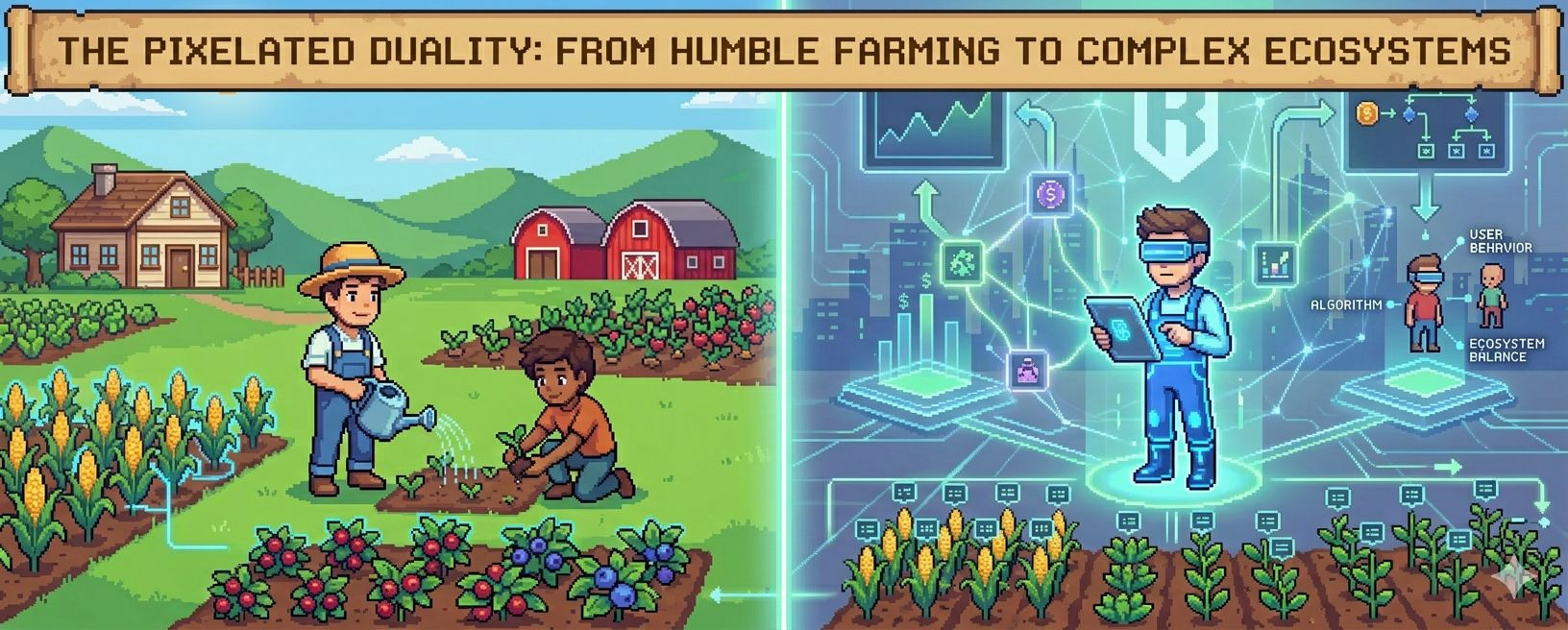
I stopped looking at @Pixels as just a farming game and started seeing it as a system. A system where every action matters, not just for progress, but for how the experience evolves over time. The loop wasn’t just play and repeat anymore. It became something more alive—play, respond, adjust, and come back slightly different the next time.
Even the idea of expansion started to feel different to me.
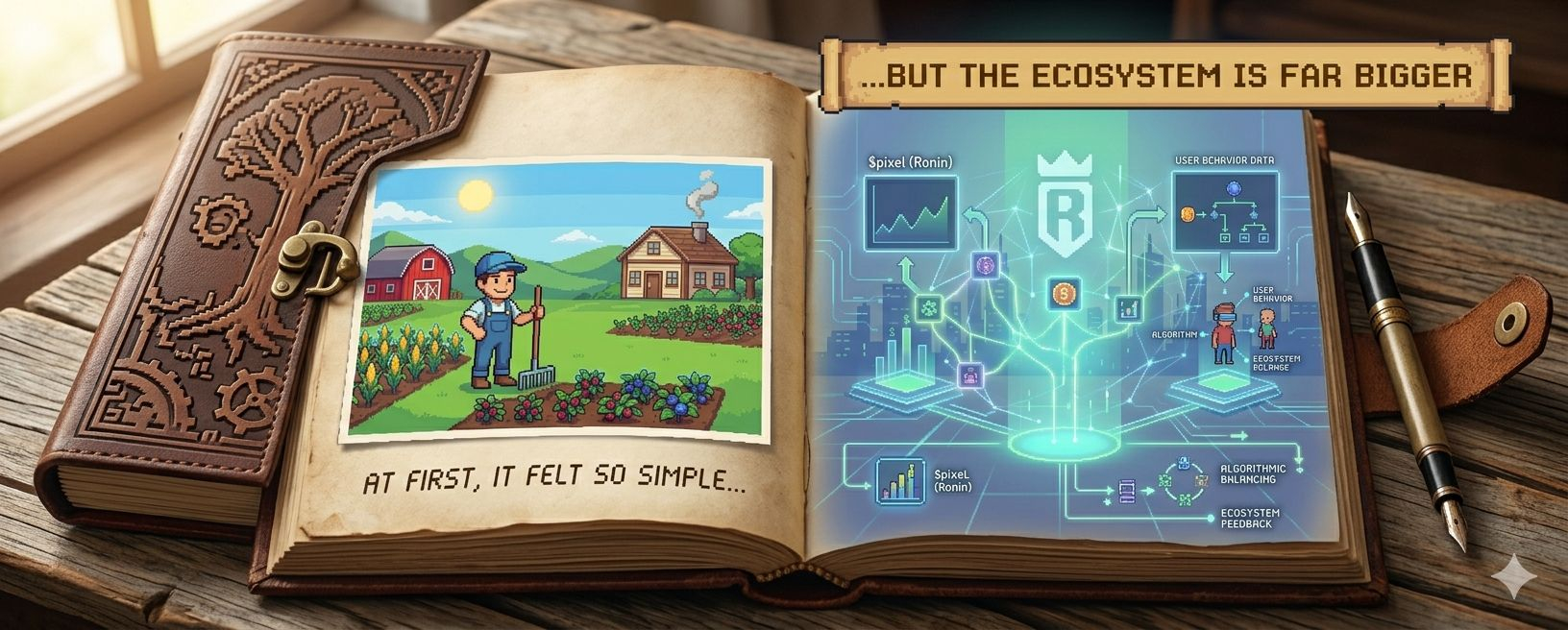
When I heard about mobile, I didn’t just think about convenience. I started thinking about scale. It felt like they weren’t only trying to reach more players—they were building something that could handle a much larger environment without breaking. A system where thousands, maybe millions, could exist at the same time while everything still stays balanced.
That’s not just game design anymore.
That’s something bigger.
Then there’s the economy side, which changes everything in a subtle way. When something like $pixel is part of the experience, your mindset naturally shifts. You don’t just play for fun—you become aware of your actions. You start thinking about what works, what doesn’t, and how your decisions connect to outcomes.
So the loop becomes clearer:
You play → you earn → you adjust → and then you play again.
But each time, it feels slightly different. Slightly more intentional.
And then comes the part that really made me pause—the ecosystem around it.
Not every game can just join this space. There are expectations. Standards. A need to prove that a game can perform, keep users engaged, and survive within this system. On one side, it makes sense. It protects the ecosystem, keeps quality high, and helps serious developers build something sustainable.
But on the other side, it quietly shapes creativity.
Because when there are rules, people design around those rules.
And over time, that can change what kind of games get built. Some ideas will naturally fit. Others won’t even get the chance. The system starts filtering—not in an obvious way, but slowly, over time.
That’s where I started thinking differently.
Because one of the things I’ve always loved about games is the randomness. The unexpected ways people play. The freedom to explore without thinking about outcomes. The moments that just happen without being designed.
But here, it feels like that randomness still exists… just within limits.
Not fully controlled, but definitely guided.
You can still play your way—but certain ways seem to work better than others. And over time, you naturally move toward those patterns, even without realizing it.
Maybe that’s necessary.
Maybe systems like this need structure to grow. Maybe chaos doesn’t scale when too many people are involved. Maybe balance requires a bit of control.
I understand that.
But still, I can’t ignore the feeling.
It doesn’t feel like I’m just playing a game anymore.
It feels like I’m part of something that is constantly observing, learning, and quietly influencing how I play. Something that evolves with its players, but also shapes them at the same time.
And maybe that’s not a bad thing.
Maybe this is just the next step in gaming.
Or maybe it’s the beginning of something we don’t fully understand yet.
But one thing is clear to me now—