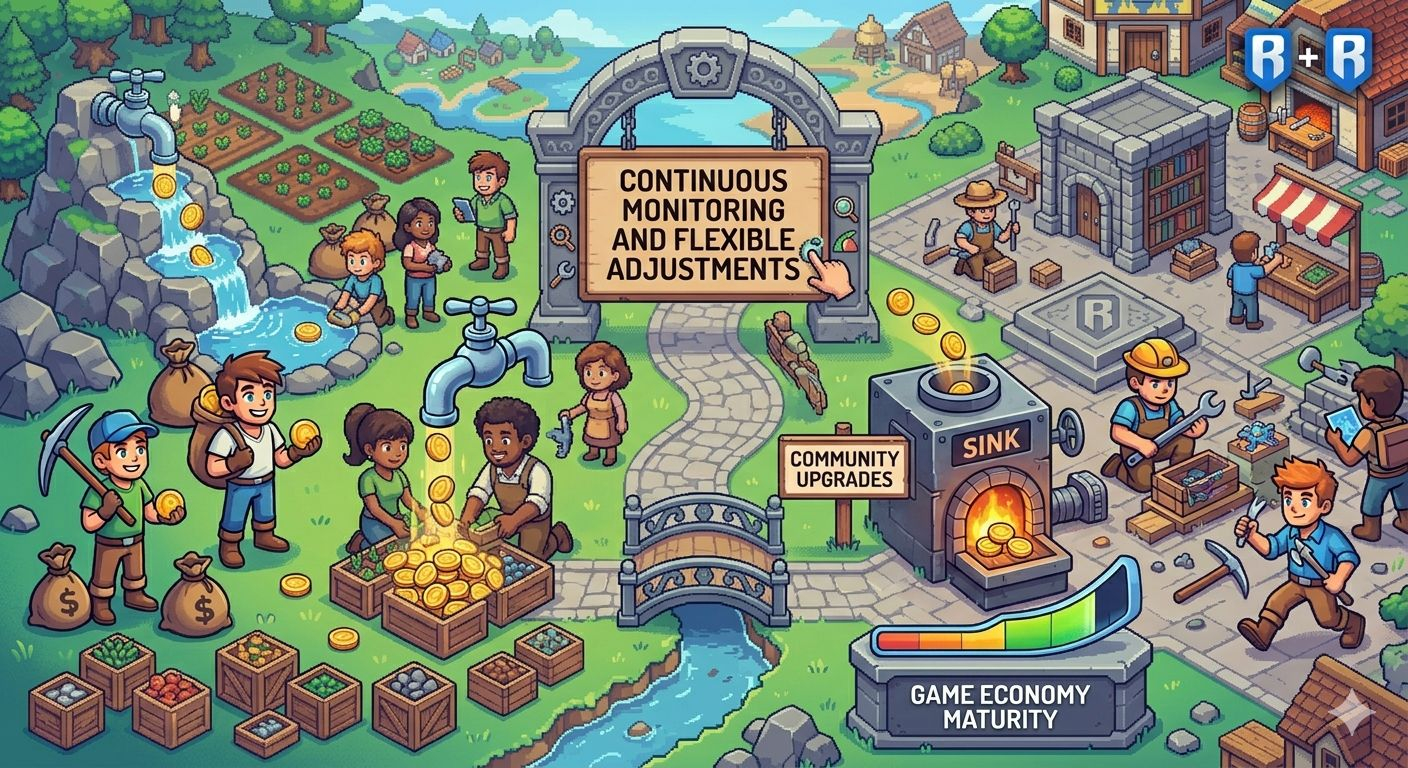
When I first heard a game economy described in terms of “sinks and faucets,” it seemed like an unnecessary complication. Over time, it became clear that it’s actually one of the most practical ways to understand how these systems work.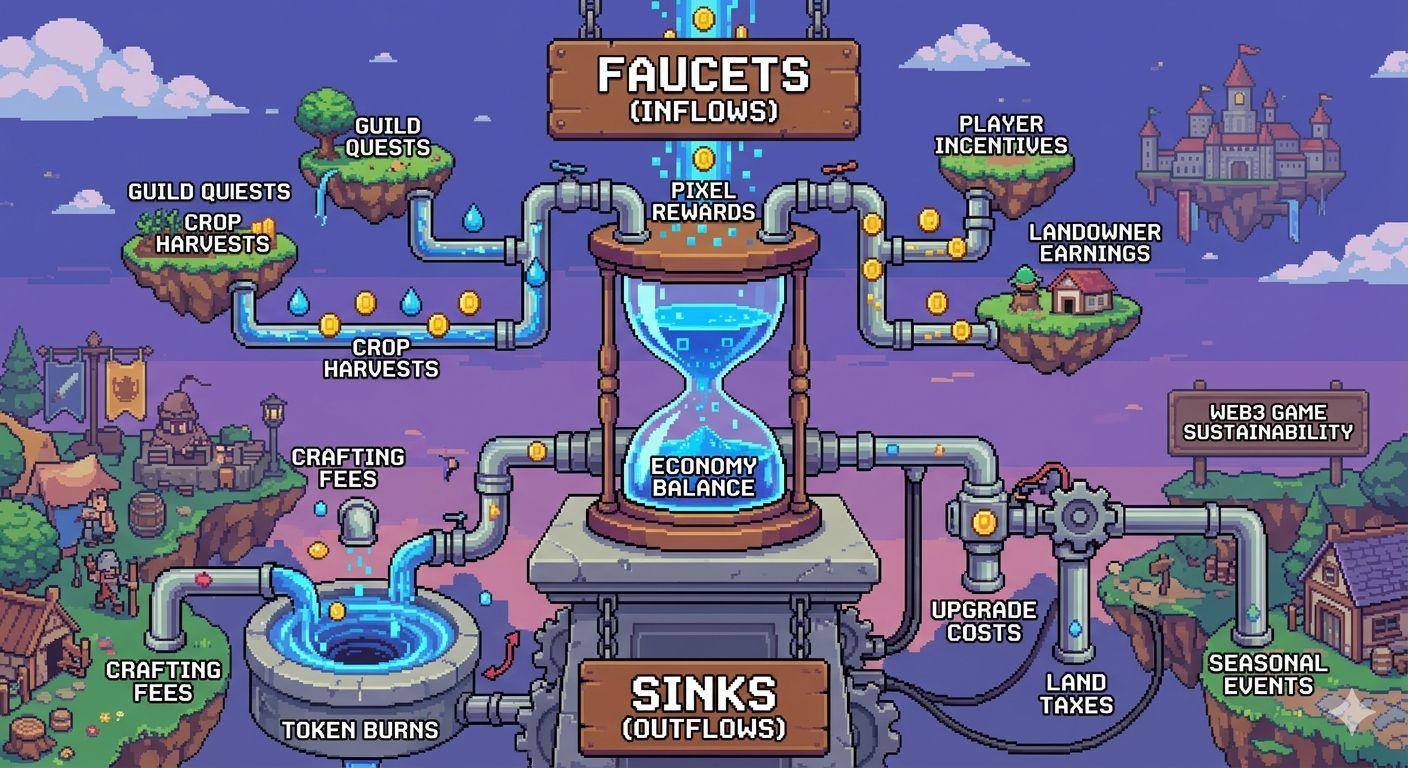
At its core, this model explains why many Web3 game economies struggle while a few manage to sustain themselves. Faucets are all the points where tokens or resources enter the ecosystem—PIXEL rewards from quests, crops producing tradable outputs, and incentives tied to player activity. Sinks are the mechanisms through which value leaves the system, such as upgrade costs, crafting fees, land taxes, and token burns. A stable economy depends on both operating in balance. Excessive faucets create inflation and weaken reward value, while too many sinks can frustrate players and reduce participation. Maintaining this balance is not a one-time task; it requires continuous adjustment as player numbers and market conditions evolve.
Pixels appears to be designed with this balance in mind. Unlike many projects that prioritized reward distribution and introduced weak sinks later, Pixels integrates both elements from the start. The PIXEL token moves into the system through gameplay and exits through upgrades, crafting systems, and burn mechanisms. In-game resources follow a similar cycle, which reflects a deliberate and structured economic design.
The challenge, however, lies in the fine-tuning of this system. This is where the analysis becomes less certain.
Since its launch, Pixels has experienced noticeable shifts in its player base. During the pre-token points campaign, user activity was high, supporting strong flows across both faucets and sinks. After the token launch, a portion of speculative users exited, changing the overall dynamics. With fewer players, both resource generation and spending naturally decline. The key concern is whether the balance between these two forces remained intact during this transition. Without access to detailed data, it is difficult to assess this with confidence.
The land economy introduces an additional layer that is both interesting and somewhat complex. Landowners earn a share from players who farm on their land, which functions as a faucet for them. For players without land, this acts more like a sink, as part of their earnings is redirected. This creates a two-tier structure where economic outcomes depend significantly on ownership status. It mirrors real-world economic patterns, which can be interpreted as either a strength or a potential drawback.
Seasonal events and limited-time activities serve as temporary sinks, removing resources during periods of increased engagement. This approach is widely used and generally effective. It creates urgency, encourages spending, and avoids long-term disruption to the core economy. However, over-reliance on such event-driven mechanisms could signal underlying imbalances in the regular system.
No live game economy is perfectly calibrated from the beginning. What matters is how actively the system is monitored and adjusted. Pixels has already shown flexibility—for example, through its migration to Ronin, which reduced transaction friction and made economic participation more accessible. This suggests a willingness to refine the system when needed.
Ultimately, Pixels faces the same fundamental challenge seen across all play-to-earn ecosystems. Players focused on earning prefer a system where faucets consistently outweigh sinks. In contrast, players focused on gameplay expect sinks to create meaning and value for their rewards. These opposing expectations create an inherent tension within the system.
This is not a problem that has been fully solved by any project so far. However, Pixels appears to be approaching it with more awareness and effort than most.