



In most blockchain ecosystems, user behavior is driven by a clear motive optimize returns within the shortest possible timeframe. Environments designed around this principle tend to encourage rapid entry and equally rapid exit.
What stands out when analyzing @Pixels is a deviation from that pattern. The defining signal is not accelerated user growth, but sustained presence. Participants are not merely passing through the system; they are embedding themselves within it. That shift reflects a fundamentally different design approach.
Operating on the Ronin Network, $PIXEL benefits from an infrastructure that reduces friction at the interaction level. This allows engagement to feel seamless, removing the urgency typically associated with transactional ecosystems. As a result, user behavior transitions from opportunistic to routine.
The core mechanics—farming, exploration, and creation—appear simple in isolation, yet their structure is deliberately interconnected. Each action reinforces the next, forming a continuous loop that prioritizes retention over extraction. Over time, this loop becomes the central engine of engagement.
From an economic perspective, this introduces a distinct value dynamic. Rather than depending on sporadic demand surges, the system derives strength from consistent internal activity. The relevance of $PIXEL is therefore tied more to sustained participation than to short-term speculation.
That said, this framework is not without risk. Its stability is closely linked to user retention. Any disruption in behavioral patterns could weaken the system’s balance, as casual ecosystems are particularly sensitive to shifts in attention.
If maintained, however, Pixels may represent an alternative trajectory for Web3—one where durability is achieved through consistency rather than volatility.
This content is for informational purposes only and not financial advice.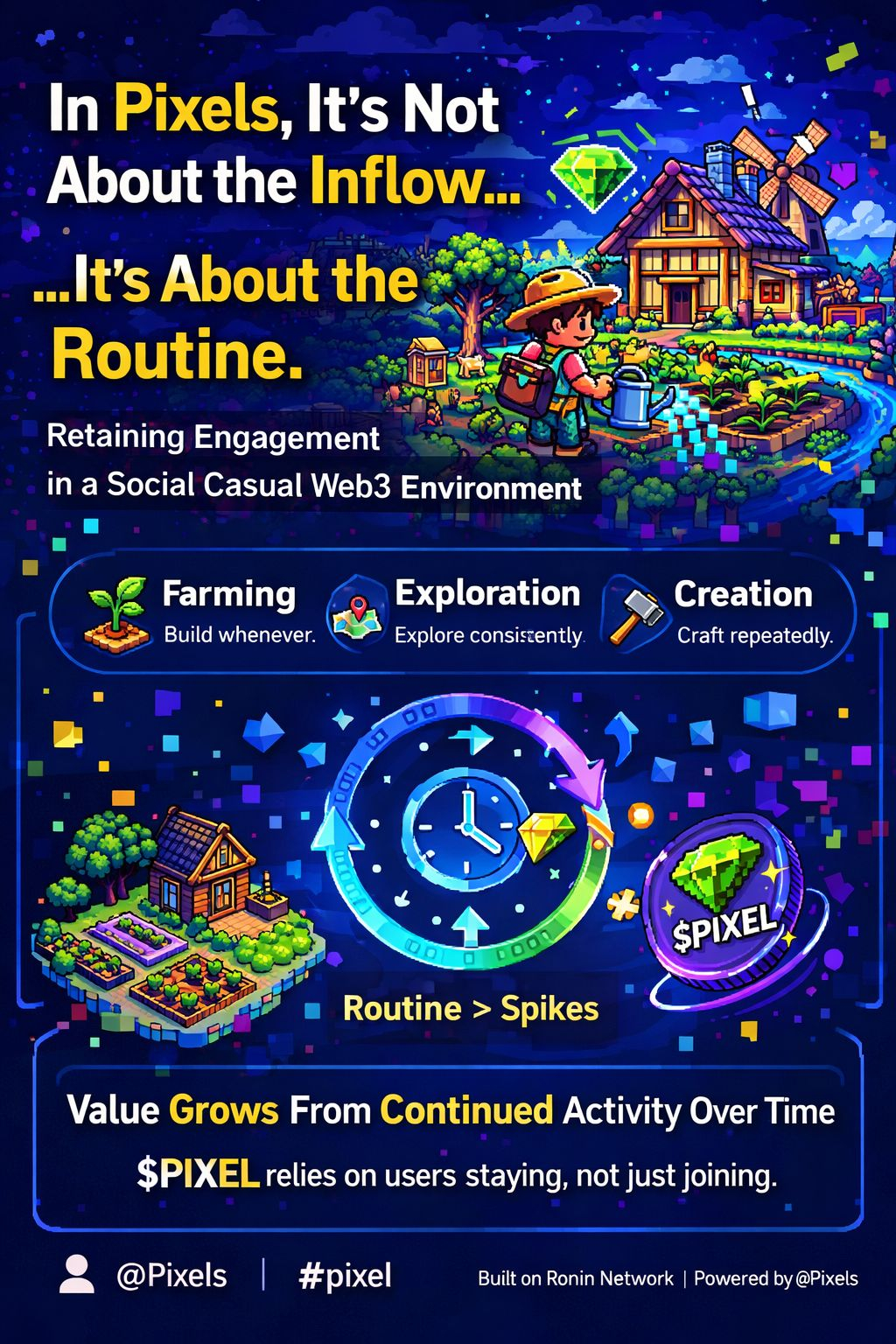
#pixel $PIXEL @Pixels