
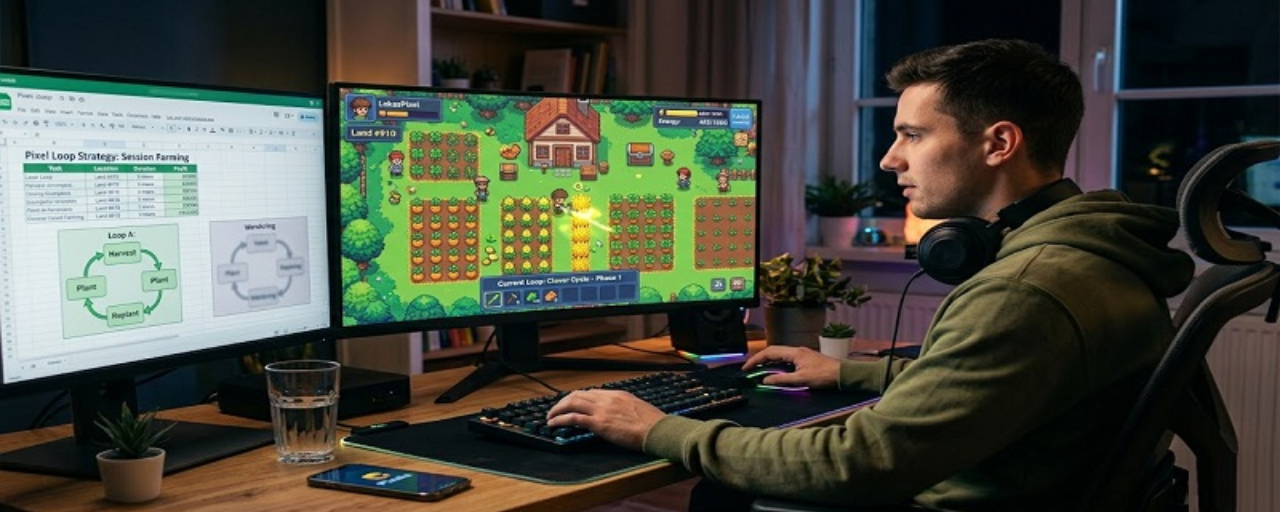
I noticed something about how I spend time in @Pixels . It’s not really about how much time I have, but how I use the small gaps between actions.
At first, I played it like any other farming game. Log in, plant, wait, come back later. It felt simple. Maybe too simple. But after a while, I started seeing a pattern in how time slips away inside the game.
There’s always something you could be doing.
The tricky part is deciding what actually matters.
In #Pixels , time isn’t just real-world time. It’s also energy, movement, attention. Walking across land, choosing which crops to plant, deciding whether to gather or craft. Each small decision stacks up.
I might be wrong, but it feels like most players lose time not because they’re inactive, but because they’re scattered.
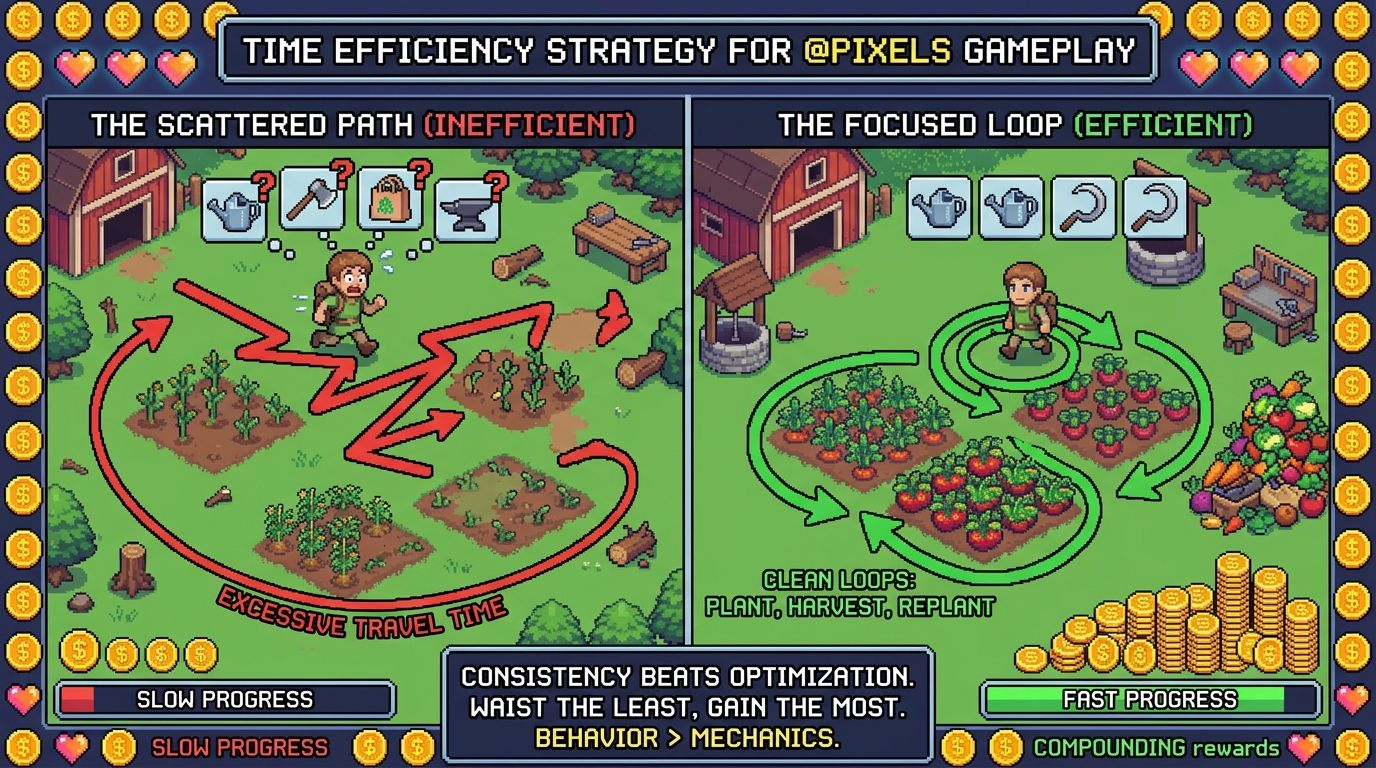
One minute farming. Next minute checking the market. Then wandering around without a clear purpose.
And suddenly, a session passes without much progress.
What changed things for me was thinking in loops instead of tasks.
Instead of asking “what should I do now,” I started asking “what cycle am I in?”
For example, if I’m focusing on farming, I stick to it fully for that session. Planting, harvesting, replanting. No distractions. No unnecessary movement. Just a clean loop.
It sounds obvious, but it actually changes how the game feels.
Less friction.
Less mental switching.
More output from the same amount of time.
The same applies when I shift to resource gathering or trading. I don’t mix them anymore. Mixing sounds efficient, but in reality it breaks momentum.
And momentum matters more than people think in a game like this.
Especially when $PIXEL rewards are tied to consistent activity rather than random bursts.
Another thing I started noticing is how travel time quietly eats into everything.
Walking across land feels small in the moment. But over time, it adds up. A lot.
So positioning becomes part of time strategy.
Where you log out.
Where you return.
Where your routine starts.
It’s not something the game tells you, but it becomes obvious once you pay attention.
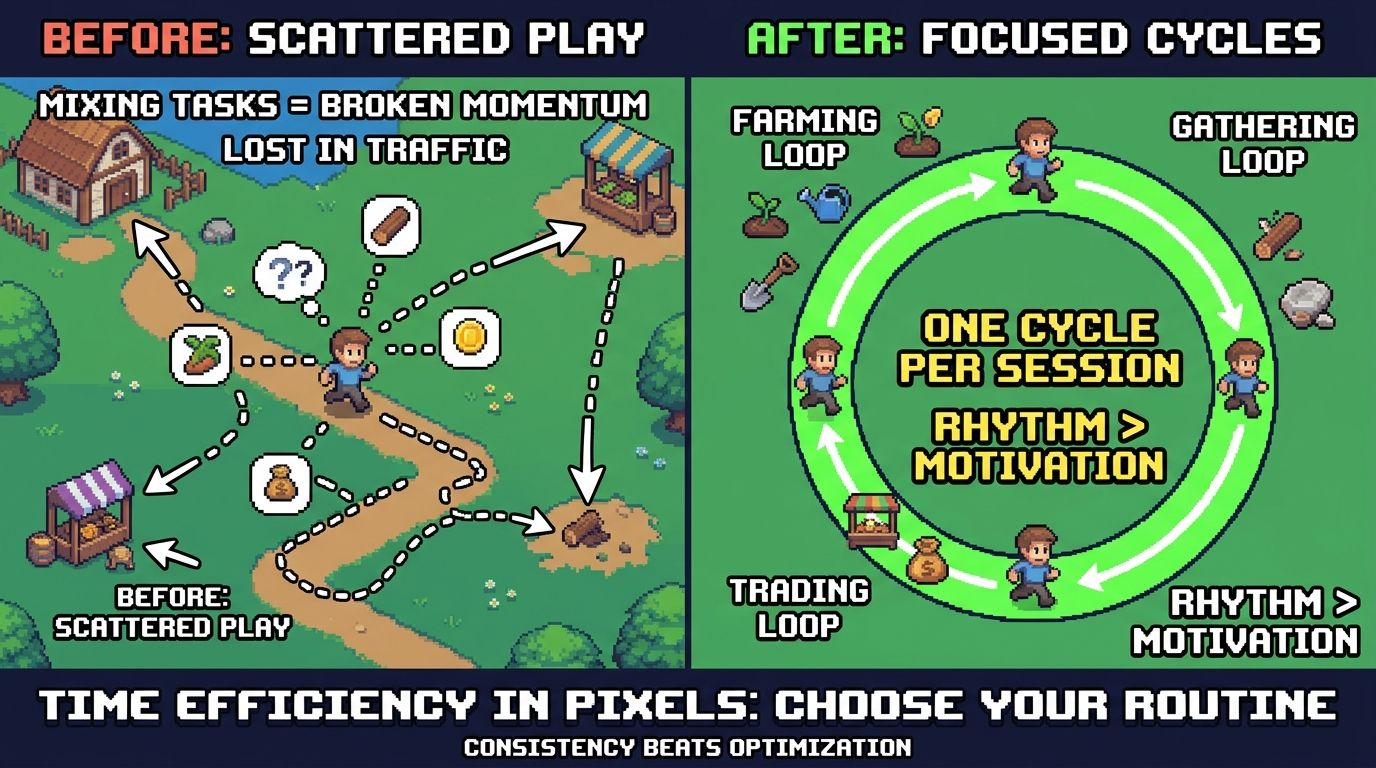
Even small adjustments help. Keeping your activities close together. Reducing unnecessary movement. Planning ahead just a little.
Nothing extreme.
Just enough to avoid wasting steps.
What’s interesting is that this doesn’t make the game feel like work. If anything, it makes it calmer.
Because instead of constantly deciding what to do next, you’re just following a rhythm.
And rhythm is easier to maintain than motivation.
I’ve also seen players chase “optimal strategies” they find online. Fastest gains, highest profit, best routes.
But those often ignore something important.
Consistency beats optimization.
A slightly less efficient routine that you actually follow every day ends up outperforming a perfect strategy you can’t maintain.
That’s where #pixel becomes more about behavior than mechanics.
The game doesn’t force you into any path. It quietly reflects your habits back at you.
If you’re scattered, your progress feels slow.
If you’re focused, things start to compound.
Even the economy side of @Pixels follows this pattern. Watching prices, timing trades, managing resources. It’s not about reacting instantly. It’s about having a steady approach.
The players who seem ahead aren’t always the ones playing the most.
They’re usually the ones wasting the least.
And that’s a different mindset entirely.
I still don’t think there’s a “perfect” time efficiency strategy. The game is too open for that.
But I do think there’s a point where you stop chasing efficiency and start noticing it.
Small habits.
Cleaner loops.
Less noise.
It feels like the game rewards that quietly.
And once you see it, it’s hard to go back to playing randomly.
