
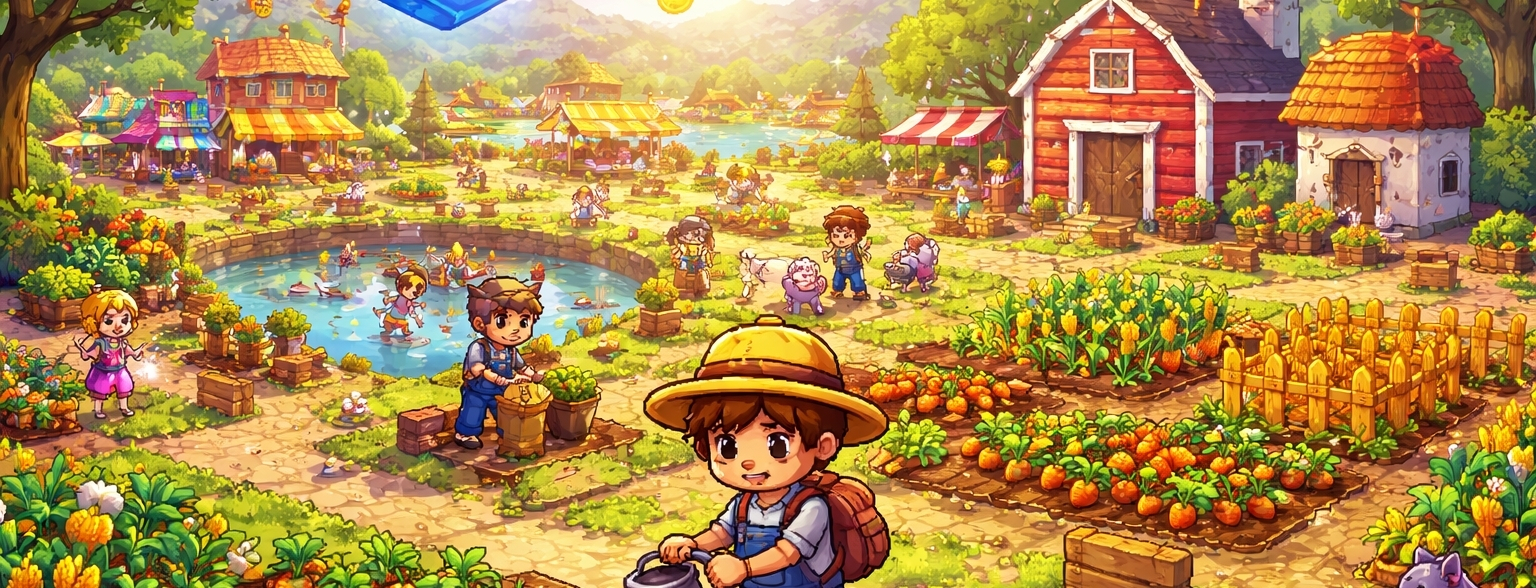
In a world that constantly demands your attentionwhere games rush you, reward you quickly, and forget you just as fast Pixels (PIXEL) feels like a quiet escape you didn’t know you needed. It doesn’t shout for your focus. It doesn’t pressure you to compete. Instead, it welcomes you into a soft, living world where every small action carries meaning, and every moment you spend feels like it actually belongs to you. Built on the Ronin Network, this social Web3 game may look like a simple farming experience on the surface, but once you step inside, it becomes something much deeper something personal.
There’s something strangely comforting about starting with a small piece of land, empty and waiting. You plant your first crops, not because you have to, but because you want to see something grow. You walk through open spaces, meet other players, gather simple resources and slowly, without even realizing it, you begin to care. Not just about progress, but about the world itself. Pixels creates a rare emotional connection, where your time doesn’t feel wasted. It feels invested. And that changes everything.
Unlike traditional games where everything you build disappears the moment you log out, Pixels introduces a powerful idea ownership. The land you nurture, the items you craft, the progress you makethey can actually belong to you. Through blockchain technology, these assets exist beyond the game, giving your effort a kind of permanence that most digital experiences lack. It’s no longer just about playing; it’s about building something that holds value, something that reflects your time and your choices.
What makes this even more special is how naturally it all unfolds. Pixels doesn’t overwhelm you with complicated systems or force you into understanding Web3 mechanics. Instead, it gently introduces you to a world where everything just works. The Ronin Network ensures that interactions are smooth, fast, and affordable, removing the usual friction people associate with blockchain games. This simplicity is not accidental it’s intentional. It allows you to focus on what truly matters: the experience.
As you spend more time in Pixels, you begin to notice layers beneath its calm surface. The resources you gather are not just for survival they become part of a living economy shaped by players like you. The energy system quietly encourages balance, reminding you that every action has weight. Owning land isn’t just about status; it becomes a source of opportunity, where your space can grow, evolve, and even support others. And then there’s the community a network of real people, each building their own stories, yet somehow connected through shared effort and interaction.
The game’s economic structure reflects this same balance. On one side, there’s a simple in-game currency that allows anyone to play, grow, and explore without pressure. On the other, the PIXEL token introduces real-world value, offering opportunities for those who wish to go deeper. But what makes Pixels different is that it never forces you to choose. You can enjoy the world fully without chasing profit, or you can engage with its economy in a meaningful way. It respects your pace, your intention, and your reason for being there.
Pixels doesn’t promise instant rewards or overnight success. And that’s exactly why it works. It understands something many projects have ignored—that people don’t stay for money alone. They stay for connection, for purpose, for the quiet satisfaction of seeing something grow over time. Yes, there are opportunities to earn, whether through farming, trading, or contributing to the ecosystem. But these rewards feel like a natural extension of your effort, not the sole reason for it. It’s not about extracting value—it’s about creating it.
When the PIXEL token entered the market, it brought attention, excitement, and validation. But beyond the numbers and trading volumes, it revealed something deeper: people are ready for a new kind of digital experience. One that doesn’t treat them as users to monetize, but as individuals who want their time to matter. Pixels tapped into that feeling and it’s something you can’t fake.
At its heart, Pixels is not just a game. It’s a feeling. It’s the quiet joy of planting something today and returning tomorrow to see it grow. It’s the subtle pride of building a space that reflects who you are. It’s the connection you feel when you realize that behind every character is another person, sharing the same world, the same rhythm. In a fast-moving digital age, Pixels slows things down just enough for you to breathe and in doing so, it creates something surprisingly rare: meaning.
Looking forward, Pixels holds the potential to become much more than it already is. Its world can expand, its systems can evolve, and its community can shape its future in ways that feel organic and real. It is not trying to be everything at once. Instead, it is growing just like the farms within it steady, intentional, and alive.
And maybe that’s why it resonates so deeply. Because in Pixels, you’re not just playing a game.You’re building something that remembers you
