
Most Web3 games struggle with one core issue—they feel more like financial tools than actual games. You log in, click a few buttons, maybe earn a token, and leave. There’s little immersion, no emotional connection, and rarely a reason to stay.
Pixels (PIXEL) takes a different path.
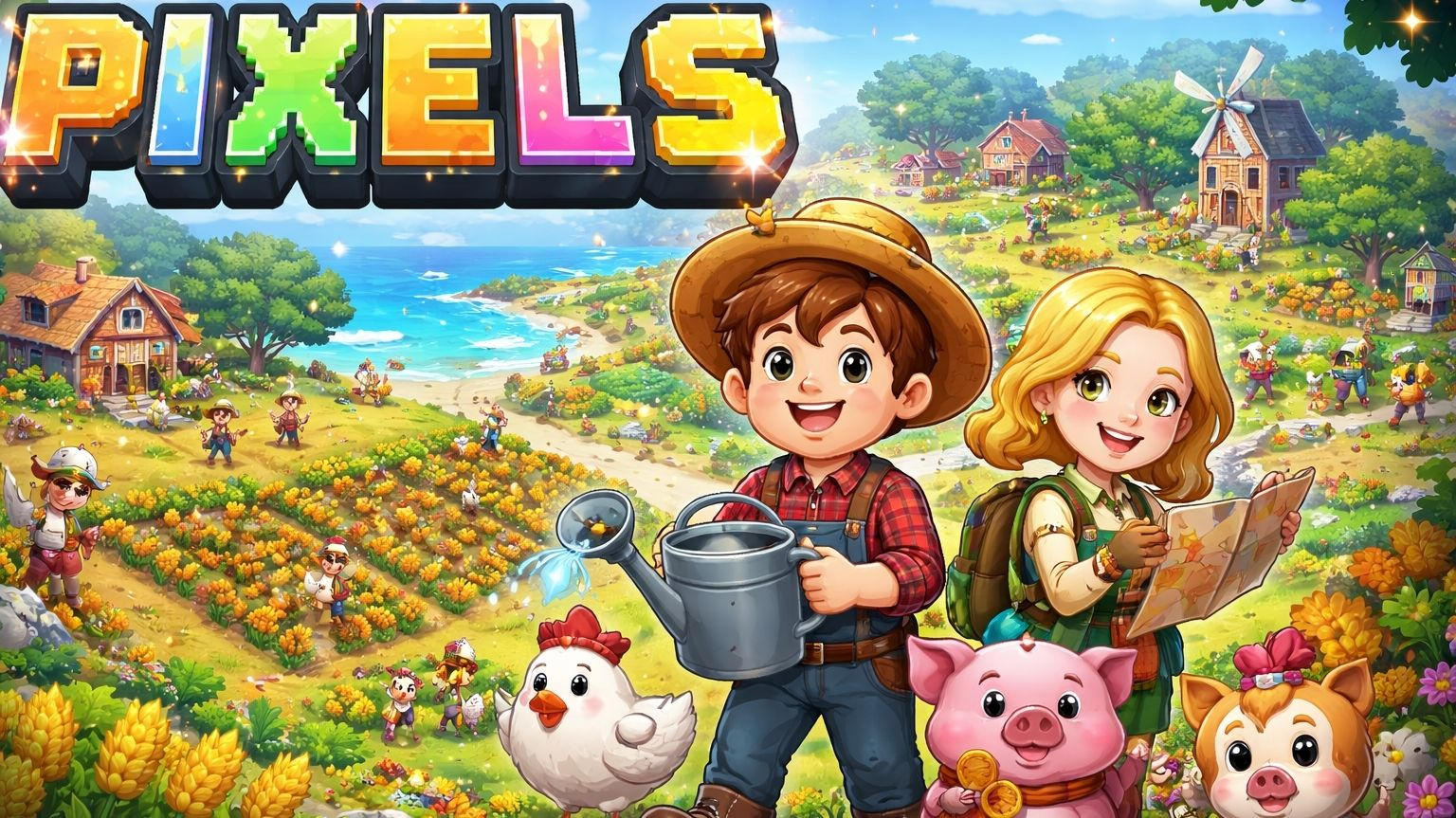
Instead of pushing players toward constant optimization, Pixels builds a living, breathing world where you farm, explore, trade, socialize, and gradually grow your presence. It’s slower, more intentional, and surprisingly engaging. Beneath its simple pixel-art surface lies a carefully designed ecosystem that blends gameplay, economy, and community in a way that feels natural rather than forced.
What is Pixels?
Pixels is a social, casual Web3 game built on the Ronin Network. At its core, it’s an open-world farming and exploration experience where players:
Grow crops and manage land
Gather and craft resources
Complete quests and events
Interact with other players
Build long-term progression
But Pixels is more than just farming—it’s about ownership and participation. Every action you take contributes to your growth within the ecosystem, whether through resources, reputation, or token rewards.
The Evolution of Web3 Gaming
To understand why Pixels matters, you need context.
Early blockchain games focused heavily on play-to-earn mechanics, where rewards were the main attraction. This led to:
Short-term player engagement
Token inflation
Unsustainable economies
Weak gameplay design
Pixels flips this model by focusing on:
Play-and-enjoy first
Earn as a secondary layer
Long-term engagement over quick profits
This shift represents a broader evolution in the Blockchain Gaming space, where sustainability and player experience are finally taking priority.
Core Gameplay: Simple Loop, Deep Strategy
At first glance, Pixels looks simple—and that’s intentional.
The Basic Loop
Plant crops
Harvest resources
Sell or craft items
Reinvest into your farm
The Hidden Depth
Over time, the game reveals deeper layers:
Energy management affects how much you can do daily
Resource optimization becomes key to progression
Market dynamics influence what you produce
Social interactions unlock new opportunities
This creates a gameplay loop that is easy to start but difficult to master.
The Social Layer: Pixels as a Community
Unlike many Web3 games, Pixels thrives on interaction.
Players don’t just grind—they:
Visit each other’s farms
Trade goods
Participate in events
Join groups and alliances
This transforms Pixels from a solo experience into a shared digital world, where progression is tied not only to effort but also to presence and relationships.
Tokenomics: The Role of PIXEL
The economy of Pixels has evolved significantly.
From $BERRY to $PIXEL
Earlier versions of the game used a token called $BERRY. However, to improve sustainability, the system shifted toward a more refined structure centered on PIXEL.
Current Model
$PIXEL is the main token
Used for governance, staking, and premium features
Supports long-term ecosystem growth
Why This Matters
Instead of flooding the system with easily farmed tokens, Pixels:
Controls supply more effectively
Rewards meaningful participation
Aligns player incentives with ecosystem health
This creates a more balanced and durable in-game economy.
Reputation System: Trust as a Game Mechanic
Pixels introduces something many games ignore: reputation.
Your reputation determines:
Access to features
Trading capabilities
Reward opportunities
Social credibility
You can improve it by:
Completing quests
Owning land or assets
Participating in events
Staying active in the community
This system discourages bots and low-quality activity while rewarding genuine players.
VIP Membership: Enhancing the Experience
Pixels offers an optional VIP layer that enhances gameplay without breaking balance.
Benefits include:
More storage space
Extra marketplace listings
Faster progression tools
Additional daily opportunities
This is a quality-of-life upgrade, not a pay-to-win shortcut—an important distinction in modern game design.
Ronin Network: The Infrastructure Advantage
Pixels’ success is closely tied to the Ronin Network.
Ronin provides:
Low transaction costs
Fast in-game interactions
A gaming-focused ecosystem
Strong developer support
This allows Pixels to deliver a smoother experience compared to many blockchain games that struggle with high fees and slow performance.
Chapter Updates: A Living Game World
Pixels is not static—it evolves through major updates.
Chapter 3: Bountyfall
One of the most significant updates introduced:
Team-based competition
Seasonal rewards
Union systems
Shared objectives
Players now compete in groups, contributing resources to collective goals and sharing rewards based on performance.
This shift adds:
Strategy
Competition
Community-driven gameplay
Beyond the Game: Ecosystem Expansion
Pixels is expanding beyond a single title.
A major step is Stacked by Pixels, a reward platform that:
Connects multiple games
Tracks player activity
Distributes incentives across ecosystems
This signals a move toward becoming a Web3 gaming platform, not just a standalone game.
Strengths and Challenges
Strengths
Strong focus on gameplay over speculation
Active and social player base
Evolving economy design
Backed by a robust network
Continuous updates and innovation
Challenges
Balancing rewards and sustainability
Preventing repetitive gameplay loops
Competing with traditional games
Maintaining long-term player interest
Future Outlook
Pixels is positioned to grow in three key directions:
1. Deeper Social Systems
Expect more guild mechanics, collaboration features, and shared progression.
2. Expanded Economy
More uses for $PIXEL, better reward distribution, and cross-game integration.
3. Ecosystem Leadership
Pixels could become a central hub in the broader Web3 gaming economy, especially within Ronin.
Conclusion: A Glimpse Into the Future of Gaming
Pixels is not trying to reinvent gaming—it’s trying to fix what Web3 gaming got wrong.
By focusing on:
Fun before profit
Community before extraction
Sustainability before hype
It offers a glimpse into what blockchain games can become.
It’s not perfect. It’s still evolving. But it’s one of the few projects that feels like it’s building something real—a world players actually want to spend time in.
FAQs
Is Pixels free to play?
Yes, the game is free, with optional premium features like VIP membership.
Do you need crypto to start?
No, you can begin playing without upfront investment.
What makes Pixels different?
Its focus on social gameplay, sustainable economy, and player experience.
Is Pixels a good long-term project?
It shows strong potential due to continuous development, ecosystem growth, and a balanced design approach.