
At first glance, Pixels feels exactly how it looks—calm, slow, and almost meditative. You plant crops, gather resources, decorate your land, and move forward at your own pace. There’s no pressure, no overwhelming mechanics, no aggressive push to optimize every second.
But that simplicity isn’t accidental.
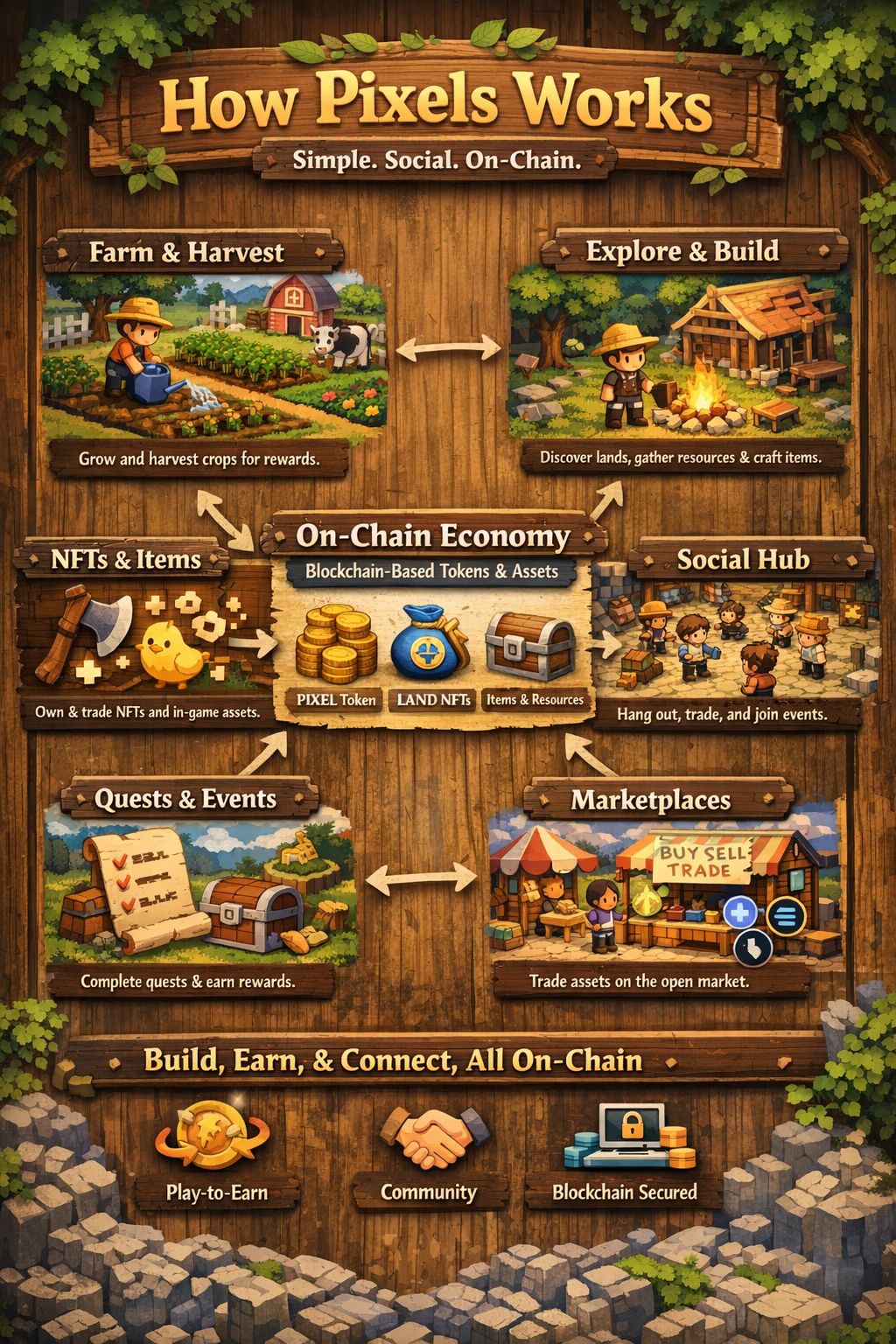
Spend enough time in the game, and you begin to notice something deeper—an underlying structure quietly shaping your experience. What seems casual at first slowly reveals intention.
A System That Remembers Your Effort
Most games are built around loops that reset. You log in, grind, earn rewards, spend them—and the cycle closes. Your effort lives briefly, then disappears into repetition.
Pixels challenges that pattern.
It doesn’t just focus on what you do while playing. It subtly shifts your attention to what remains after you stop. Your progress, your land, your decisions—they persist. That persistence changes how your time feels. Effort no longer feels temporary; it starts to feel cumulative.
Ownership That Changes Behavior
Ownership in Pixels isn’t loud or overly technical, but it’s impactful. When you build something, it doesn’t feel like it belongs to the game—it feels like it belongs to you.
That small psychological shift adds weight to everything you do.
You’re no longer just completing tasks. You’re building something over time. And naturally, a deeper question emerges: what gives that ownership real value?
Strategy Over Time Spent
Pixels doesn’t reward players equally for equal time. Instead, it rewards how you play.
Two players can spend the same hours in the game and walk away with completely different outcomes. One may rush through actions without planning, while another carefully manages crops, resources, and timing.
The difference isn’t effort it’s intention.
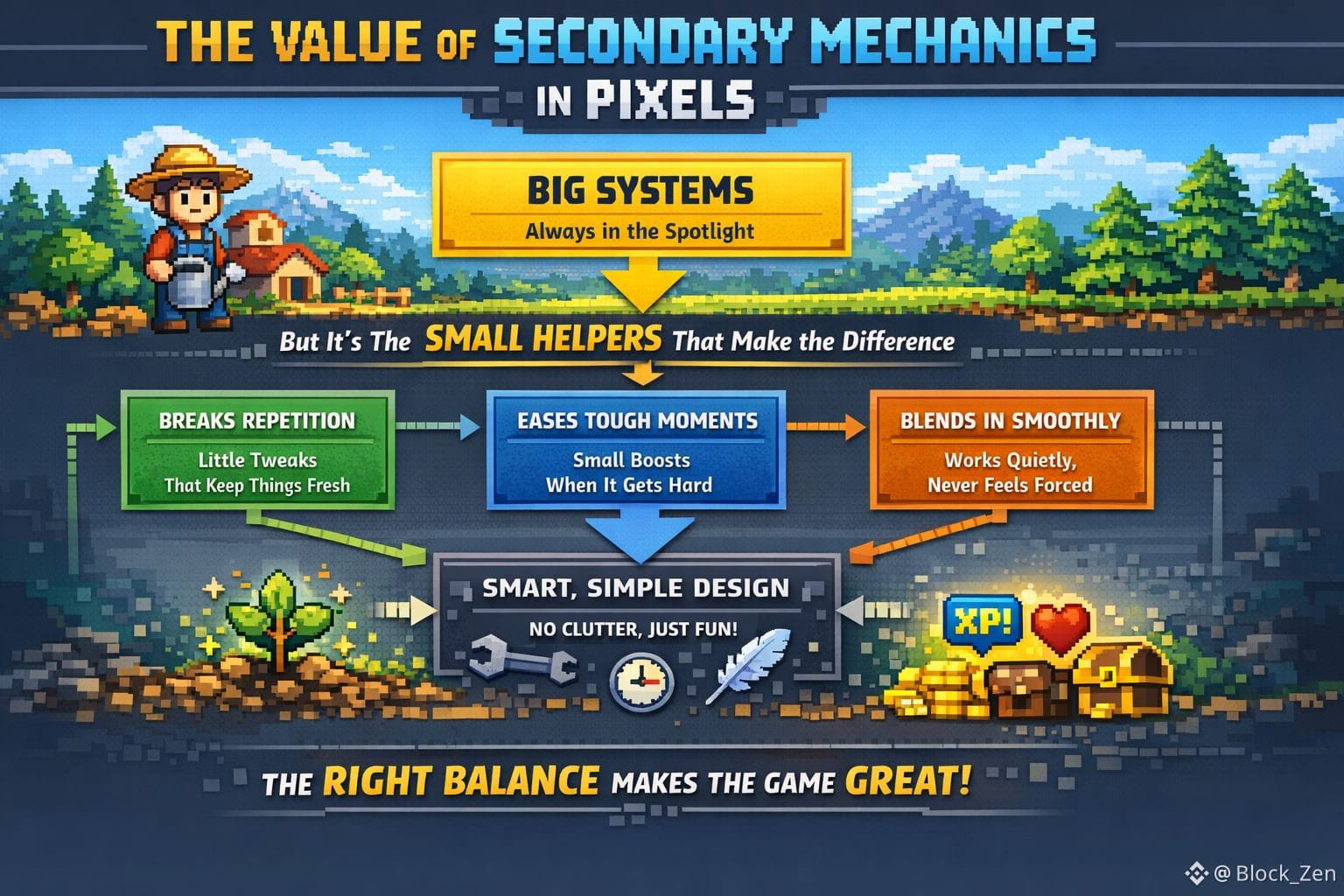
That’s where Pixels starts to feel less like a game loop and more like a system where decisions matter.
From Multiplayer to Cooperation
Player interaction adds another layer. Guilds don’t feel like casual groups—they operate more like coordinated units.
Players divide roles, share strategies, and optimize collectively. It begins to resemble small, purpose-driven communities rather than simple multiplayer participation.
This kind of coordination transforms the experience. It’s no longer just about individual progress—it’s about shared efficiency.
A Living, Evolving Economy
The economic layer in Pixels is still evolving, but its direction is clear.
Instead of rewarding passive participation, the system leans toward active contribution. Value isn’t just extracted—it’s created through behavior, coordination, and decision-making.
Even updates reflect this philosophy. What looks like standard content drops—new items, features, or mechanics—often serve a deeper purpose. They adjust balance, introduce resource sinks, and refine how the system functions.
It’s less about expansion and more about tuning an economy in motion.
Open Questions, Real Potential
Pixels isn’t perfect, and it doesn’t try to be.
Questions remain. What happens if player growth slows? How stable is the system long-term? Can balance be maintained across different playstyles?
These uncertainties matter.
But what stands out is that Pixels isn’t just presenting an idea—it’s actively testing one.
Final Thought: More Than Play-to-Earn
Pixels isn’t trying to overwhelm players with complexity. It stays approachable on the surface while experimenting with something much deeper underneath.
Can a game function like a lightweight economy?
Can ownership truly change behavior?
Can coordination outweigh raw grinding?
It doesn’t fully answer these questions—yet.
But it’s asking them the right way.
And maybe that’s the real shift:
Not just play to earn.
Play, contribute… and see if the system remembers you.