
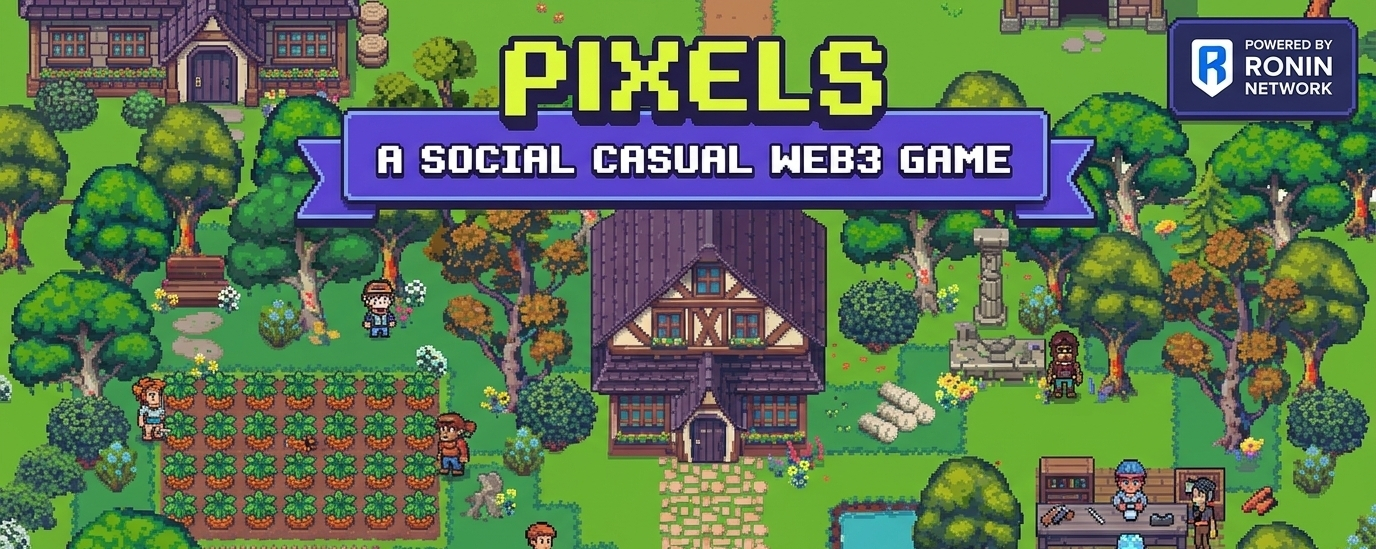
Most people look at Pixels and see a farming game with tokens layered on top. I used to see it that way too—but the longer I’ve spent in it, the more that view feels incomplete.
What I’ve started noticing is how little the game actually works in isolation. Farming only matters because someone else needs what you grow. Crafting only matters if there’s a player who values the output. Even exploration isn’t really about wandering—it feeds back into everything else. None of these systems stand on their own. They rely on people consistently showing up and participating.
And that’s the part I think gets overlooked: Pixels quietly runs on presence.
Over time, I’ve seen a pattern. The players who approach it like a system to “solve” tend to lose interest faster. They optimize, extract, repeat—and eventually it starts to feel empty. But the ones who stay don’t just play efficiently. They build routines. They return to the same places. They start recognizing other players, even without trying to.
At some point, they stop just playing the game—they become part of its rhythm.
That’s when my perspective shifted. I realized the economy isn’t just about resources—it’s shaped by familiarity. People trade more easily with names they’ve seen before. Collaboration happens more naturally when there’s some shared history, even if it’s small. Land and items stop feeling like static assets and start acting like social anchors.
So beneath everything, there’s another layer—not economic, but behavioral.
And behavior compounds in ways that aren’t obvious at first.
Someone who shows up consistently starts to pick up on small signals—timing, demand shifts, who’s active, who’s reliable. They become part of informal networks that don’t exist on any interface, but still shape outcomes. It’s subtle, but it adds up.
I don’t think Pixels is a perfect system, and I don’t think it has all the answers. But I do think it reveals something important: incentives can bring people in, but it’s habits and relationships that keep a system alive.
Once I started seeing it like that, I stopped asking “what’s the most optimal move right now?” and started asking “how do I fit into this world over time?”
And honestly, that shift changes everything.
