
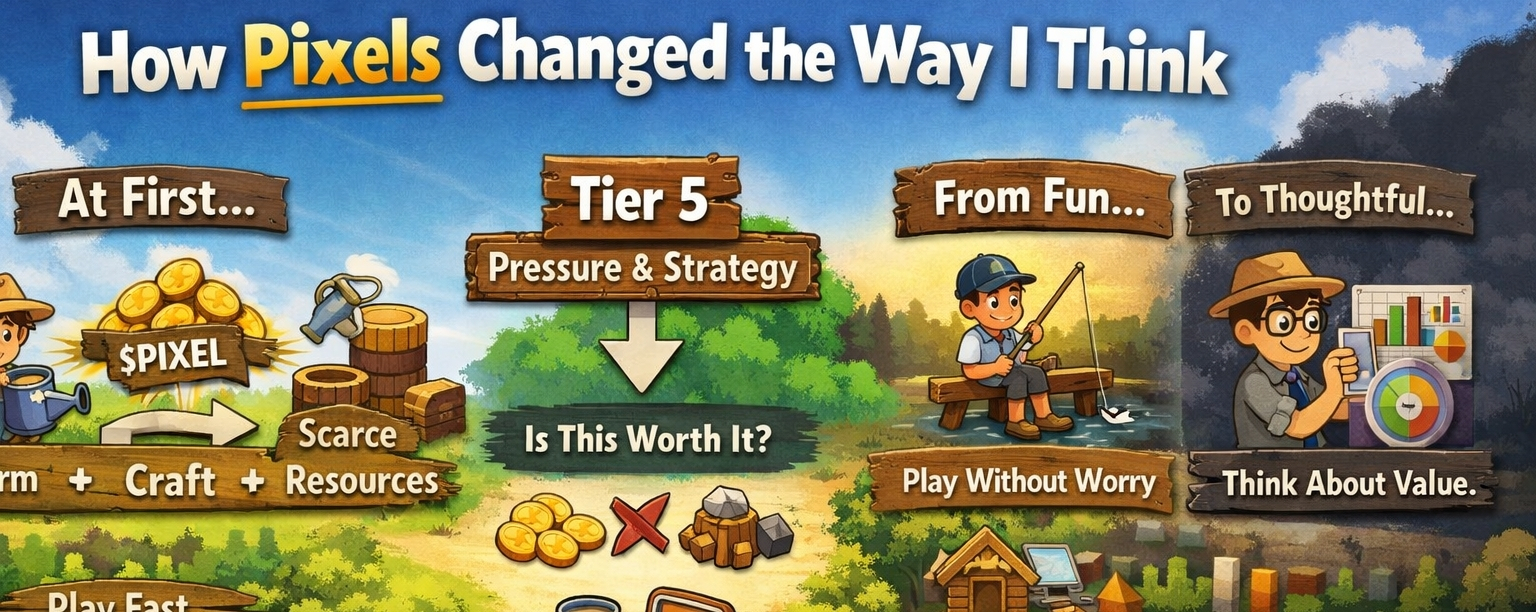
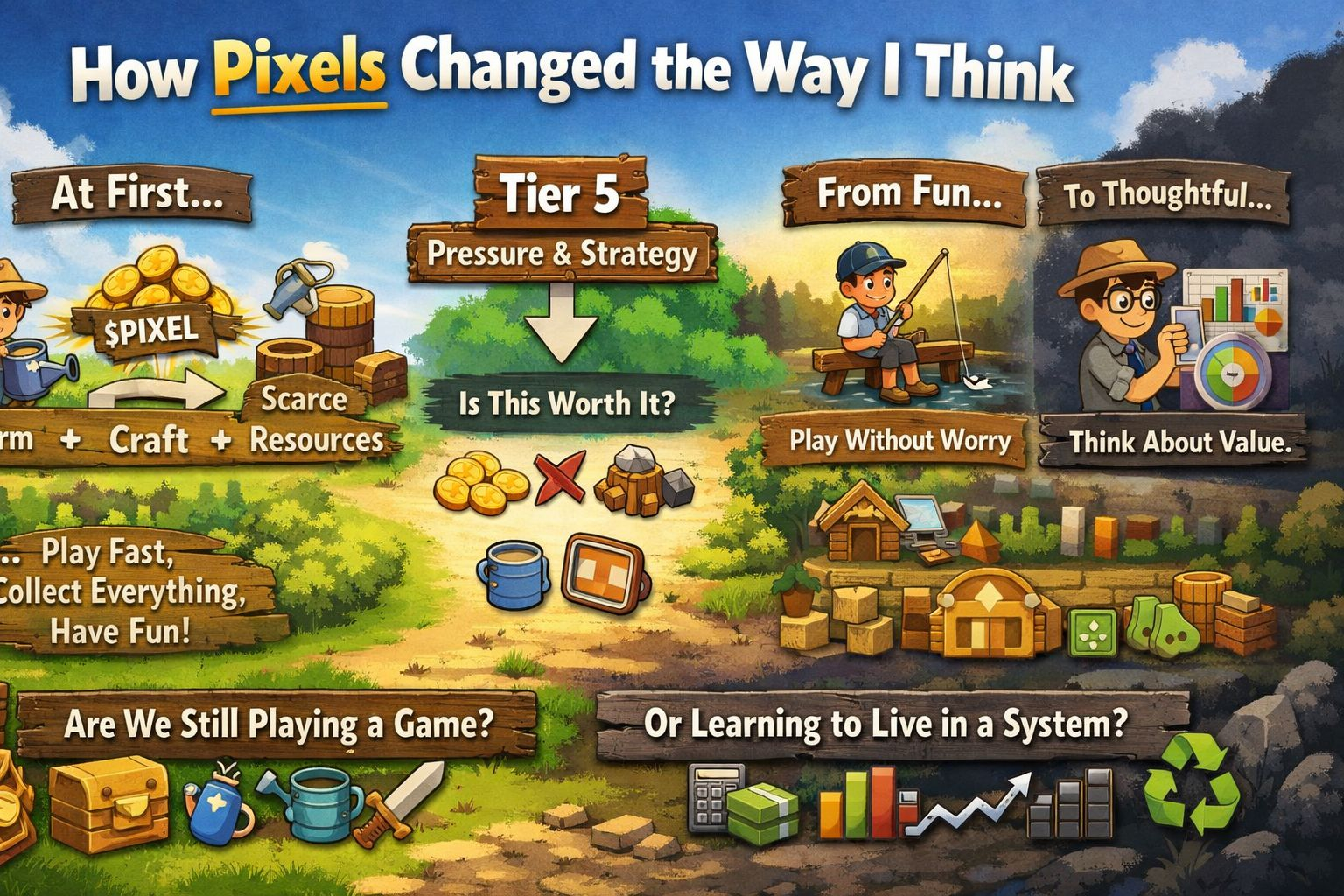
At first, I played it like any normal game. I farmed, crafted items, earned $PIXEL, and repeated the same actions. I didn’t think much about it. I was just playing.
But slowly, something changed.
I started to slow down. I began to think before taking actions. I asked myself, “Is this really worth it?” That is when Pixels became more valuable to me.
When I reached Tier 5, I noticed something important. The game was not just adding more content. It was adding pressure to my decisions. Resources became limited. Tools could break. Some items lost value. Sometimes it was better to destroy an item and reuse its parts instead of using it normally.
At first, I thought this just made the game more strategic. But then I started noticing other players.
New players move fast. They do everything, use everything, and collect everything. For them, it feels like a normal game.
But experienced players are different.
They move slowly. They think before acting. They skip actions that are not valuable. They focus more on value than activity.
This difference feels important.
The game never tells you to think like this. It doesn’t force you to calculate or optimize. But if you don’t, you slowly realize you are missing something. So players start to adapt.
Some track their results. Some test different strategies. Some even break their own items on purpose to get better value later.
At this point, it feels less like playing a game and more like managing a system.
This is where it becomes complicated for me.
On one side, this is what makes Pixels special. It is not a simple or repetitive game. Every action matters. You cannot just repeat actions without thinking. The game pushes back using scarcity, timing, and resource management.
But on the other side, the feeling of “fun” changes.
The game becomes quieter. More thoughtful. You are not just reacting anymore. You are thinking, planning, and evaluating. Sometimes, the best decision is to do nothing.
And that feels strange for a game.
It reminds me of real life.
For example, when someone starts managing money seriously. At first, they spend freely. But later, they think carefully before spending. Every decision becomes important.
Pixels creates a similar mindset.
Experienced players are comfortable with this. They focus on efficiency, long-term value, and smart decisions. But new players are still in the early stage, where everything feels easy and open.
It feels like two different experiences at the same time.
Maybe this is intentional.
Maybe Pixels is designed to change how players think. To move them from just playing… to understanding systems.
But I still wonder:
If a game rewards careful planning more than fun actions,
If it makes you think about value instead of enjoyment…
Are we still playing a game?
Or are we learning how to live inside an economy that looks like one?