
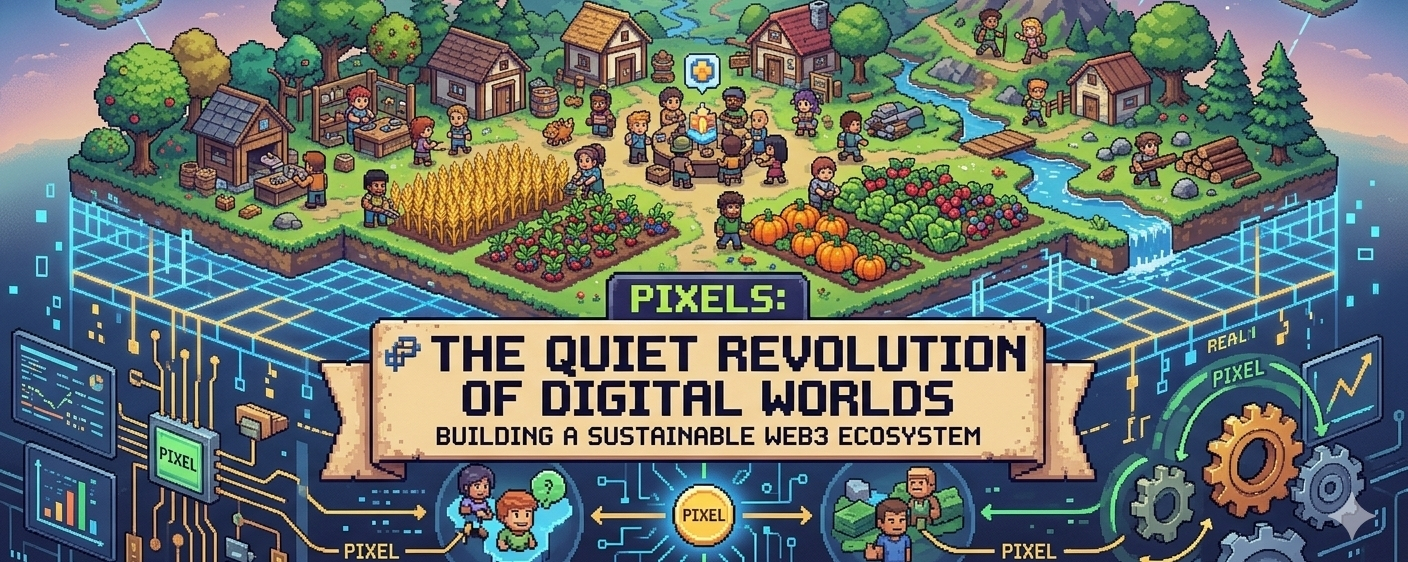
In a space dominated by noise and hype, Pixels chose a different path. No explosive marketing, no promises of instant wealth—just a simple pixelated farming world. But beneath that simplicity lies a carefully designed system built for something most Web3 projects fail to achieve: longevity.
While early play-to-earn models attracted users chasing profit, they often collapsed under unsustainable economies. Pixels learned from that era. Its move from Polygon to Ronin wasn’t just technical—it reflected a deeper shift toward sustainability over speed.
At its core, the game feels familiar: farming, crafting, exploring. Yet its economy is layered. Land ownership, resource cycles, and a dual-currency system create a balance between effort and value. Not everything is financialized—and that’s intentional.
Pixels doesn’t try to eliminate friction. It introduces limits, scarcity, and time-based progression. These constraints reshape behavior. Players don’t just extract—they return, plan, and engage. Over time, this builds something rare in Web3: habit.
Its growth proves the model. Without aggressive hype, it has attracted a loyal and active player base, helping revive the Ronin ecosystem in the process. The PIXEL token extends its reach into broader markets, but remains optional—supporting the system without overwhelming it.
Now, Pixels is evolving beyond a single game. With systems like Realms, it hints at becoming a platform—a foundation for multiple worlds and communities.
Still, challenges remain: economic balance, bot activity, and the cyclical nature of Web3 interest. Long-term success depends on maintaining its delicate balance between fun and finance.
Pixels isn’t chasing attention. It’s building something steady, something lived in. A world where value grows slowly, shaped by time and behavior—not hype.
And in Web3, that might be the real revolution.
