
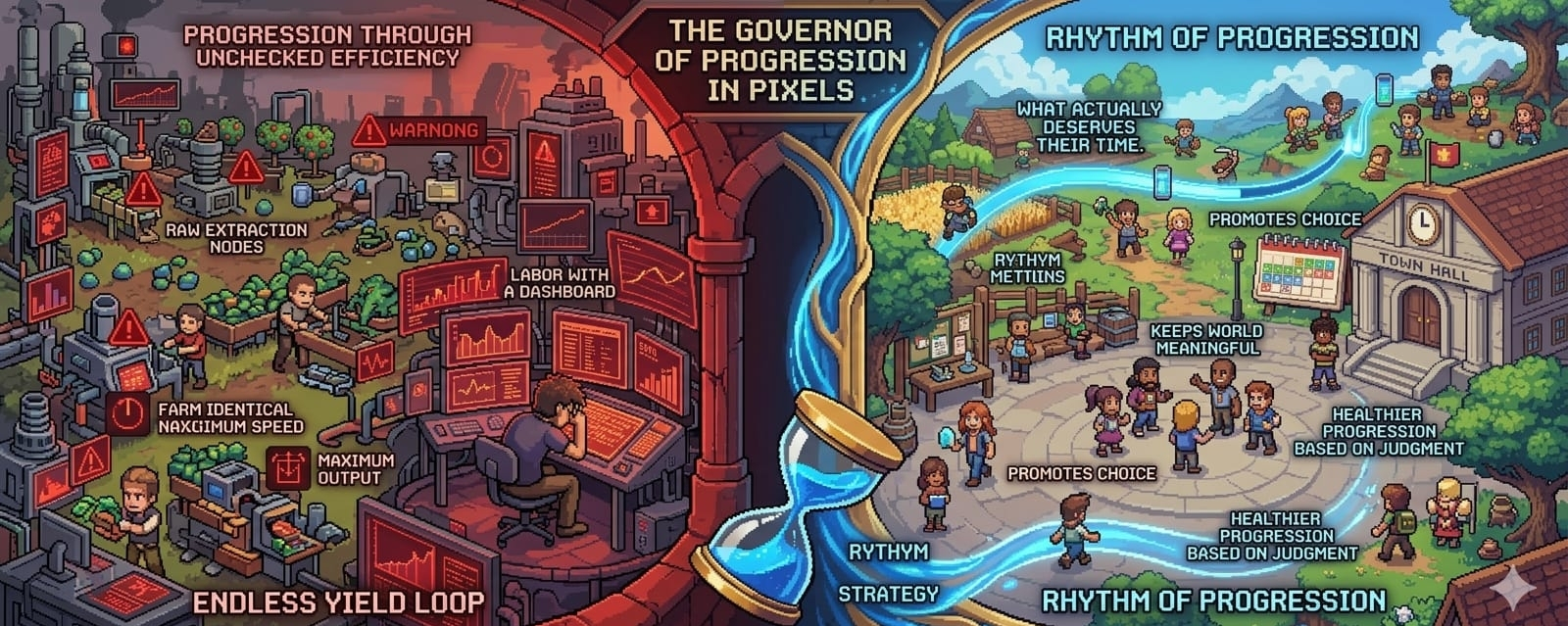
To, co Pixels rozumie lepiej niż większość gier Web3, to fakt, że postęp nie może być budowany na nieskończonym działaniu. Ten model już raz zawiódł. Kiedy gra nagradza graczy głównie za to, że robią więcej, szybciej i dłużej, w końcu przestaje przypominać grę. Zaczyna przypominać pracę z panelem kontrolnym.
Dlatego energia ma w Pixels tak ogromne znaczenie.
Na pierwszy rzut oka wygląda to jak prosty limit aktywności. W praktyce robi coś ważniejszego. Decyduje o tempie. Zapobiega temu, by postęp stał się czystym wyścigiem, w którym wygrywa tylko osoba z największą ilością czasu, najlepszą automatyzacją lub najsilniejszym apetytem na powtarzanie.
Ten mały wybór projektowy wskazuje na głębszy problem, który Pixels stara się rozwiązać. Gry Web3 miały trudności, ponieważ ich ekonomie optymalizują się zbyt szybko. Gdy wszystko staje się kwestią maksymalnej produkcji, sam świat traci sens. Gracze przestają pytać, co sprawia im przyjemność, a zaczynają pytać, co przynosi najlepszy zwrot.
Energia pomaga powstrzymać ten zjazd. Zmusza do wyboru. Sprawia, że gracze myślą o tym, co naprawdę zasługuje na ich czas w danej sesji. To tworzy zdrowszy rodzaj progresji, oparty mniej na surowej ekstrakcji, a bardziej na ocenie.
Dla mnie to jest prawdziwa wartość systemu. Nie jest tu tylko po to, aby spowalniać ludzi. Jest tu, aby chronić grę przed stawaniem się kolejną bez końca powtarzającą się pętlą zysków. W Pixels energia nie jest pobocznym mechanizmem. To cicha struktura, która utrzymuje progresję związana z rytmem, a nie czystą produkcją.