
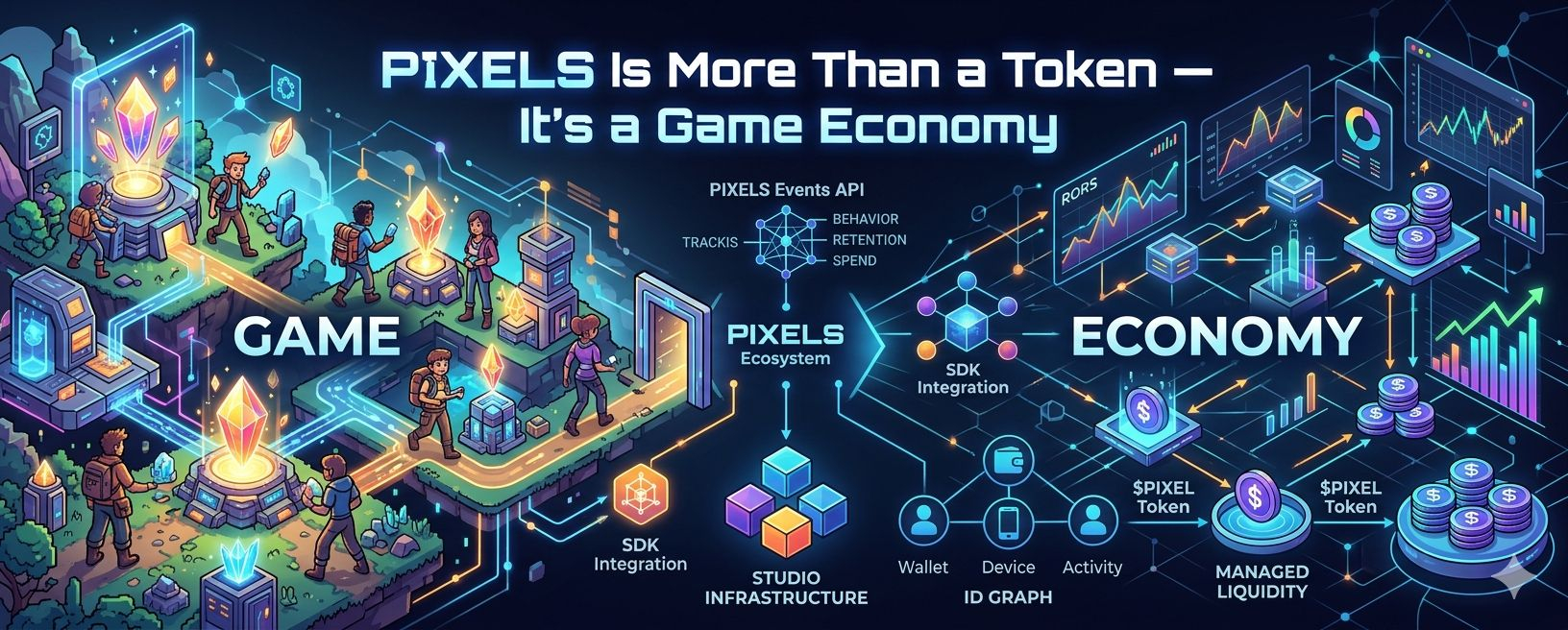

Will gaming remain just a game, or will it evolve into a digital economy through models like PIXEL 🤔? This question keeps circling back to me every time I take a moment to dive into the Pixels whitepaper.
At first glance, it feels familiar rewards, tokens data SDKs. We’ve seen these buzzwords in Web3 gaming for years. But to understand where the real shift is happening you have to stop looking at it as a "game" and start seeing it as a publishing ecosystem.
Think about it this way: before, a movie was just a story. Now, if that movie is part of a platform where content, data, ads, and user behavior all work together, it’s no longer just a movie. PIXELS is trying to occupy that same space, and the mechanics under the hood are fascinating.
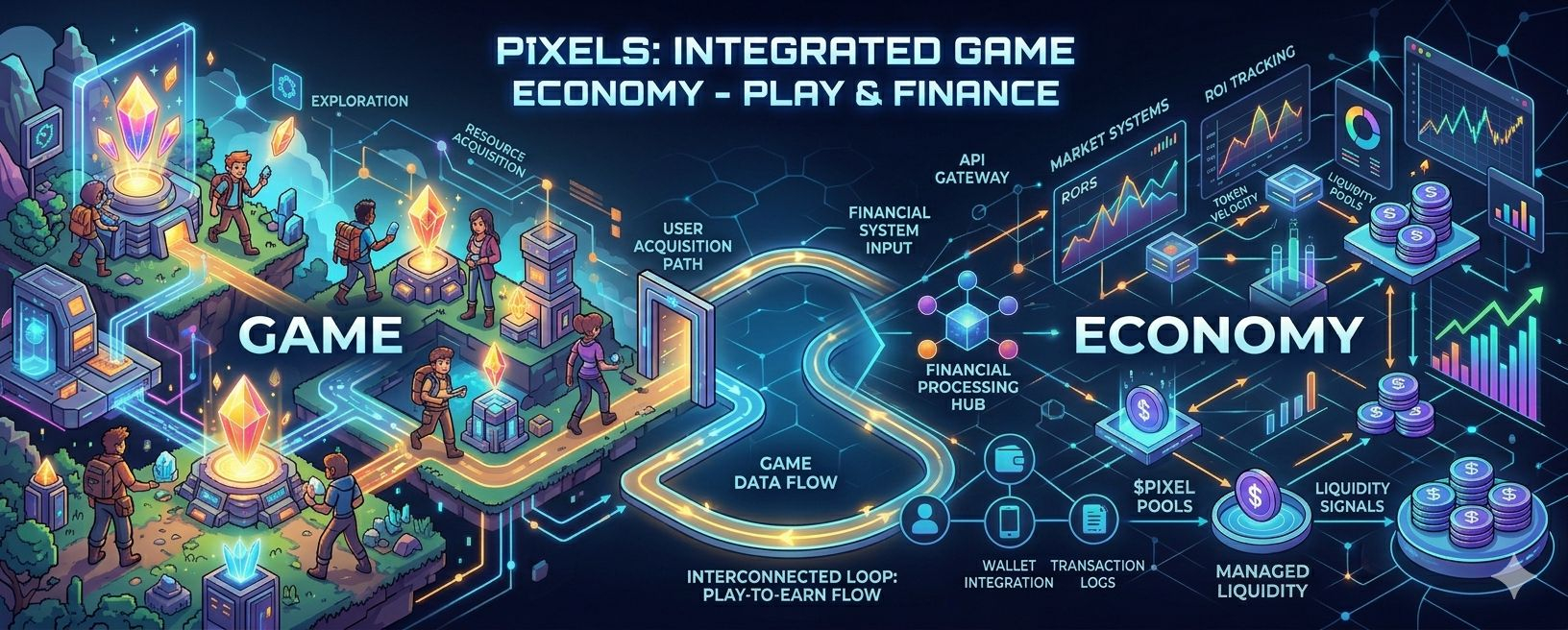
The Smart Reward Layer: Beyond the "Middleman"
The first layer is the smart reward system. On today’s internet, the trade-off is simple but invisible: you use a free service, and in return, your attention is harvested and sold to an ad network. PIXELS flips this. They are saying that value should go directly to the player.
When you finish a tutorial or play regularly, you get a token directly. It’s not just a reward for "working" in the game; it’s a reward for being present. For a casual player, it’s simple: I play, I earn. But from a design perspective, it’s an engagement economy. Your time is the primary value.
However, there’s a psychological catch. People love incentives at the start, but if the incentive becomes the only goal, the experience stops being a "pure game" and starts feeling like a loop.
The Brain: Data as a Prediction Engine
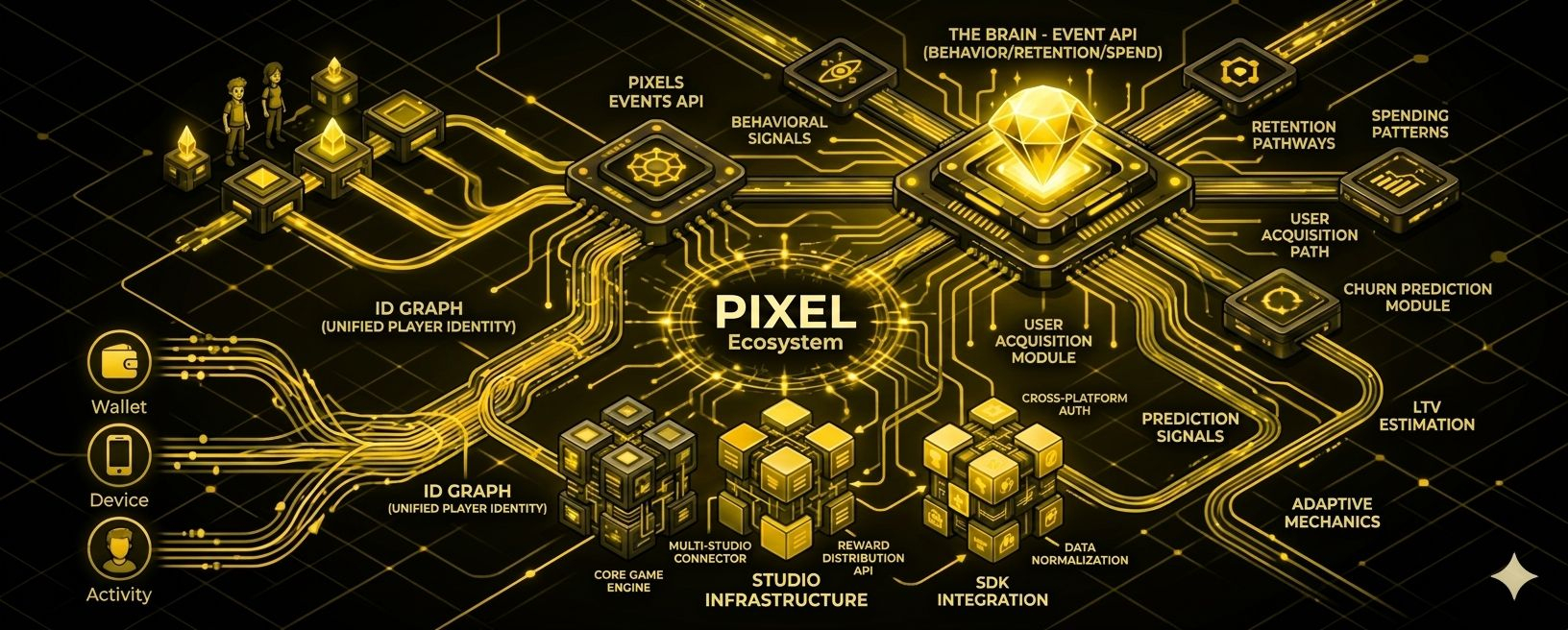
The second layer is the Pixels Events API, which I’d call the "brain" of the system. It tracks everything—behavior, spending, retention. From the outside, it looks like standard analytics, but it’s actually a prediction system.
The game isn't just letting you play; it’s learning to understand you. There’s a metaphor here: value, engagement, and activity together create the behavior of the entire system. This is incredibly powerful for developers. When rewards and economies are no longer random, they become predictable.
But here is where a subtle problem arises: when everything is predicted, the surprise is gone. And when you lose surprise, you often lose the "real feel" of a game.
Infrastructure: The "City" Model
The third layer is the studio infrastructure. #pixel is building a network where any game studio can integrate their SDK. It’s like building a city and telling other developers, "The roads and power lines are ready you can open your store here."
The ID Graph is the glue. It connects your wallet, your device, and your behavior. You aren't just a player in one game; you’re a node in an entire network. This makes user acquisition easy for developers, but it also creates a dependency. Once you’re in the PIXELS ecosystem, it’s hard to leave.
The Reality Check: RORS and Consolidation
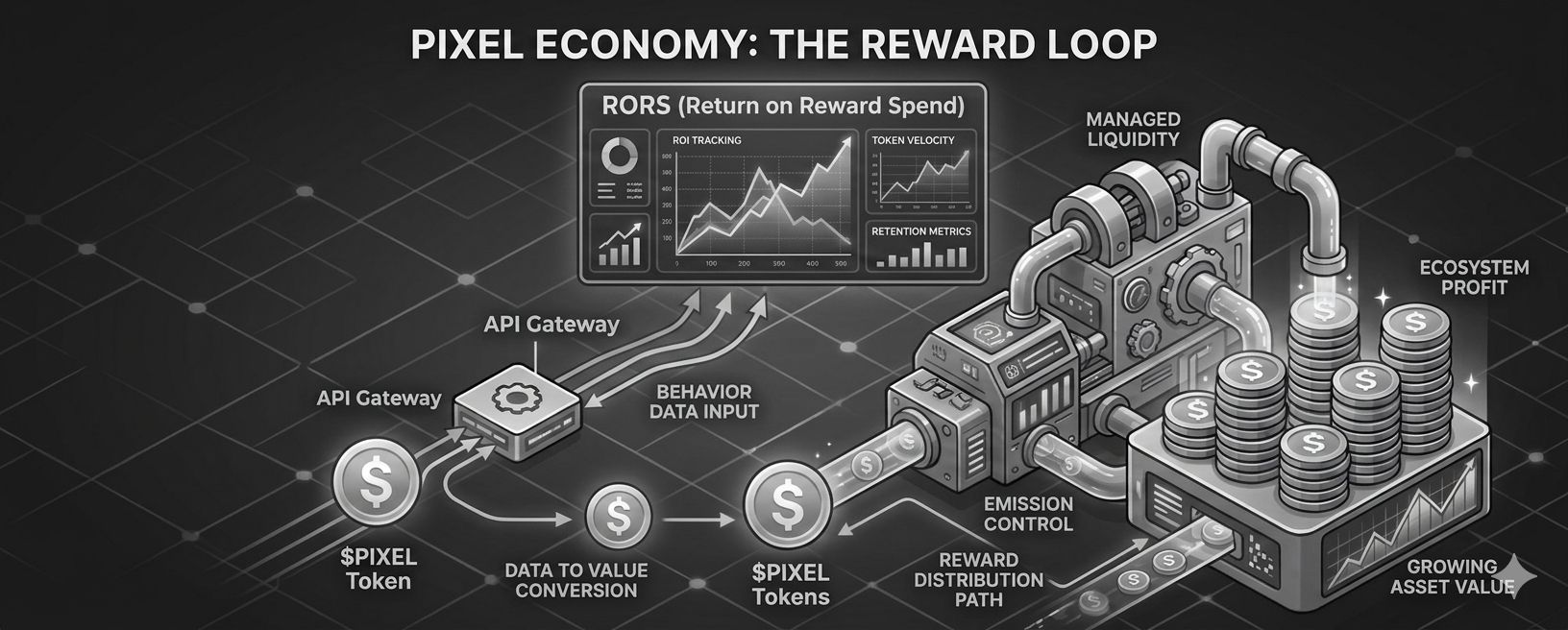
Looking at the progress over the last year, you can see the structure tightening. The RORS (Return on Reward Spend) dashboard is a reality check—it shows live data on the ROI of rewards. In Web3, where ROI is often a mystery, this is a game-changer.
The transition from $BERRY to $PIXEL was more than just a ticker change; it was narrative consolidation. It brought the entire economy under one roof, using staking and emission models to control liquidity and turn the reward pool from a "cost" into a "managed economy."
The Big Picture: A New Kind of Network
If we step back, @Pixels is trying to create a Google or Facebook-style network, but where gameplay replaces the ad and player action replaces the data harvest.
For the user: You play and gain value directly.
For the developer: You get a ready-made audience and deep analytics.
For the trader: The token isn't just a currency; it’s an engagement signal.
But the real hurdle is trust. People get nervous when their behavior and financial value are so tightly intertwined. Add the volatility of tokens to the mix, and that fear grows. If rewards are unpredictable, can engagement ever be stable?
At the end of the day, PIXEL is a live experiment. The biggest question isn't about the technology it’s about us. Do we really want to live in a world where our entertainment and our economics are permanently fused?
No one knows the answer yet. We are all just watching the clock. Only time will tell if PIXEL is the future of digital life or just another loop in the system.