
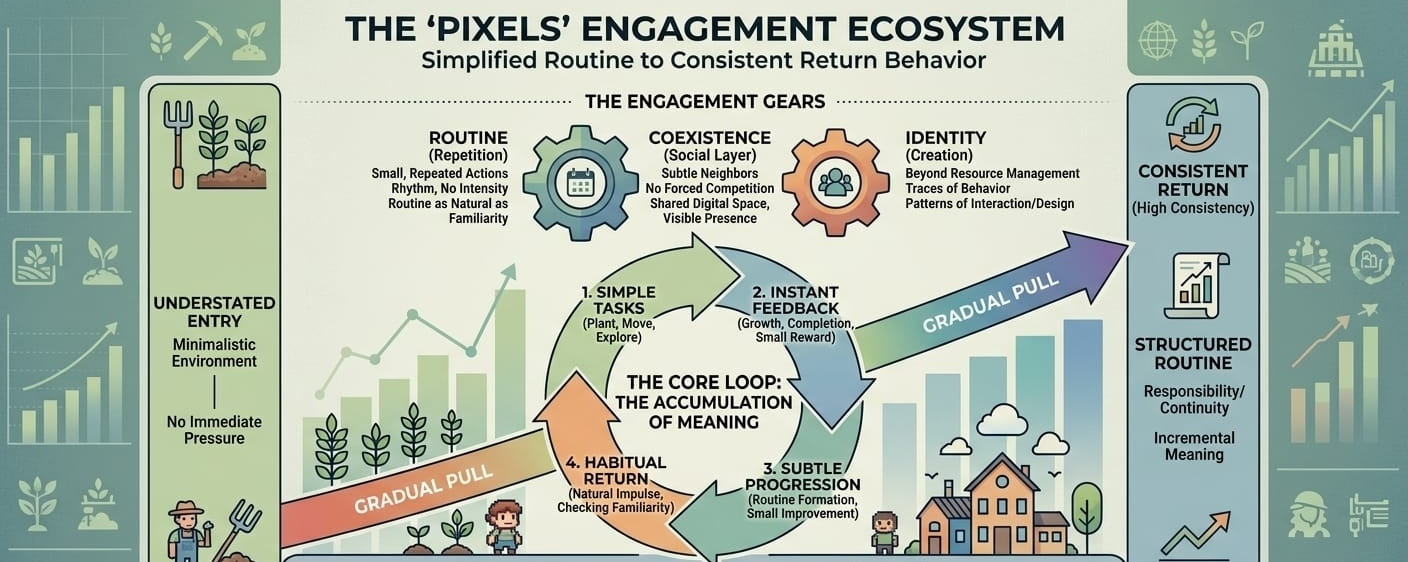
At first, Pixels might look like a basic farming game in the Web3 space. But once you spend some time with it, you start to notice that it’s built very differently. It’s not just about earning quickly—it’s about creating a system that people actually want to return to every day.
Easy Start, No Pressure
Pixels doesn’t overwhelm you in the beginning. There’s no heavy setup or confusing mechanics. You just start playing—planting crops, moving around, exploring the world.
This simple entry point makes a big difference. Instead of forcing players to grind, it lets them settle in comfortably and learn naturally.
A Loop That Feels Natural
The core experience in Pixels is built around a simple cycle:
You do small actions
You get quick feedback
You slowly improve
You feel like coming back again
It sounds basic, but that’s exactly why it works. Over time, these small actions start to feel meaningful, and the game becomes part of your routine.
More Than Just Gameplay
What makes Pixels interesting is how it mixes different elements:
Routine helps players build habits
Social space allows interaction without pressure
Identity lets players express themselves
It’s not just about farming or earning—it’s about being part of a living environment.
No Forced Grinding
Many Web3 games push users to keep playing with aggressive rewards or fear of missing out. Pixels takes a different route.
Here, the pull is gradual. You don’t feel forced to log in—but you still do. That’s a big difference, and it’s what makes engagement feel real instead of artificial.
Web3 in the Background
The game runs on the Ronin Network, but you don’t constantly feel it while playing.
Things like ownership and assets exist, but they don’t interrupt the experience. Instead, they quietly add value behind the scenes.
From Casual Play to Daily Habit
As you keep playing, something changes:pixel coin

What starts as casual gameplay slowly becomes a habit.
What feels small at first begins to add up.
That shift—from random play to consistent behavior—is where the real strength of Pixels lies.
Why This Matters for Pixel Coin
This kind of system is important for Pixel Coin because it creates real usage.
The token isn’t just there for trading—it’s connected to actual activity inside the game. That means demand comes from players, not just the market.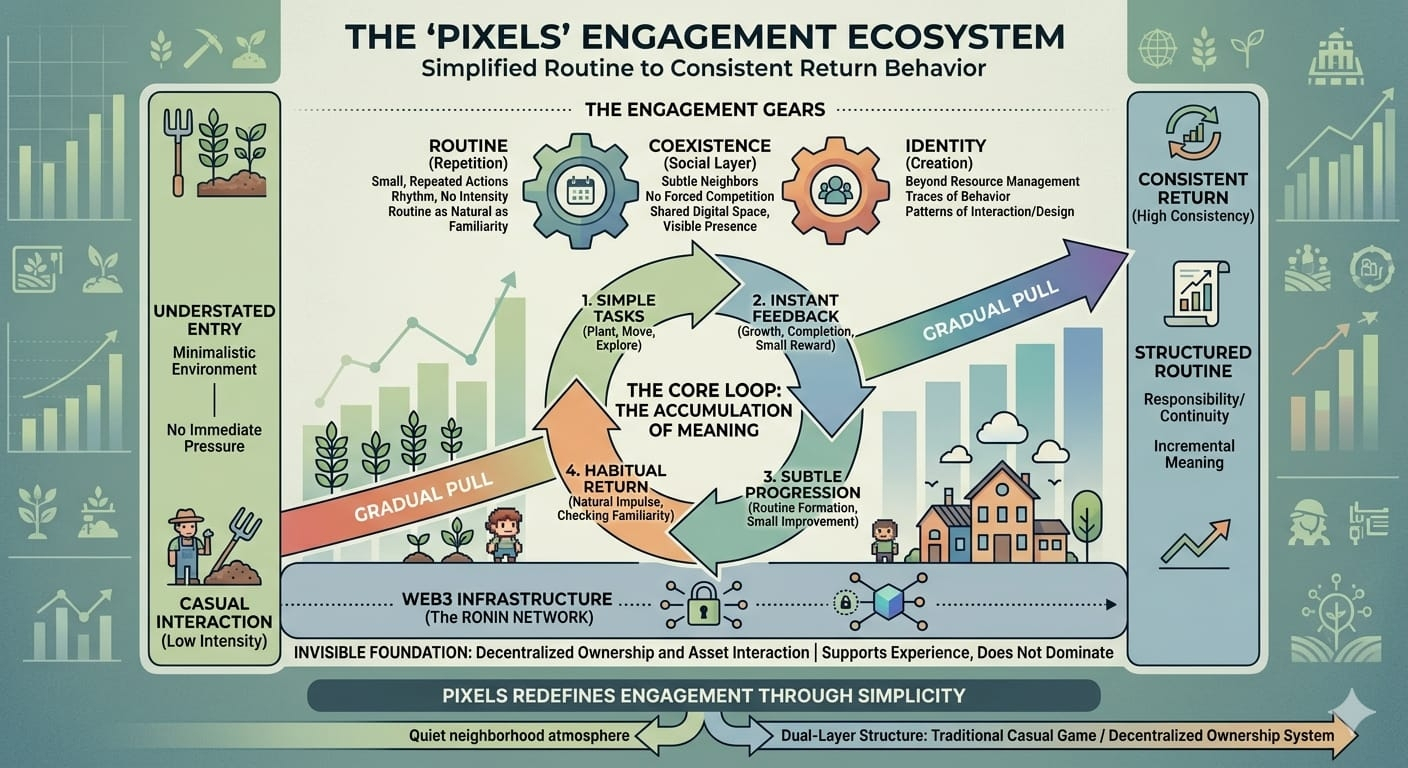
Final Thoughts
Pixels doesn’t try to impress with complexity. Instead, it focuses on doing simple things really well.
By building around habits, comfort, and gradual progress, it creates an experience that people stick with—and that’s something most Web3 games struggle to achieve.