

I started noticing something after a few sessions in Pixels that I couldn’t immediately explain.
Two players could log in for the same amount of time, follow similar tasks, and still walk away with very different results. At first, I assumed it was just randomness or inefficiency on one side. But the more I paid attention, the less that explanation made sense.
The system itself isn’t as even as it looks.
On the surface, Pixels presents a simple loop. Plant crops, complete quests, gather resources. It’s easy to understand and easy to start. But once you move past the first layer, progress starts to depend on factors that aren’t immediately obvious.
Assets are one of them.
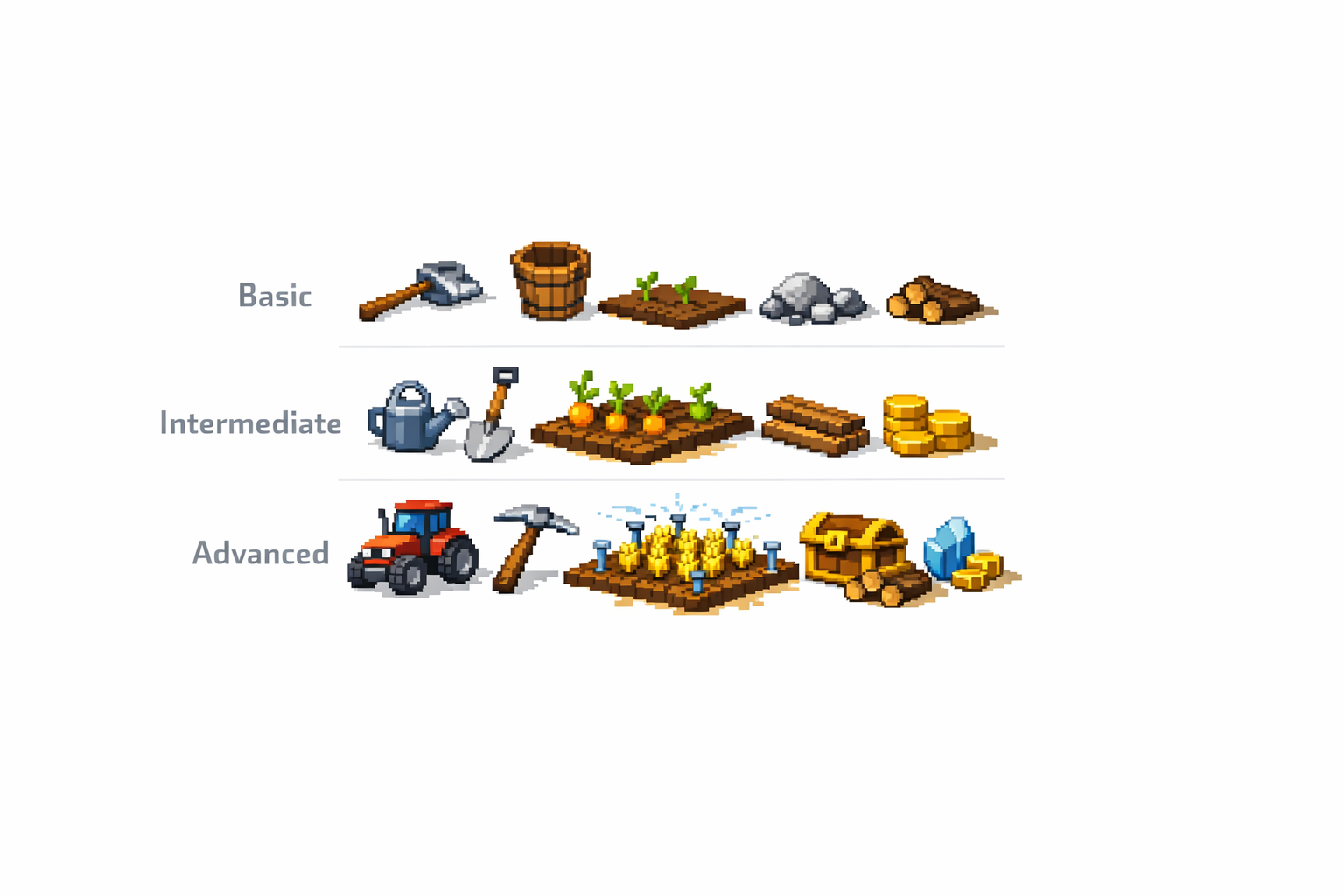
Players with land, better tools, or more optimized setups operate under completely different conditions than those without. The difference isn’t just speed. It’s compounding advantage. Better resources lead to better outputs, which lead to faster progression, which then loops back into even more efficient farming.
For a new or casual player, that gap can feel subtle at first. Then it becomes noticeable. Eventually, it defines the experience.
Time is another variable that behaves differently than expected.

It’s not just about how long you play, but when and how you play. Logging in at the right intervals, managing cooldowns efficiently, and aligning actions with in-game timing systems all influence outcomes. Two players with the same total playtime can end up in very different positions depending on how that time is used.
That’s where Pixels starts to shift from a game into something closer to a system.
And systems don’t treat every participant equally.
There’s also a psychological layer that I didn’t expect to matter as much as it does. When progress feels uneven, players start questioning their approach. Am I doing something wrong? Am I missing something? Or is the system designed this way?
The answer is probably a mix of all three.
What I find interesting is that this unevenness isn’t necessarily a flaw. In many ways, it’s what keeps the system engaging. If every player progressed at the same rate regardless of decisions, there would be no strategy, no optimization, no reason to think beyond basic actions.
But it does change how you should approach the game.
If you go in expecting equal results for equal effort, you’ll likely feel frustrated. If you approach it as a system that rewards efficiency, timing, and positioning, the experience starts to make more sense.
That doesn’t mean it’s perfectly balanced. I’m not convinced it is.
The gap between different types of players still feels significant, and whether that gap grows or stabilizes over time is something I’d want to observe more closely.
For now, I see Pixels as a system where progress is shaped more by decisions than by actions alone.
And that’s a subtle difference, but an important one.