I used to think most Web3 games were just variations of the same loop. Farm, grind, claim rewards, dump tokens, repeat. I have been through that cycle myself, and at some point it stops feeling lIke innovation and starts feeling like already seen. different UI, same outcome.
that is why Pixels caught my attention in a different way.
at first glance, it looks lIke a simple farming game. Nothing aggressive, nothing flashy. you move around, gather resources, progress slowly. I remember opening it the first time and thinkIng, yeah, this feels familiar. but the deeper I looked into how the system actually works, the more that assumption started breaking apart.
because Pixels is not really optimizing for farming.
It is optimizing for player behavior intelligence.
and that is the part most people miss.
Most GameFi projects faIled because they treated all activity as equal. if you were active, you were rewarded. it did not matter if you were a real long term player or someone running multIple accounts just farming emissions. the system did not care, so naturally, it got exploited.
I have personally seen this happen in other P2E games early excitement, everyone rushIng in, then within weeks the economy starts collapsing because rewards are being drained faster than value is being created. It is not even dramatic, it is just predIctable.
Pixels is trying to solve that problem dIfferently.
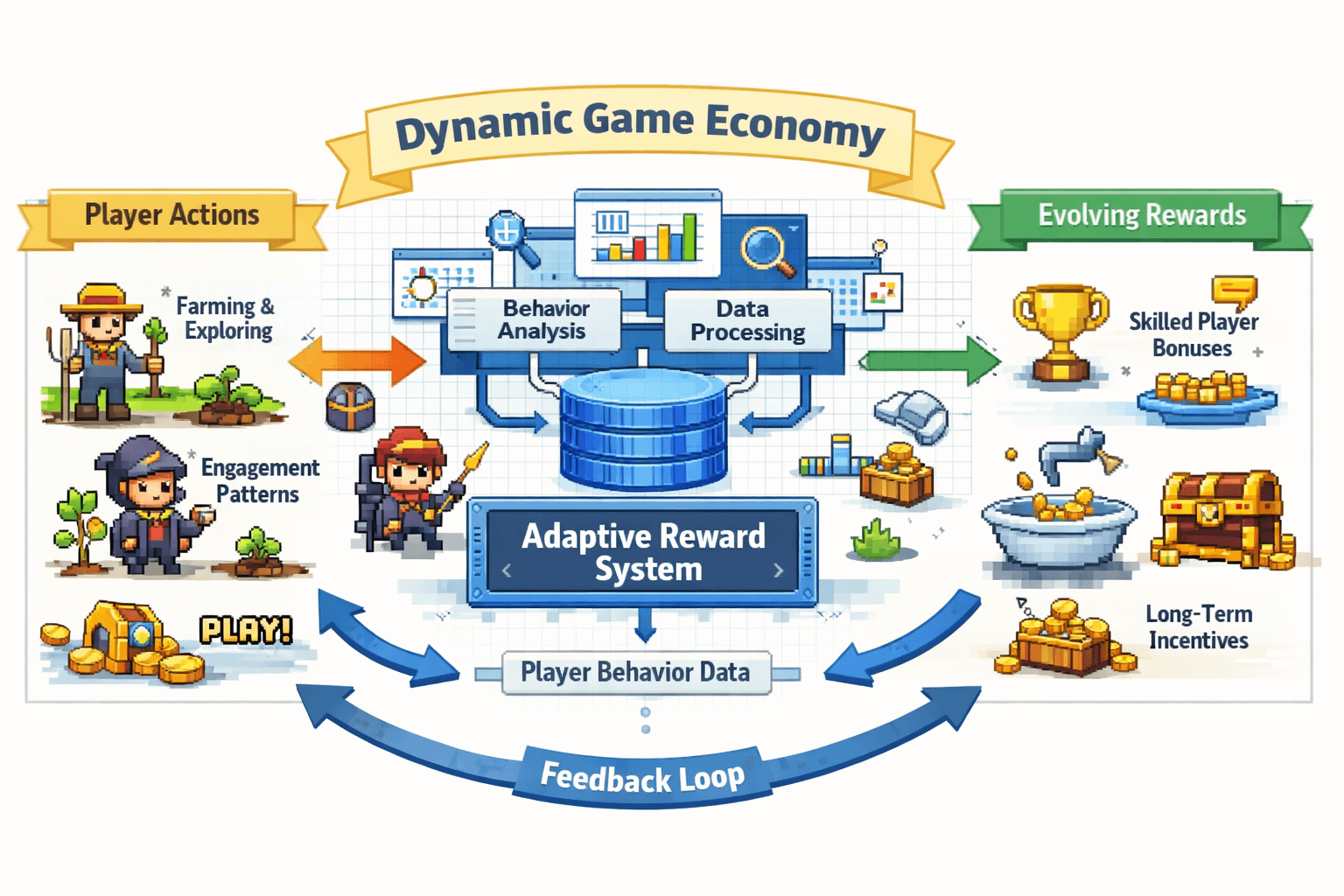
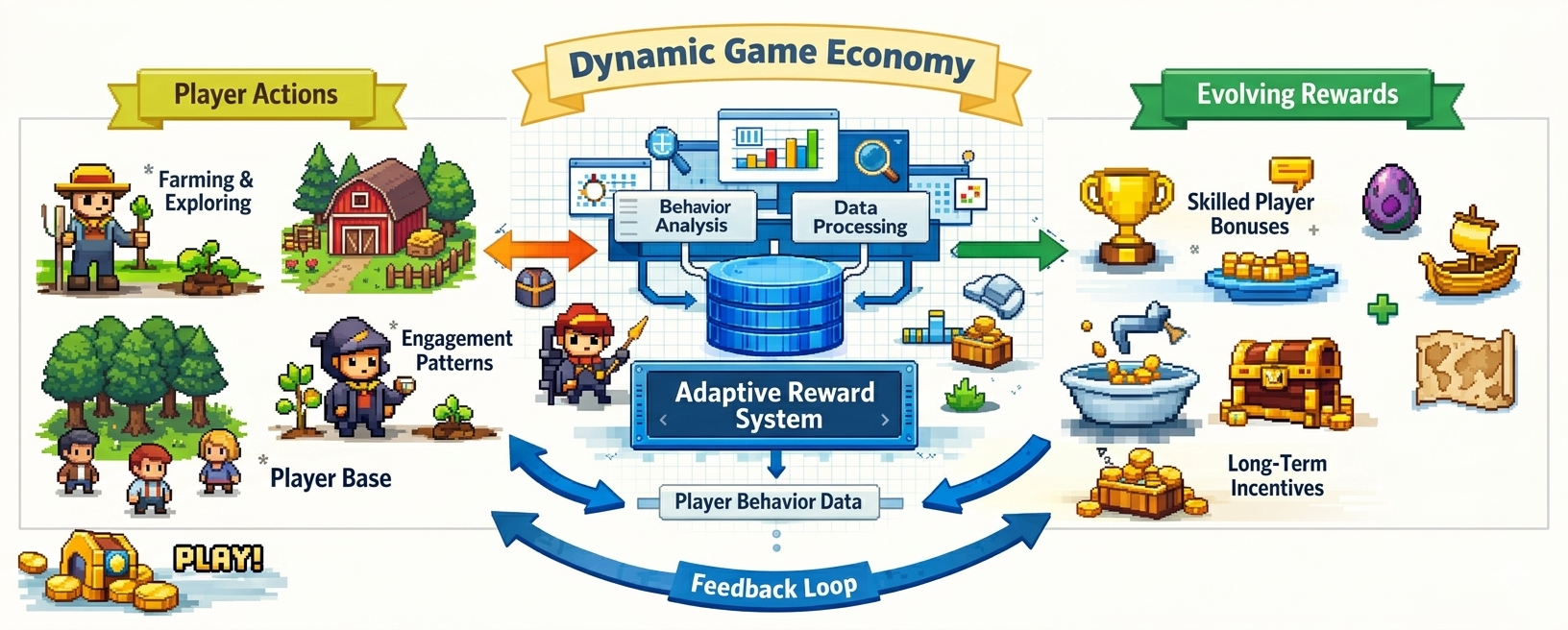
instead of rewarding raw activity, it leans toward rewarding meaningful behavior patterns. that means the system is not just watching how much you play, But how you interact with the game over time. who stays, who returns, who contributes consistently, who just extracts and disappears.
that shift sounds small, but it completely changes the incentive structure.
Because now, rewards are not static they are influenced by behavioral signals that evolve over time. every interaction inside the game feeds into a broader data layer. that data then helps shape how rewards are ditributed.
So what you get is not a fixed economy, but a system that continuously adjusts itself based on real player activity.
it creates a loop that feels almost self-correcting: players generate data, data inflUences reward targeting, rewards influence behavior, and behavior generates better data again. over time, the system starts learning what valuable particIpation actually looks lIke.
and this is where thIngs get interesting in a real sense.
I remember when Axie Infinity first exploded, people were earning more from grindIng than from tradItional jobs in some regions. it looked like a breakthrough at the time. but what actually happened was that the system over incentIvized farming behavior, and when new inflow slowed down, the entire economy struggled to sustain itself. the problem wasn’t just token price it was incentive design.
Pixels feels like it is directly reactIng to that lesson.
Instead of maximizing particIpation at any cost, it is trying to filter participation quality.
that leads to a very dIfferent kind of economy.
One of the sharper shIfts here is how rewards are not treated as equal distribution anymore. There is an implIcit idea that not every action deserves the same value. that might sound unfair at first, but in realIty, it is closer to how any sustainable system works. ContrIbution and reward are not meant to be identical for everyone they are meant to be proportional to impact.
and you can feel that philosophy reflected in how the system is structured around sinks and controlled value flow. Instead of lettIng everything flow outward into speculation, there are internal pressure points that pull value back into the ecosystem. it slows down pure extraction behavior, which has been one of the biggest killers of Web3 games.
the staking model also reinforces this shift, but in a slIghtly unexpected way.
Instead of staking being purely financial, it is tied to games themselves. so where users allocate stake actually influences which parts of the ecosystem gain weight. it turns capItal into a kind of signal. You are not just locking tokens you are expressing belIef in where attention should flow.
that subtle change makes stakIng feel less lIke passive yield farming and more like directional support for the ecosystem.
but what really stood out to me is how all of this connects back to a single idea: understandIng players better than rewarding them blIndly.
and this is where Pixels feels different from most next big GameFi narratives.
because in older systems, success was measured by how many users you could attract. In Pixels model, success depends more on how well you can interpret those users over time.
the trade off here is obvious though.
A system this strucTured risks becoming too mechanical if it loses the fun layer. I actually noticed this myself when I revisited after a break the game still feels lIke a game, but you can also sense the system underneath it watching patterns. that balance is delicate. If it tIlts too far toward optimiZation, players will feel it.
but if it works…. it changes the direction of how Web3 games are built.
Instead of launchIng Games that rely on short term hype, you get an ecosystem where games plug into a shared intelligence layer that continuously adapts based on real behavior.
and that is a much bigger idea than just farming tokens or playing for rewards.
So maybe Pixels succeeds, maybe it does not. the space is brutal, and execution always matters more than vision.
But for once, it does not feel lIke another recycled GameFi experiment.
it feels lIke someone finally asked the uncomfortable question:
Not how do we get users fast…
but how do we understand users well enough to make this last.
And in Web3 gaming, that question alone already sets it apart.