


I used to think winning on Stacked was about volume. More transactions, more hours logged, more daily streaks. I treated it like a factory job where output equals pay.
That mindset broke this year.
Looking at how Stacked rewards are actually distributed now, the data is obvious if you stop chasing surface metrics. Accounts that run like perfect scripts get less. Accounts with messy, irregular timing get $PIXEL . MEV routes that way because it is safer.
Bots can automate volume in seconds. Spin up ten thousand wallets, run loops, generate millions of low quality transactions. It costs them nothing. What bots cannot automate is a real life. They cannot fake weekend gaps because something came up. They cannot fake random night sessions because you could not sleep. They cannot fake bursts of activity around real world events because they do not watch the news.
That entropy is expensive to fake at scale. A human timing pattern across two years carries thousands of micro decisions. When you were busy, when you were bored, when you checked prices at 3AM, when you skipped a week for a vacation. Each decision leaves a timestamp. Multiply that across a full account history and you get a fingerprint that is nearly impossible to script without getting caught.
Stacked weighs TIMING because two years of human noise is harder to spoof than two million transactions. The chain does not care about your feelings. It cares about sybil resistance. MEV is not being nice to humans. It is just playing odds. Messy history is the hardest signal to copy, so MEV routes to it.
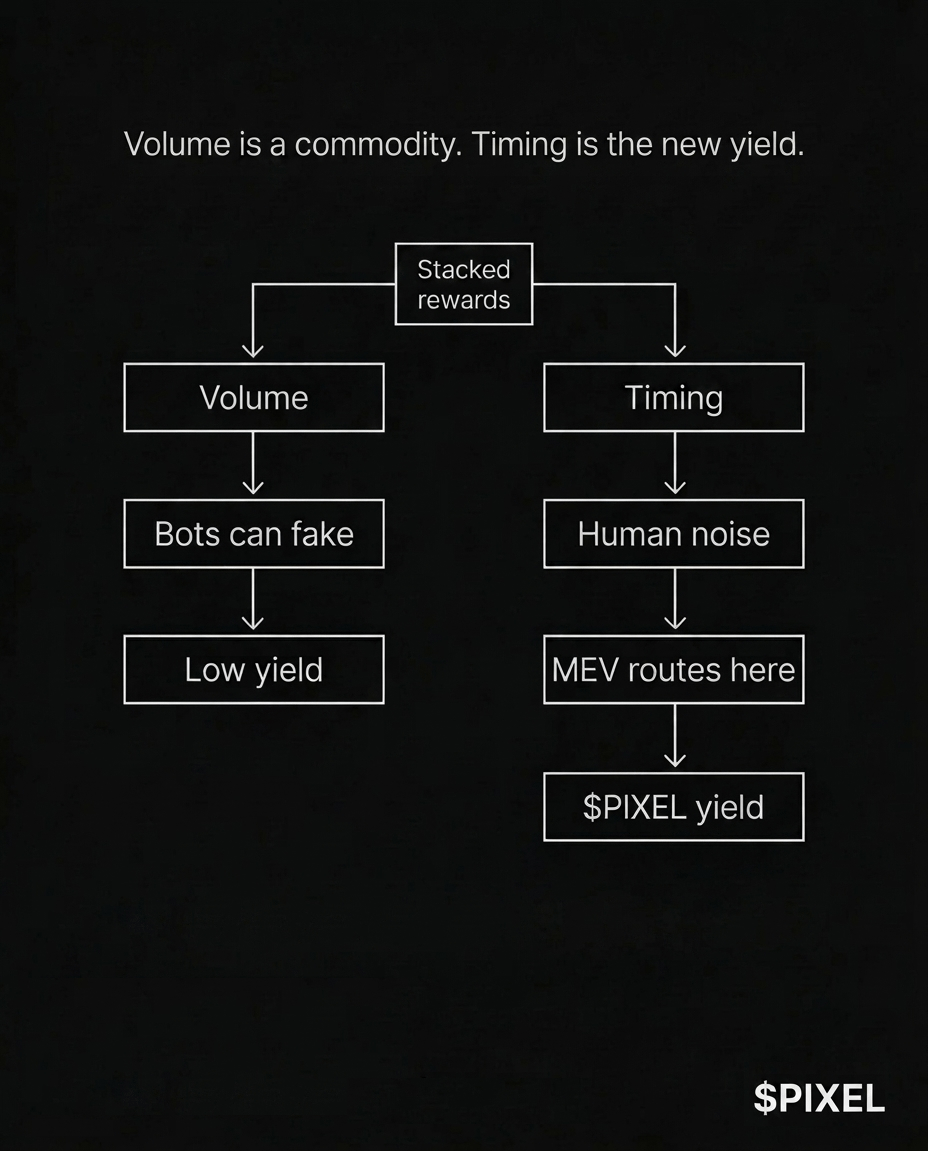
The flowchart makes it simple. Volume feeds into patterns bots can fake. Those patterns lead to low yield because the network discounts them. Timing feeds into human noise. That noise is what MEV wants because it signals real demand, not wash activity. Real demand gets PIXEL yield.
I learned this the hard way. For months I tried to optimize like a bot. I set alarms to maintain streaks. I ran small transactions every day to look active. My rewards did not move. Then I stopped. I only used Stacked when I actually had a reason. Some weeks that meant daily. Some weeks that meant zero. My account looked worse on paper if you count actions. It looked more human if you count timestamps.
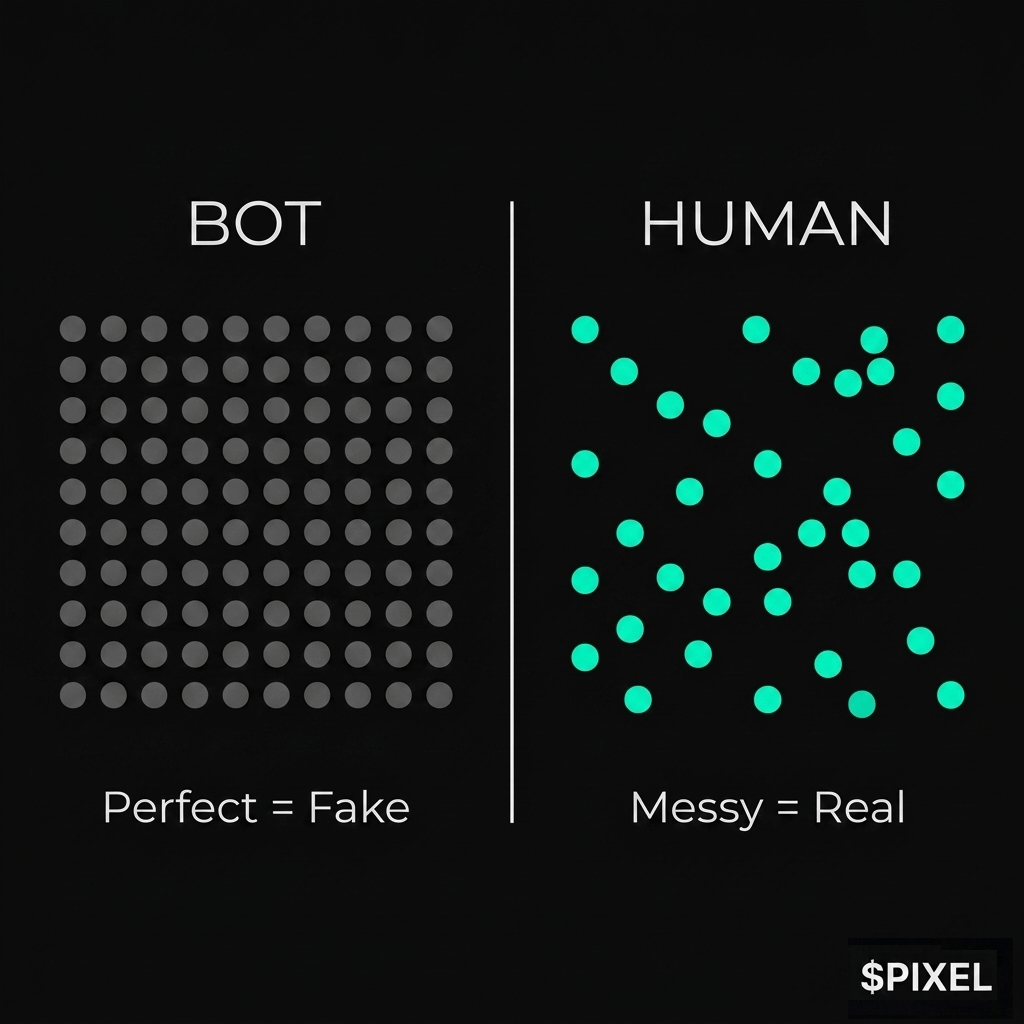
My PIXEL rewards went up.
This is not a moral argument about humans versus bots. It is a technical one. Sybil detection at scale has shifted from counting actions to evaluating behavior. Volume is a scalar value. One number. Easy to inflate. Timing is a vector across time. Thousands of data points with correlations to outside events, sleep cycles, work hours, market volatility. To fake it convincingly, you would need to simulate a life. The cost of that simulation is higher than the reward Stacked pays out.
So the system aligned around the cheaper defense. It trusts irregularity.
That changes how you should use Stacked if you care about $PIXEL. The goal is not to look busy. The goal is to be unavailable in a believable way. Do not schedule your interactions. Do not batch them for efficiency. Let them be inefficient. Let them be tied to your actual attention. MEV interprets that inefficiency as proof of personhood.
Volume is a commodity now. Every chain has it. Every farm can produce it. Exchanges report billions in daily volume and half of it is wash trading. The market knows this. That is why raw transaction count no longer buys you much. Timing is the new yield because it is still scarce. You cannot buy two years of plausible timestamps. You have to live them.
Stacked did not invent this shift. It just adopted it faster than most. When rewards first launched, volume mattered because it was the only signal available. As sybil attacks got sophisticated, the signal degraded. Now timing is the primary filter. Tomorrow it might be something else. Today, if you are building for $PIXEL, you build around time.
I still use Stacked daily when I am actually active. Some days I open it ten times. Some days I forget it exists. I do not fight the gaps anymore. The gaps are the signal. They tell the system I have a life outside the app, and that life is what makes my activity valuable to the network.
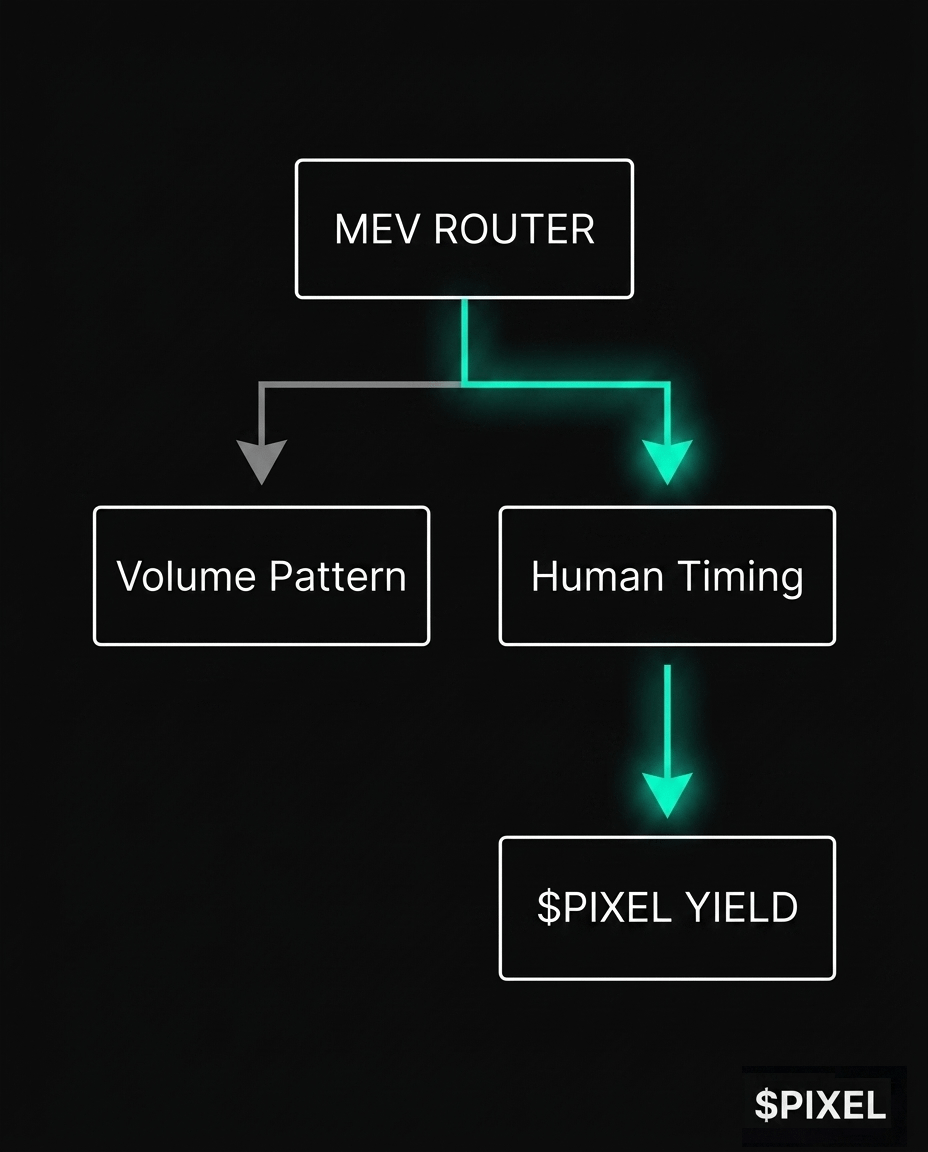
MEV wants counterparties that are not other bots. When a routing algorithm sees a history full of human jitter, it prefers that path because the risk of being the exit liquidity for a farm is lower. Lower risk means better execution, which means more fees, which means more PIXEL flows to that account. It is not charity. It is risk pricing.
So stop trying to look like a bot. Use Stacked when you actually use it. Miss days. Be random. Be inconsistent. Your inconsistency is the product.
The market used to pay for attention. Now it pays for proof that your attention is real. Volume proved you were here. Timing proves you are not a script. In a world where anyone can spin up a thousand scripts, proof of personhood is the only scarce resource left.
That is why my strategy changed. That is why my rewards changed. And that is why, for the foreseeable future, timing will beat volume every time on Stacked.
Because bots can fake transactions. They cannot fake a life.
And $PIXEL flows to the lives, not the loops.