

Bitcoin’s current market cycle is performing far weaker than the three previous halving cycles, according to Galaxy Research head Alex Thorn.
Since the April 2024 halving, Bitcoin’s all-time high above $125,000 in October 2025 marked only a 97% gain from the halving price near $63,000. By comparison, previous cycles delivered much larger returns:
2012 cycle: +9,294%
2016 cycle: +2,950%
2020 cycle: +761%
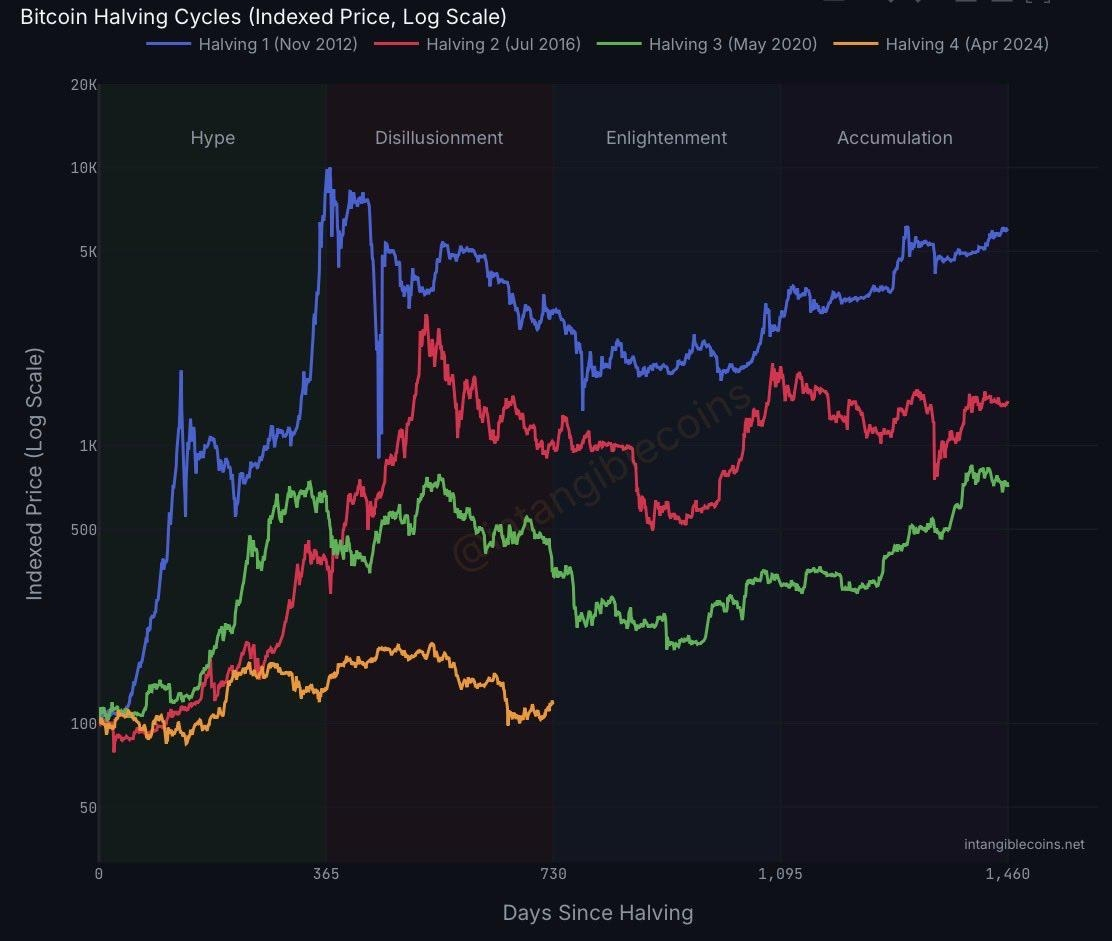
Thorn described cycle four as “dramatically underperforming”, raising questions about whether the traditional four-year halving model is losing influence.
One major reason may be declining volatility. Bitcoin’s 30-day volatility index has remained much lower this cycle, recently near 1.75%, compared with previous sharp spikes.
However, critics argue the comparison is incomplete because Bitcoin hit a record high above $70,000 in March 2024, before the halving itself. That unusual pre-halving rally was largely driven by U.S. spot Bitcoin ETF approvals.
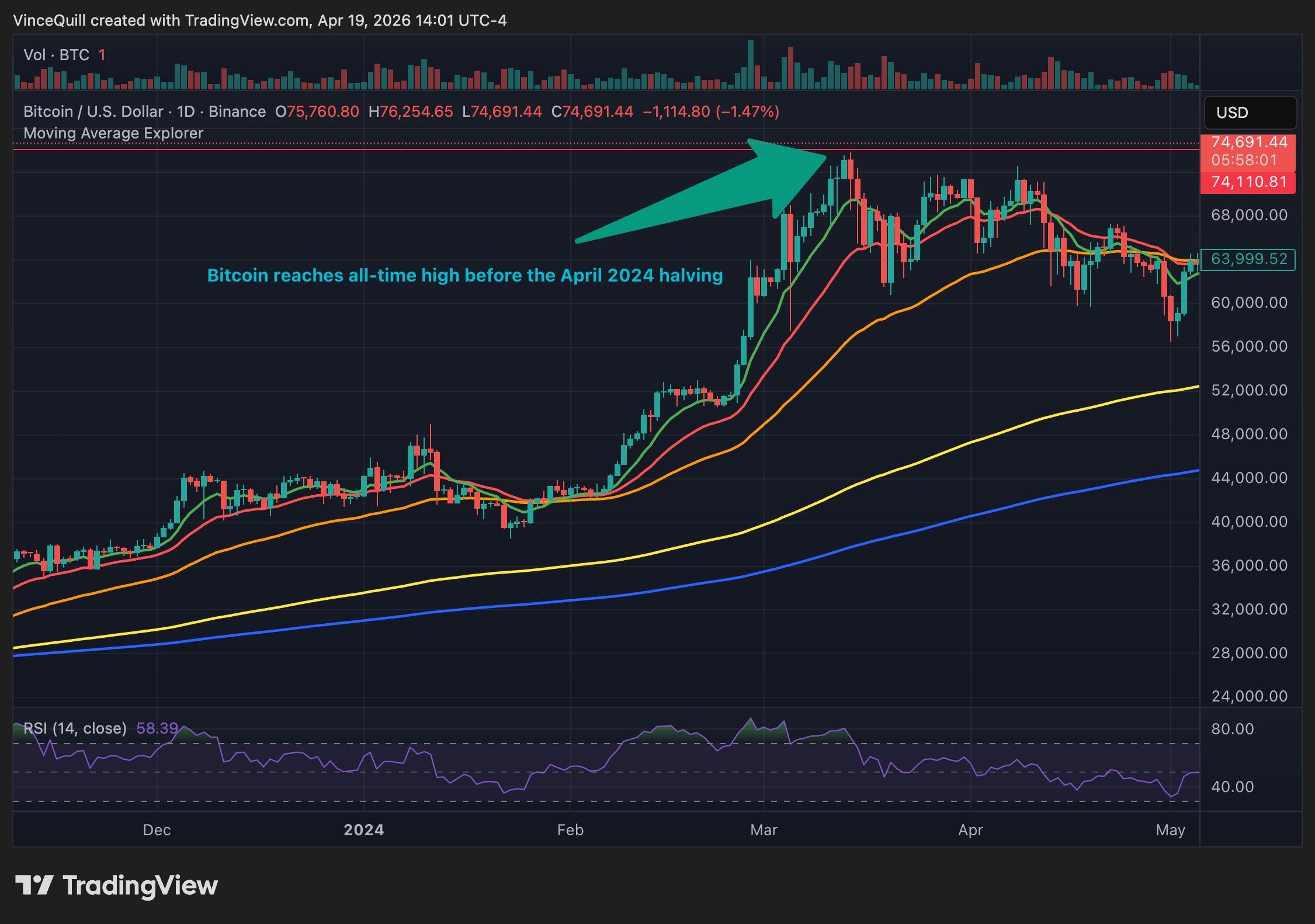
Another notable shift is smaller bear market drawdowns. Past Bitcoin crashes often reached 80% to 90%, while the recent drop from $125K to $60K was closer to 50%.
Some analysts believe this signals a maturing market, with institutional flows and ETFs increasingly shaping Bitcoin price action more than the halving cycle alone.
Bitcoin was trading near $74,700, up almost 5% over the last seven days.