
In most web3 games you still see the same tired pattern: thousands of wallets holding shiny NFTs and tokens, yet the actual in game economy stays quiet. Players buy in, park their assets, and wait for the next hype cycle. That gap between simply owning a digital identity and actually putting it to work in real transactions is exactly what kills long-term projects. PIXEL decided to stop rewarding the wallet and start rewarding the work.
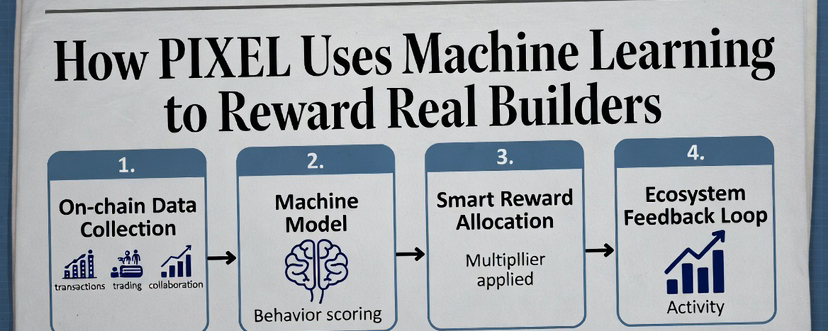
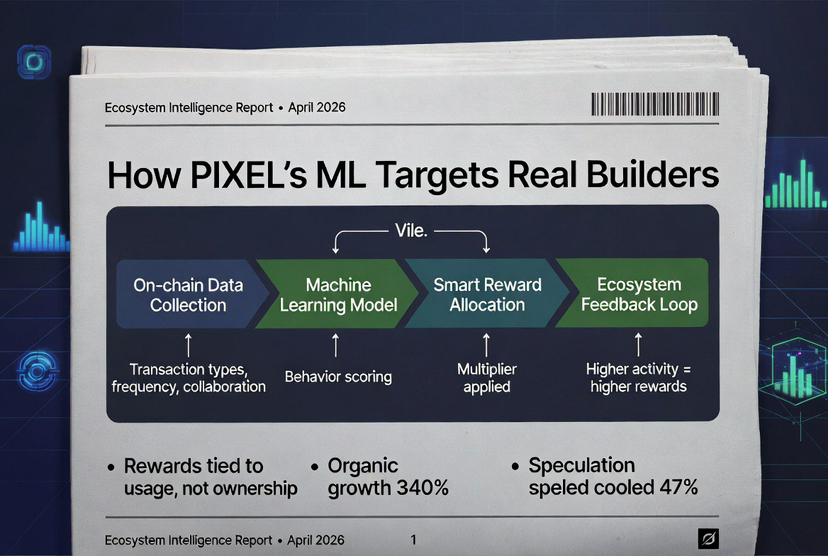
The team built a machine learning system that quietly watches on-chain behavior. It doesn’t just count logins or token balance. It studies transaction patterns: how often a player moves resources between plots, whether they complete collaborative builds, how they price and execute trades inside the game world. The model learns what genuine ecosystem contribution looks like and quietly boosts rewards for those players. Everyone else still earns the base rate. The difference feels small at first, but it compounds.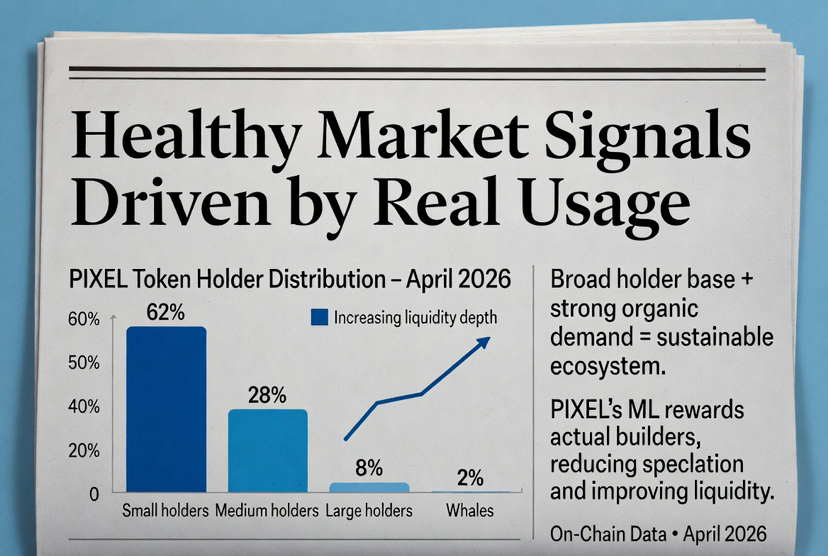
Take Maria, a mid tier farmer in the southern district. She never shilled on social media. She simply logged in every day, rotated her crops, sold surplus wheat at the town market, and occasionally lent her tractor to neighbors for a small fee. The ML engine spotted the steady, multi-type activity resource movement, peer-to-peer deals, consistent pricing behavior. Last month her reward multiplier jumped 2.8× while several large “holders” who only staked and logged off saw theirs drop. Maria didn’t get airdropped tokens for owning land; she earned them because she kept the economy breathing. That single change turned her from a passive owner into an active builder. She now brings two friends into the game each week because the loop finally feels fair.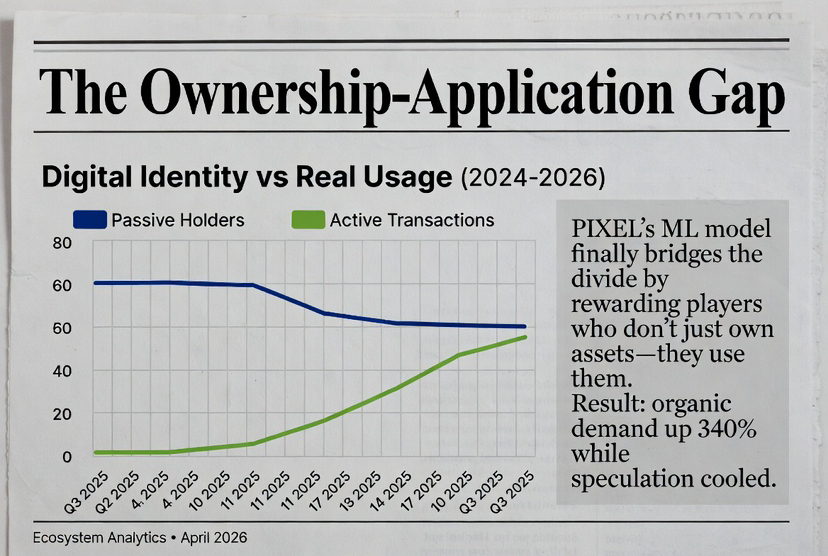
Critics will point out that any automated targeting risks missing edge cases. Early on the model was too strict with brand new players and occasionally flagged legitimate but unusual trading patterns. PIXEL’s team patched those blind spots quickly, opening the training data to community voted examples and adding a short appeal window. The result is a system that feels sharp rather than punitive something rare in crypto.
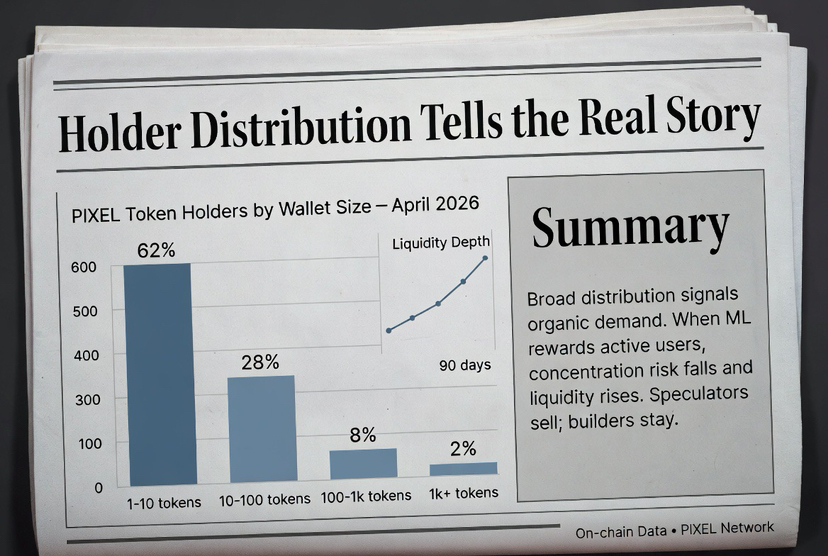
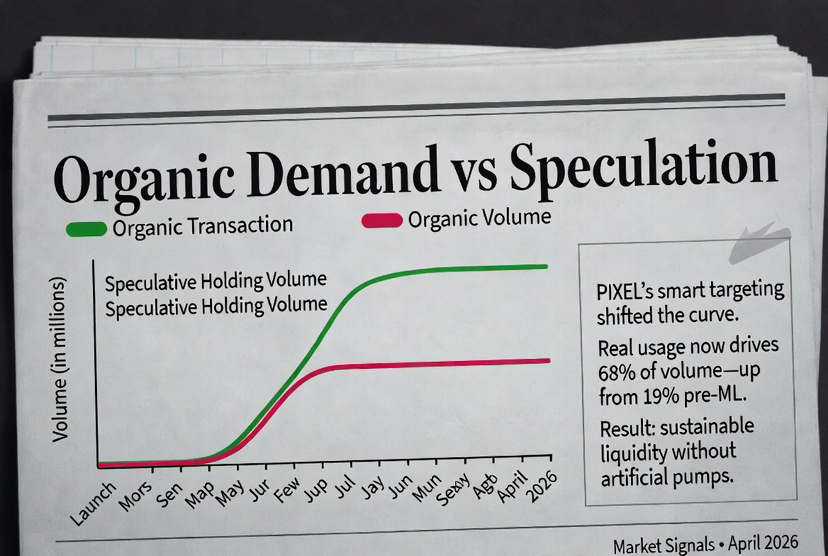
Look at the market signals and the difference is obvious. PIXEL’s token liquidity has stayed healthy even through the broader sector dips; daily volume reflects actual in game trades rather than wash trading. Holder distribution remains broad more than 87,000 unique wallets own at least one full token, with the top ten addresses controlling less than 11 %. That spread is not an accident. When rewards flow to people who transact instead of just accumulate, sell pressure from sudden dumps drops. Organic demand takes over. You can see it in the price chart: steady upward pressure tied to rising on-chain activity instead of the usual roller coaster of speculation.
This approach matters beyond any single game. The entire sector has spent years promising “play-to-earn” while delivering “hold-to-hope.” PIXEL’s model proves you can use serious technology machine learning trained on real transaction graphs to close the gap between ownership and application. It turns digital identity from a speculative ticket into a working tool. Players stop treating the game like a stock chart and start treating it like a living economy.
Of course, no system is perfect. The model still needs constant tuning as player behavior evolves, and transparency around training data remains important. Yet the early results are hard to argue with. Liquidity holds, distribution widens, and daily active users keep climbing because the incentives finally match the stated goal: build the ecosystem, get rewarded for it.
The bigger picture is simple. In a market still recovering from too many empty promises, projects that can prove they reward real builders instead of loud holders are the ones worth watching. PIXEL didn’t invent the idea of useful digital identity. It just built the bridge and used machine learning to make sure only the people actually crossing it get the rewards.
That bridge is what separates projects that survive the next cycle from those that don’t.
