
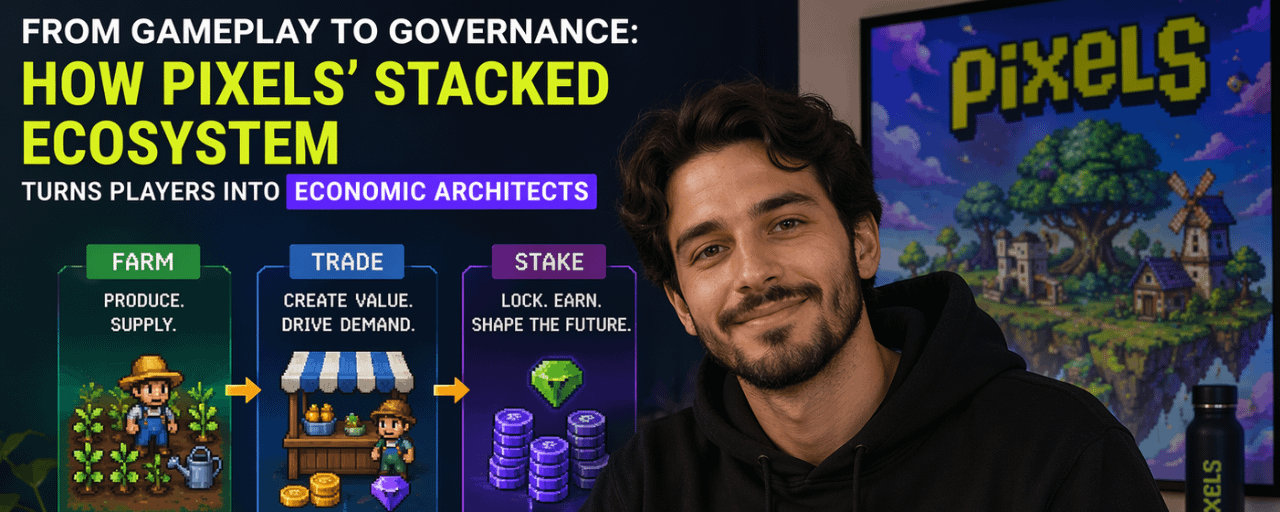
@Pixels is no longer just a play-to-earn experiment—it’s evolving into a layered economic system where every player decision contributes to a larger, self-sustaining loop. What makes Pixels unique isn’t just farming, trading, or staking individually, but how these elements are stacked to create a dynamic player-driven economy. This structure transforms users from passive participants into active economic architects.
At the base layer, farming acts as the primary resource generator. Players invest time and strategy into producing crops and materials, which are not just in-game items but valuable economic inputs. Unlike traditional games where resources are infinite or developer-controlled, Pixels ties production to effort, scarcity, and player behavior. This creates a natural supply flow that feeds directly into the next layer: trading.

The trading layer introduces liquidity and price discovery. Every harvested item enters a marketplace where demand is shaped by real player needs—crafting, upgrading, or staking. This means value is not artificially assigned; it emerges organically. Players who understand market timing, scarcity cycles, and demand spikes can outperform others, making trading a skill-based economic activity rather than luck.
Above this sits staking, the layer that binds the ecosystem together long-term. Instead of quick extraction, staking incentivizes commitment. Players lock assets to earn rewards, support the ecosystem, and stabilize token circulation. This reduces inflation pressure while rewarding those who believe in the system’s future. It’s a shift from short-term gain to long-term positioning.
What truly defines Pixels’ stacked ecosystem is the feedback loop between these layers. Farming fuels trading, trading influences staking decisions, and staking impacts future resource value. This interconnected cycle ensures that no action exists in isolation. Every choice—what to grow, when to sell, what to stake—has ripple effects across the entire system.
More importantly, this design introduces a subtle but powerful concept: governance through behavior. Even without formal voting systems, players collectively shape the economy. If many players shift to farming a specific crop, supply increases and prices drop. If staking rises, circulating supply tightens, affecting market dynamics. In essence, the community governs the ecosystem through participation.
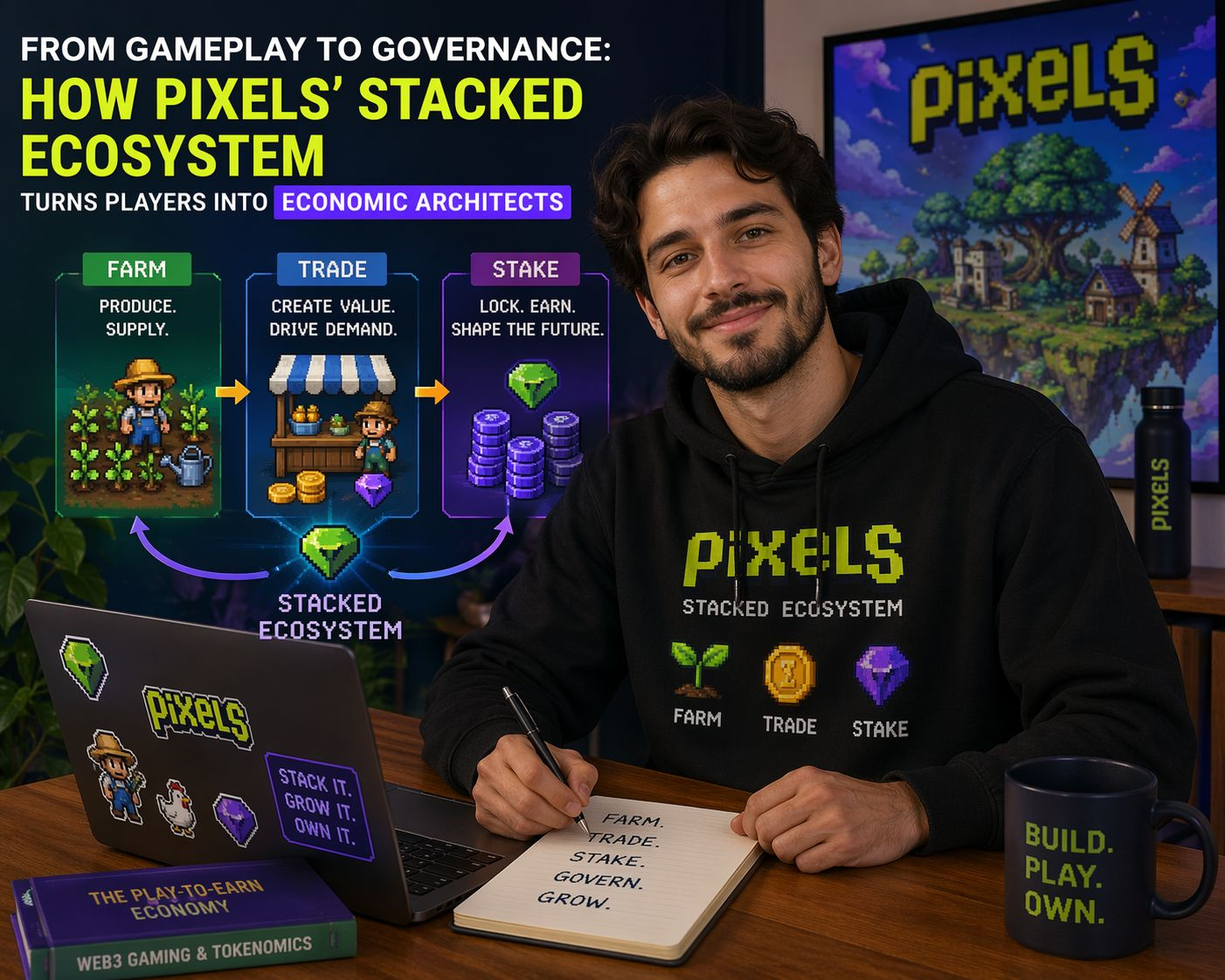
This is where Pixels breaks away from traditional gaming and even many Web3 models. It’s not just about earning tokens—it’s about influencing a living economy. Players are no longer just users; they are stakeholders whose strategies define the system’s direction.
As the ecosystem matures, this stacked design could become a blueprint for future Web3 games. Instead of isolated mechanics, we’ll likely see more interconnected systems where gameplay, economy, and governance merge seamlessly. Pixels is already demonstrating that when players are given real economic roles, engagement deepens and sustainability improves.
In the end, Pixels isn’t just building a game—it’s building a digital economy where every action matters, and every player has the power to shape its future.