
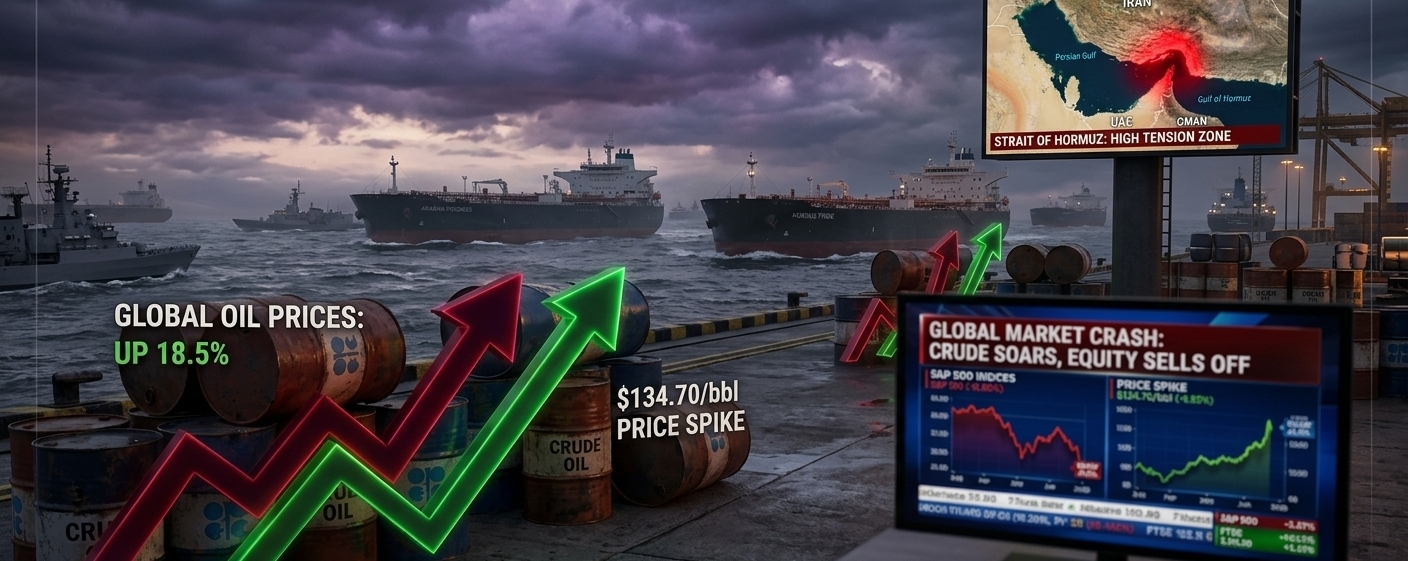
Global oil markets are back in turbulence as escalating tensions between the United States and Iran send prices sharply higher.
In early Monday trading, Brent crude jumped 6.4% to $96.13, while West Texas Intermediate (WTI) surged 7.5% to $90.15, reflecting growing fears of supply disruption.
At the center of the الأزمة is the Strait of Hormuz — a critical maritime corridor responsible for transporting nearly 20% of the world’s oil and LNG.
📊 WHAT TRIGGERED THE SPIKE?
The latest surge comes just days after oil prices briefly dropped when Iran signaled the strait would remain open during a temporary ceasefire. That optimism quickly faded.
Over the weekend, US President Donald Trump confirmed that US forces seized an Iranian-flagged cargo ship, accusing it of violating a naval blockade.
The move has intensified fears that the الأزمة could spiral further, potentially disrupting global energy flows.
⚠️ MARKET VOLATILITY IS BACK
Since late February — when US and Israeli strikes targeted Iran — oil markets have experienced extreme swings, driven by military escalation and uncertainty over shipping routes.
Iran has repeatedly warned it could target vessels in the Strait of Hormuz, turning the المنطقة into one of the most dangerous energy corridors in the world right now.
🌍 DIPLOMACY STALLS
Efforts to ease tensions are struggling. Talks expected in Islamabad may not happen, as Iran signals it has no immediate plans to participate.
The US delegation, led by Vice-President JD Vance, is still preparing for negotiations — but without Tehran’s involvement, progress remains uncertain.
📉 THE BIG PICTURE
With military pressure rising and diplomacy stalling, markets are now pricing in a higher risk of prolonged disruption.
If the Strait of Hormuz faces further restrictions, oil prices could climb even higher — impacting everything from fuel costs to global inflation and crypto markets.
#OilPrices #USIran #StraitOfHormuz #BreakingNews #EnergyCrisis #GlobalMarkets #Geopolitics #Inflation #CryptoNews #MarketVolatility