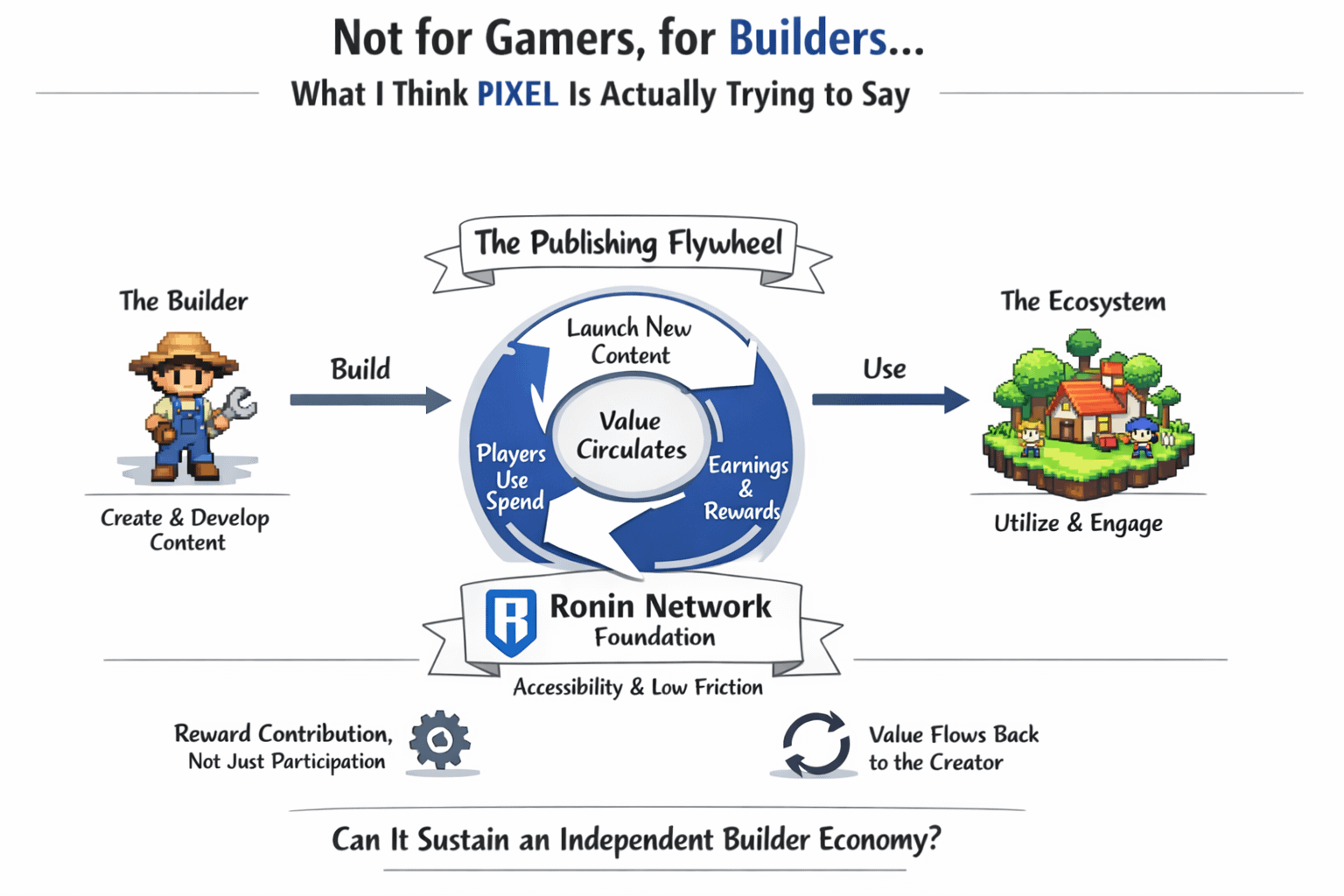
I didn't expect this but once I actually sat down and read through the whole model, one question kept coming back to me......Is this really a game, or is there a builder economy quietly running underneath it? Because the more I looked, the more I realized the gamers here are users. The ones building content, creating tools, growing the ecosystem from the inside out, those are the people this thing was actually designed for.
I've been around long enough in this space to know that most projects talk about ecosystems... but never really define who the ecosystem is for. 😏 That's where this one started feeling different to me. The structure here isn't built around rewarding someone for playing well. It's built around rewarding someone for contributing something that others keep using. That's a fundamentally different incentive design, and it changes how you read everything else about the project.
The Publishing Flywheel model is the clearest example of this. At its core, the idea is that value should circulate, not just be extracted. When a creator builds something inside the ecosystem and that thing gets used repeatedly, the system is supposed to generate returns back to that creator....Most GameFi projects I've watched over the last few cycles never got this right. 🤔 They built reward systems that looked generous on paper but drained the moment new users stopped coming in. This model at least attempts to solve that by tying value creation to actual utility, not just participation.
But here's what I kEEp sitting with......An intention is not the same as an execution... The flywheel concept makes sense in theory, and I think it's asking the right questions. Whether the on-chain behavior actually reflects that over time is a separate conversation. So far the supply dynamics and the demand signals I've been watching suggest the structure is holding, but I wouldn't call it proven yet. I'd call it worth watching closely.
What genuinely surprised me is the choice of Ronin as the foundation. Most people frame that as a gaming infrastructure decision, and it is. But it also tells you something about who they think the long-term builders will be. Ronin has a specific developer community, a specific ethos around accessibility and low friction........ Choosing to build there wasn't just a technical call. It was a statement about what kind of economy they're trying to attract.
The question I can't fully answer yet is whether the builder incentives are strong enough to sustain independent contribution at scale. Right now the ecosystem still feels early, which is honest. But early is only valuable if the foundation holds when the crowd thins out. Most projects I've followed haven't survived that test.
So where does that leave me? I'm not calling this a sure thing....I'm saying that the questions this project is asking about ownership, contribution, and circular value are more serious than what I usually see packaged inside a farming game. That alone makes it worth understanding before writing it off as just another token on a chain. 👀