
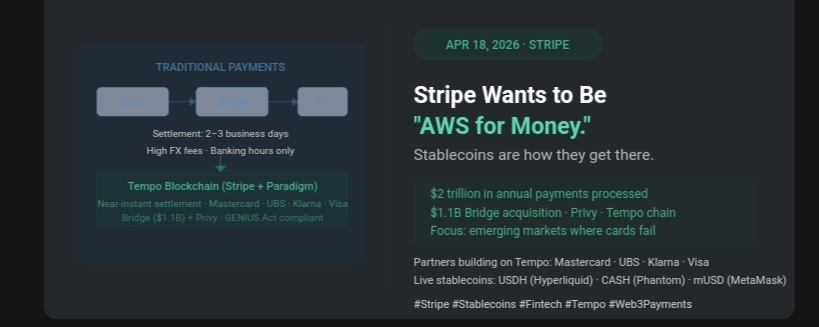
Gdy firma, która cicho obsługuje płatności dla Amazon, Google, Shopify, Lyft i milionów innych firm, mówi, że "zainwestuje w stablecoiny", warto zwrócić na to szczególną uwagę. Stripe integruje stablecoiny i blockchain w swoim podstawowym systemie płatności w dążeniu do zostania "AWS dla pieniędzy" i przyspieszenia globalnego ruchu pieniędzy. Firma, która przetwarza prawie 2 biliony dolarów w płatnościach rocznie, wykorzystuje przejęcia takie jak Bridge i Privy oraz nowy blockchain o nazwie Tempo, aby skrócić czasy rozliczeń z dni do niemal natychmiastowego.
Porównanie AWS jest precyzyjne i zamierzone. Amazon Web Services nie tylko hostował strony internetowe — stał się niewidoczną infrastrukturą, na której działa większość internetu. Stripe stawia na to samo: że stablecoiny i programowalne blockchainy staną się niewidocznymi rurami, przez które przebiega większość globalnego ruchu pieniędzy. Chcą być firmą, która buduje i posiada tę infrastrukturę. Stripe dąży do tego, aby użytkownicy mogli płynnie przechodzić między tradycyjnymi systemami bankowymi a kryptowalutami, ze szczególnym naciskiem na rynki wschodzące, gdzie stablecoiny i DeFi mogą oferować usługi, które tradycyjne banki mają trudności w dostarczeniu. Popyt na to rośnie najszybciej w Globalnym Południu i w przypadkach transakcji transgranicznych, gdzie karty zawodzą, a waluty są niestabilne.
Stos wykonawczy jest już znaczny. Przejęcie Bridge za 1,1 miliarda dolarów daje Stripe API do orkiestracji stablecoinów, które pozwalają firmom wysyłać, odbierać i konwertować stablecoiny bez bezpośredniego dotykania złożoności blockchaina. Privy, przejęte w zeszłym roku, obsługuje infrastrukturę portfela dla 75 milionów kont, nie wymagając od użytkowników zarządzania frazami seedowymi czy tokenami gazu. Stripe nawiązał współpracę z firmą inwestycyjną kryptowalut Paradigm, aby opracować blockchain skoncentrowany na płatnościach o nazwie Tempo, który zadebiutował w zeszłym miesiącu z partnerami infrastrukturalnymi, w tym Mastercard, UBS, Klarna i Visa.
Pomyśl, co oznacza to ostatnie zdanie. Blockchain stworzony do płatności przedsiębiorstw, już działający, już współpracujący z Mastercard i Visa jako partnerami infrastrukturalnymi. To nie jest whitepaper. To operacyjne. Już działające stablecoiny na tej infrastrukturze: USDH na Hyperliquid, CASH na Phantom, mUSD na MetaMask. Wczesni adopci są związani z kryptowalutami — ale infrastruktura jest budowana z myślą o dniu, kiedy tradycyjne firmy podążą za tym trendem. Lider kryptowalutowy Stripe opisał tę okazję: "Technologia nie była wcześniej dostępna. Teraz doszliśmy do punktu, w którym możemy to naprawdę zrealizować. Jesteśmy bardzo podekscytowani i podwajamy nasze wysiłki."
Stripe nie buduje tylko produktu. Buduje finansowy odpowiednik chmury obliczeniowej — a stablecoiny to jego architektura serwerowa. Jeśli im się to uda, firmy, które nie zintegrowały się, będą w takiej samej sytuacji, jak przedsiębiorstwa, które odmówiły przejścia do chmury w 2012 roku.