

On the surface, Pixels is exactly what it claims to be. It’s a bright, pixelated world of agrarian loops. You log in, you till the soil, you plant the seeds, you wait, and you harvest. It’s a familiar rhythm, one we’ve been conditioned to accept across decades of gaming—from Harvest Moon to FarmVille. We assume the game is a simple vending machine: you insert time and effort, and it spits out progress and $PIXEL tokens.
But stay in the loop long enough, and the rhythm starts to feel... different. Not broken, but weighted.
After spending significant time within the ecosystem, I began to notice a divergence that couldn’t be explained by simple RNG (random number generation) or basic optimization. You can take two players, give them the same amount of time and the same basic resources, and watch them end up in entirely different places. It isn't a matter of skill—there’s no "aim" in watering a berry—and it’s not purely luck.
There is something quieter happening. It feels as though the system isn't just counting your hours; it’s reading them.
The Myth of Neutral Time
We tend to view time in games as a neutral currency. An hour spent by Player A is worth the same as an hour spent by Player B. If Player A gets more out of it, we chalk it up to "strategy." But in Pixels, time doesn't feel neutral. It feels structured.
I started noticing that certain routines "stick" better than others. When you fall into specific patterns of behavior, the friction of the game seems to melt away. The rewards don’t necessarily spike in a way that would trigger a developer’s "nerf" reflex, but the progress becomes smoother. The "misses" become fewer.
This isn't just progress in the traditional sense of leveling up; it’s as if the system is rewarding predictability.
Think about how global marketplaces like Amazon or eBay rank their sellers. They don’t just look at who moves the most volume. They look at consistency. They look at delivery times, response rates, and repeat patterns. The platform prioritizes the reliable seller over the chaotic one because the reliable one is a "known quantity." They are easier to manage, easier to scale, and easier to integrate into the platform’s long-term health.
Pixels appears to be doing the same thing with player behavior. It is quietly sorting us.
$PIXEL: More Than a Reward, It's a Filter
This is where the $PIXEL token begins to look like something other than a standard reward currency. Usually, we see tokens as a "thank you for playing" gesture—a way to extract value from your time. But if the system is favoring specific behavioral patterns, the token ceases to be a neutral asset.
Instead, $PIXEL, becomes a sorting mechanism.
The system doesn’t need to know your name or your IP address to build a profile of you. It only needs to see how you move through the loop. Once your behavior becomes stable and predictable, you become "usable" to the ecosystem. Your time is no longer just a raw resource; it’s a structured asset.
By rewarding the "smooth" loops and the consistent routines, the game effectively reinforces certain types of players while letting "noisy," erratic behavior fade into the background. We aren't just farming crops; we are being farmed for our data-driven reliability.
The Narrowing of the Loop
There is a tension that comes with this kind of structural design. The more a system rewards predictable behavior, the more we—the players—unconsciously adjust to meet it.
We stop asking, "What is fun?" or "What can I explore?" and start asking, "What works?"
This creates a convergence. Diversity of play drops. The game world becomes more efficient and easier for developers to manage, but it also becomes narrower. We see this in social media algorithms all the time: the more the system rewards a specific type of "high-engagement" post, the more everyone starts posting the exact same way. The ecosystem becomes a monoculture.
In Pixels, this manifests as a silent pressure to optimize. If you don’t find the "smooth" path, you feel like you’re wading through mud. If you do find it, you’re no longer playing; you’re performing a protocol.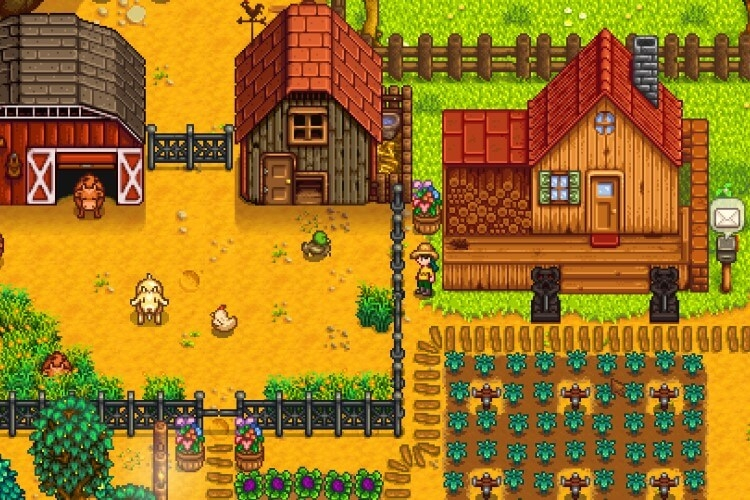
The Invisible Market
From an investment and market perspective, this makes $PIXEL, incredibly difficult to read. If you’re looking at a chart of player growth or daily active users, you’re only seeing the surface. The real value of the ecosystem might actually be tied to the quality of its structured time.
Standard Growth: More players = more demand = higher price.
Structured Growth: More predictable, usable behavioral patterns = a more durable, programmable ecosystem.
If the $PIXEL, token is the grease that keeps these "predictable loops" moving, then its value isn't just in how many people are playing, but in how effectively the system can sort those players and reuse their behavior in future expansions or interconnected games.
The Final Output
It’s entirely possible that I’m overthinking it. Systems often appear more intelligent than they are simply because of the sheer volume of human interaction hitting them at once. This could all be emergent behavior—the natural result of thousands of players seeking the path of least resistance.
However, I can’t shake the feeling that the "farming" is just a front.
In the digital age, we’ve learned that if a service is free (or even if it’s a game), the product is often us. In the case of Pixels, the product isn't the berry you just harvested, and it isn't even the token you earned for it.
The real output of Pixels is structured time. It is the process of taking the chaotic, unpredictable energy of human play and refining it into something orderly, predictable, and—ultimately—valuable to a machine.
The next time you log in to plant your seeds, ask yourself: are you tending to the farm, or is the farm tending to you?
