

It sort of crept up on me, honestly.
Not in a big, loud way more like I kept seeing it in the background. Screenshots, people mentioning it casually, someone saying they’d been logging in every day like it was nothing. A farming game. Pixels. I almost ignored it, which is usually my default at this point. There’s always something new, always another thing people swear is “working.”
I’ve learned to wait.
Because most things in this space look stable right up until they’re not. And games, especially — they tend to carry this extra layer of illusion. Fun on the surface, but underneath there’s always a system trying to balance itself, usually with a token doing more work than it should.
Maybe that’s too harsh.
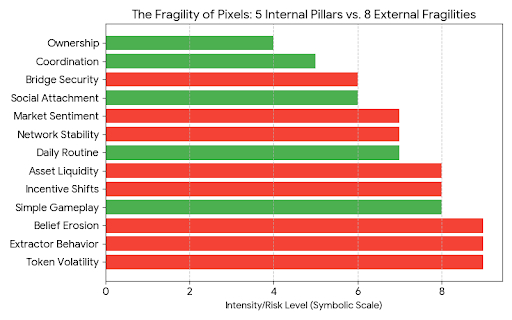
Because the longer I watched it — not just the game, but the way people moved around it — the more it started to feel like something else was being tested. Not the gameplay itself, which is… fine. Pleasant, even. But the surrounding system. The invisible parts. Who shows up, why they stay, what breaks when incentives shift just slightly.
I keep coming back to that.
Web3 games always talk about ownership, but rarely about persistence. What does it mean for something like Pixels to exist not just during the good months — when tokens behave, when attention flows easily — but during the quiet stretches? When activity drops, when assets stop feeling liquid, when “players” start acting more like… extractors.
That’s where things start to feel uncomfortable.
Because a farming loop only works if people believe the harvest matters. Not just emotionally, but economically, or at least socially. And in these systems, belief is thin. It’s conditional. It bends under pressure.

Pixels leans on Ronin, which is interesting in itself. Ronin has history — not all of it clean. And that’s part of the point, maybe. Infrastructure in crypto doesn’t fail loudly most of the time; it erodes slowly. Small trust assumptions stack up. Bridges, wallets, identity layers… they work until they don’t, and when they don’t, it’s rarely contained.
So you start asking different questions.
Not “is the game fun?” but “what happens if the underlying network hiccups for a week?”
Not “are there players?” but “are these players or just temporarily aligned incentives?”
Not “does the token have value?” but “who is left when it doesn’t?”
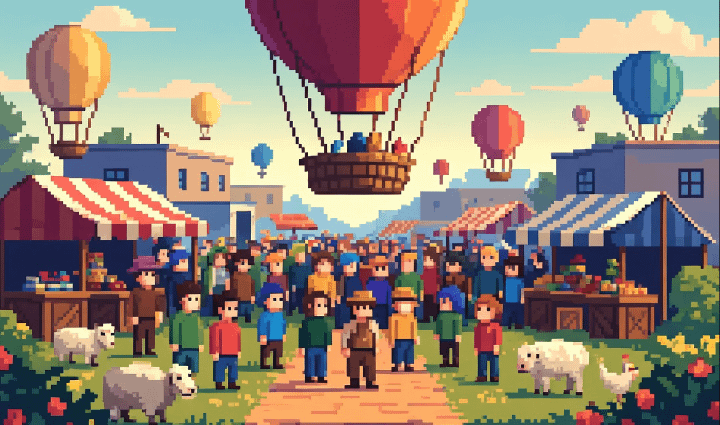
And Pixels, to its credit or maybe just by accident, exposes some of this more than others. The simplicity makes the cracks easier to see. There’s nowhere to hide. No complex mechanics to mask what’s really going on underneath: a coordination experiment, lightly gamified.
Sometimes it works. You see real patterns of behavior — cooperation, routine, even a kind of attachment forming. People logging in not just for extraction, but because it’s become part of their day. That’s not nothing.
But then you notice how thin that layer is.
A slight shift in rewards, a change in token dynamics, and the tone changes. The same fields, the same pixels… but the intention behind every action feels different. Less like tending, more like timing. Less like play, more like positioning.

Maybe that’s inevitable.
Or maybe it’s the part we keep underestimating that these systems aren’t just about building worlds, but about sustaining belief in them. And belief, especially in crypto, has a short memory and a quick exit.
I’m still not sure what Pixels really is, underneath all of this. A game, obviously. But also a kind of mirror. Or maybe a stress test.
And I can’t tell if it’s holding up… or just holding on.
