
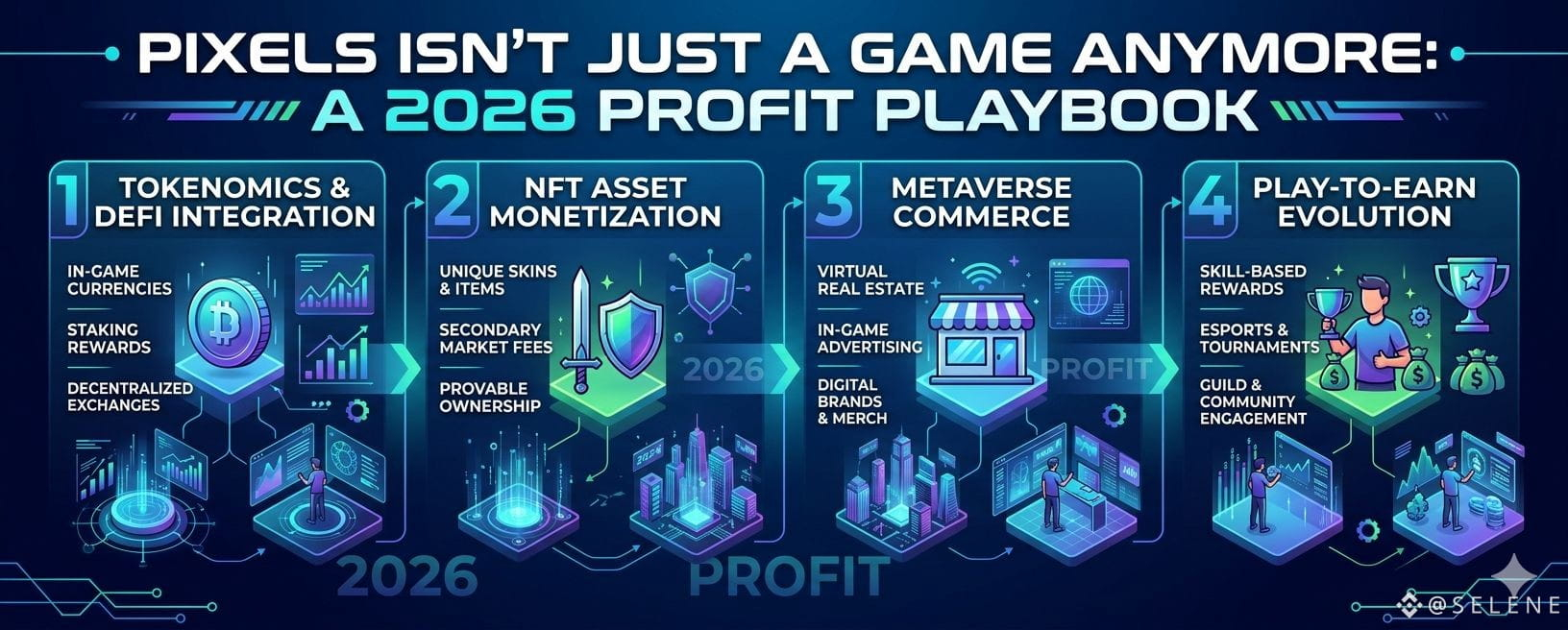

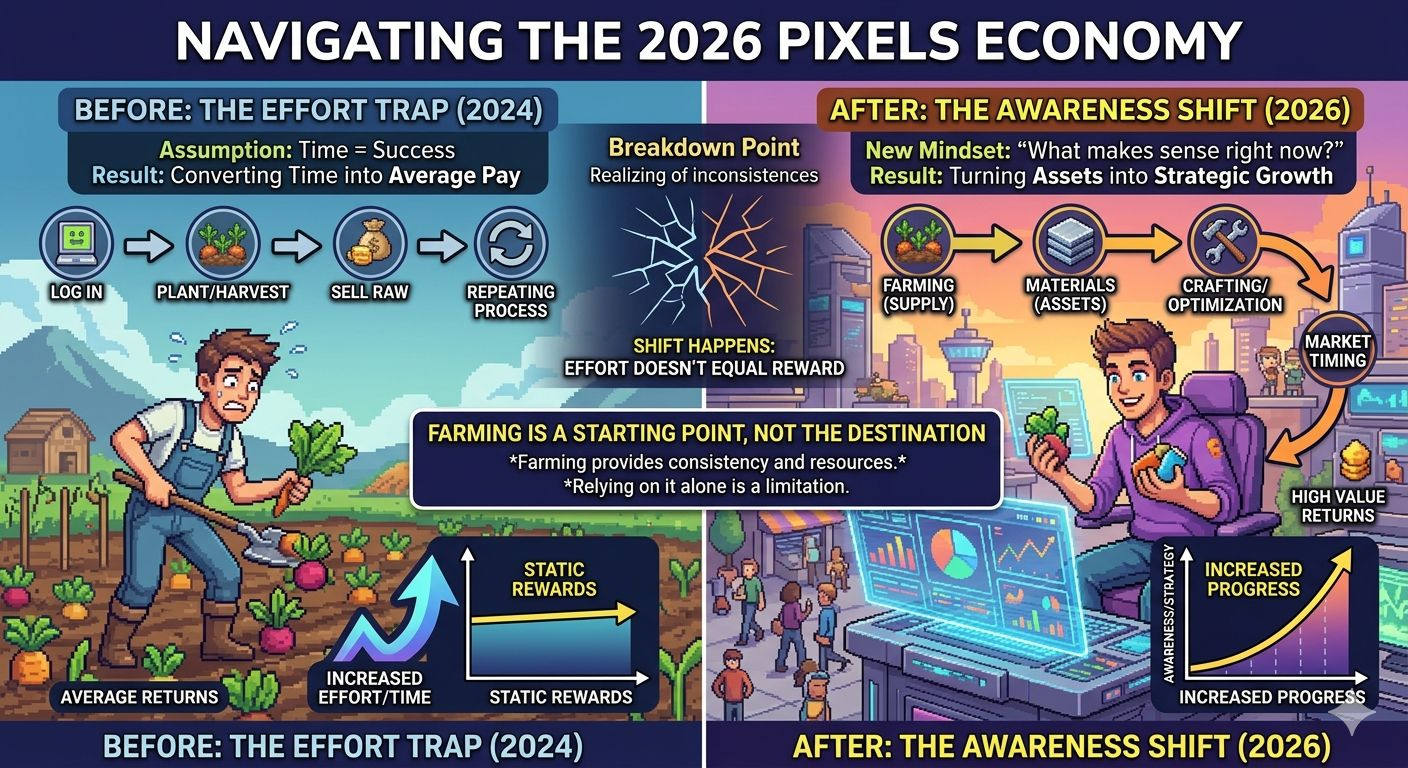
When I first started playing Pixels, I believed success was all about effort. The assumption was simple the more time you invest, the more you earn. Log in, plant crops, complete tasks, repeat it felt like a straightforward system that would eventually pay off.
But over time, that idea started to break down.
There were days when I spent hours grinding with almost nothing to show for it. Then there were moments when I barely played, yet somehow ended up ahead. That inconsistency forced me to rethink everything. Eventually, it became clear: Pixels doesn’t reward effort in the way it appears to on the surface. It rewards awareness.
By 2026, the game has evolved into something much deeper than a casual farming experience. It still looks simple, but underneath, it operates like a living economy. Once you recognize that shift, your entire approach changes.
Instead of asking, What should I do next?
the better question becomes,
What actually makes sense right now?
Farming Is a Starting Point, Not the Destination
Farming is where everyone begins, and it remains an essential part of the game. It provides consistency, structure, and a steady flow of resources. However, relying on farming as your main source of profit is one of the biggest limitations a player can face.
The reason is simple: farming produces materials, not value.
If you immediately sell everything you harvest, you’re accepting whatever the market is offering at that moment. There’s no strategy involved, no optimization, and no opportunity to increase returns. You’re just converting time into predictable—but average—results.
In 2026, that approach isn’t enough.
The smarter perspective is to treat farming as a supply system. It gives you assets to work with, but what you do with those assets is what determines whether you actually make progress.
Trading Changes Everything
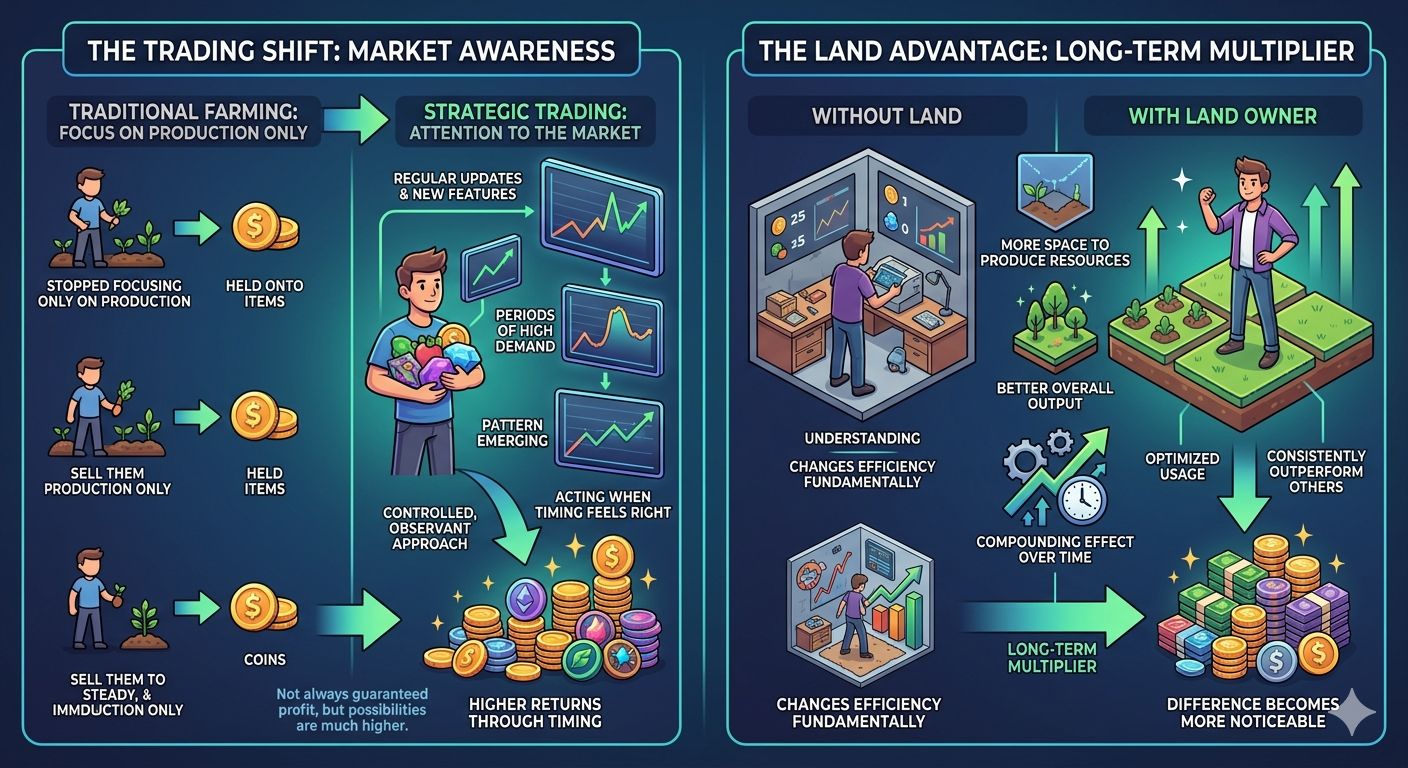
The biggest improvement in my results came when I stopped focusing only on production and started paying attention to the market.
At first, I didn’t do anything complicated. I simply held onto certain items instead of selling them immediately. It felt inefficient in the beginning, but over time, patterns started to emerge.
Some resources would suddenly increase in value. Others would stay flat for long periods. Occasionally, demand would spike after updates or new features were introduced. These moments created opportunities that farming alone could never match.
That’s when trading became part of my strategy.
Not in a high-risk, aggressive way—but in a controlled, observant way. Watching how prices move, noticing which items gain attention, and acting when the timing feels right.
Of course, trading isn’t guaranteed profit. Sometimes prices don’t move as expected, and holding assets can backfire. But that uncertainty is also what creates opportunity. While farming offers stability, trading introduces the possibility of significantly higher returns.
Land Ownership Creates Long-Term Advantage
Another major shift comes with understanding the importance of land.
At first glance, land might seem like just an upgrade. In reality, it’s much more than that. It fundamentally changes how efficiently you can operate within the game.
With land, you gain:
More space to produce resources
Better overall output
Fewer limitations in your workflow
These advantages may not seem dramatic at first, but they compound over time. A player with optimized land usage can consistently outperform others, even if they spend the same amount of time playing.
It’s still possible to play without land, but the difference becomes more noticeable as the game progresses. Land isn’t just helpful it’s a long-term multiplier.
Playing Alone Slows You Down
Like many players, I initially ignored the social aspect of Pixels. I treated it as a solo experience, focusing only on my own progress.
That turned out to be a mistake.
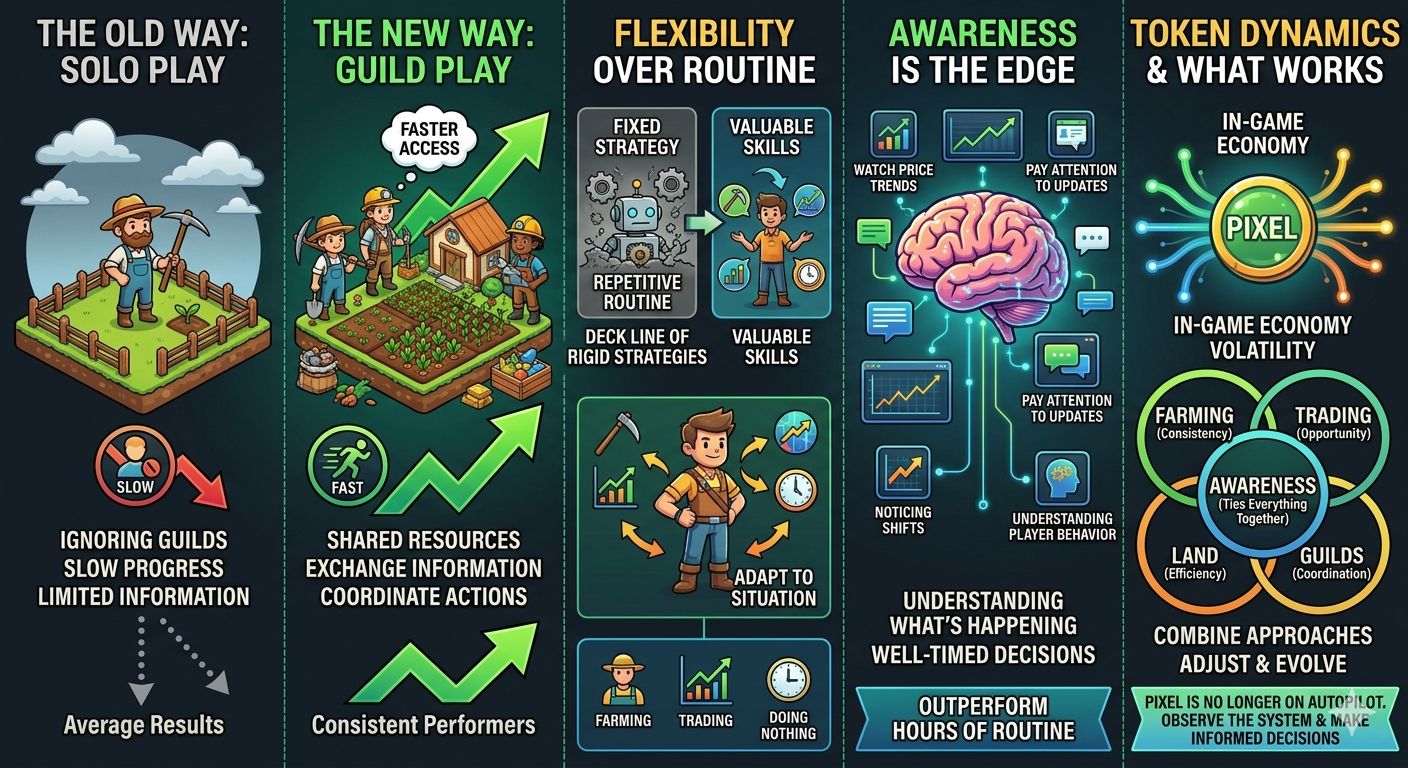
Players who engage with guilds or groups tend to move faster for a reason. They share resources, exchange information, and coordinate actions. This creates efficiency that’s difficult to replicate on your own.
Being part of a group means:
Faster access to useful information
Better resource management
More strategic coordination
While solo play is still possible, it often leads to slower growth. In a system where timing and awareness matter, having access to shared insights makes a real difference.
Fixed Strategies No Longer Work
One of the biggest changes in Pixels is the decline of rigid strategies.
There was a time when you could follow a simple routine and see consistent results. That’s no longer the case.
In 2026, the environment is constantly shifting. Prices change, updates introduce new dynamics, and player behavior evolves. What works today might not work tomorrow.
That’s why flexibility has become one of the most valuable skills.
Instead of following a fixed plan, successful players adapt:
Some days are best for farming
Others are better for trading
Occasionally, doing nothing is the smartest move
This ability to adjust based on the situation is what separates consistent performers from average ones.
Awareness Is the Real Edge
If there’s one factor that defines success in Pixels today, it’s awareness.
Awareness isn’t about working harder—it’s about understanding what’s happening around you.
This includes:
Watching price trends
Paying attention to updates
Noticing shifts in demand
Understanding player behavior
A single well-timed decision can outperform hours of routine gameplay. That’s why two players with similar resources can end up with completely different results.
Awareness connects every part of the strategy. Without it, even the best tools and resources lose their effectiveness.
Token Dynamics and Recent Developments
The in-game economy is closely tied to the PIXEL token, which has continued to evolve alongside the game itself.
In 2026, the token has shown periods of volatility, often influenced by updates, reward adjustments, and broader market conditions. Rather than moving randomly, these price changes tend to follow key events within the ecosystem.
Recent developments include:
Improved integration of the token within gameplay systems
Adjustments designed to control inflation
Expanded utility across different features, including land and premium mechanics
These changes suggest a clear direction: the focus is shifting toward long-term balance rather than short-term incentives. For players, this means that understanding the token’s role is just as important as understanding the game itself.
What Actually Works in 2026
There isn’t a single strategy that guarantees success. Instead, profitability comes from combining multiple approaches:
Farming provides consistency
Trading creates opportunity
Land increases efficiency
Guilds improve coordination
Awareness ties everything together
Ignoring any of these elements limits your potential.
The most effective players don’t rely on one method they adjust, combine, and evolve based on what’s happening in the moment.
#pixel is no longer just a game you can play on autopilot. It requires attention, decision-making, and a willingness to adapt.
The idea that effort alone leads to success doesn’t hold up anymore. What matters is how you use your time, not just how much of it you spend.
Players who continue to follow repetitive routines will likely see average results. Those who step back, observe the system, and make informed decisions will find far better outcomes.
In the end, the most profitable strategy isn’t a shortcut or a trick.
It’s understanding the system—and responding to it intelligently.
Disclaimer
This content is for informational purposes only and should not be considered financial advice. Outcomes in Pixels depend on individual decisions, market behavior, and ongoing updates. Always do your own research before making any financial or in-game investment decisions.


