
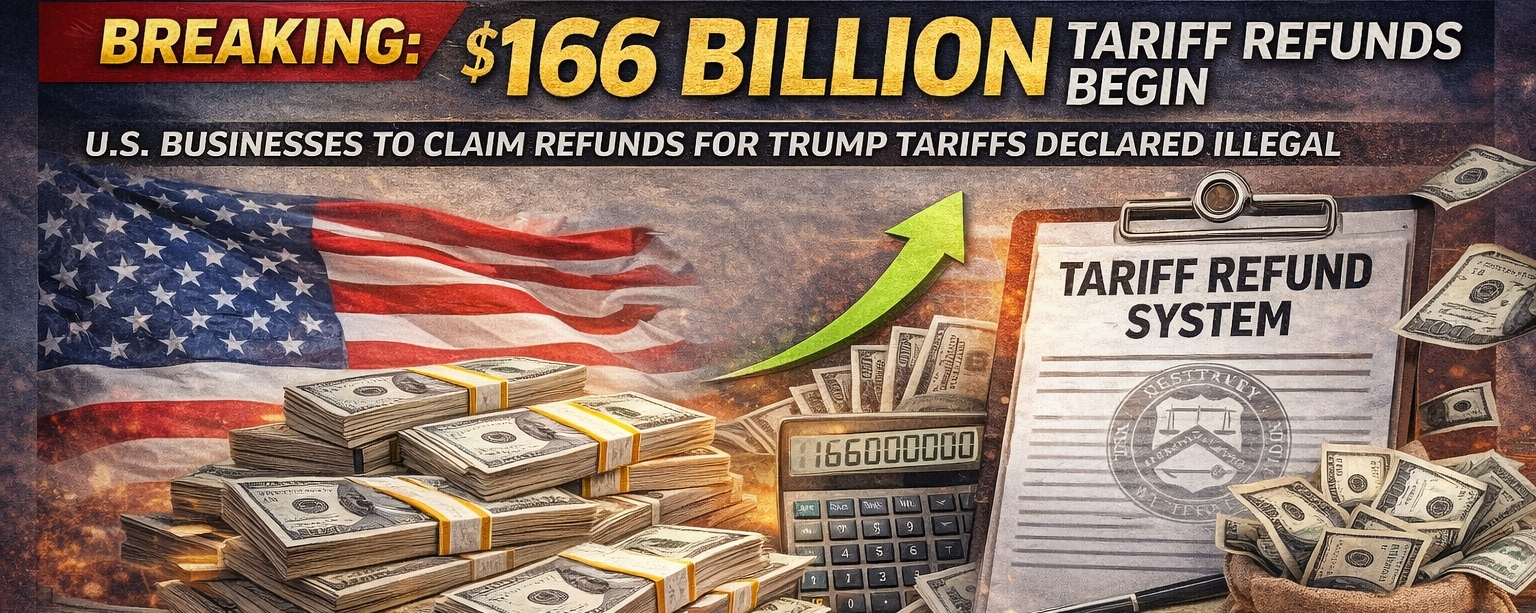
A major financial shift is starting today, and from my perspective, it’s the kind of event that doesn’t look dramatic but could have a deep impact over time. The U.S. has officially launched its tariff refund system, allowing businesses to reclaim funds from tariffs that were ruled illegal. In total, about $166 billion is now set to flow back into the economy.
What stands out to me isn’t just the size of the number—it’s where the money is going. Around 330,000 importers are eligible, which means this isn’t concentrated in one sector. It’s spread across industries, supply chains, and business models. That kind of distribution makes the impact broader and more layered.
From where I’m standing, this feels like a delayed correction rather than new stimulus. This is money that businesses already paid, now being returned. But even though it’s not “new” capital, getting it back now still changes behavior. It improves liquidity, reduces strain, and gives companies more flexibility at a critical time.
Another thing I’m noticing is how this could affect pricing and inflation dynamics. If businesses were previously absorbing higher costs due to tariffs, this refund could ease some of that pressure. Whether that translates into lower prices or higher margins depends on how companies respond—but either way, it shifts the equation.
At the same time, I don’t see this playing out as an instant boom. Unlike direct consumer stimulus, this type of liquidity tends to move more gradually. Some companies will reinvest, others will stabilize, and some may simply hold onto the cash as a buffer. The effects will build over time rather than explode all at once.
From my perspective, the key takeaway is simple:
This is a structural reset, not a short-term spike.
It strengthens the foundation of businesses rather than creating immediate demand.
And when the foundation improves, the long-term impact can be more meaningful than a quick surge.
Right now, this is just the starting point.
But as this $166 billion begins to circulate, even slowly, it has the potential to reshape confidence, operations, and momentum across the U.S. economy in the months ahead.