
I have been thinking a lot about what really makes a blockchain game stick around and it is not always the flashy token rewards everyone talks about. It is the boring stuff like how much it actually costs to play. In Pixels that transaction efficiency is quietly doing some heavy lifting for $PIXEL and I dont think people give it enough credit.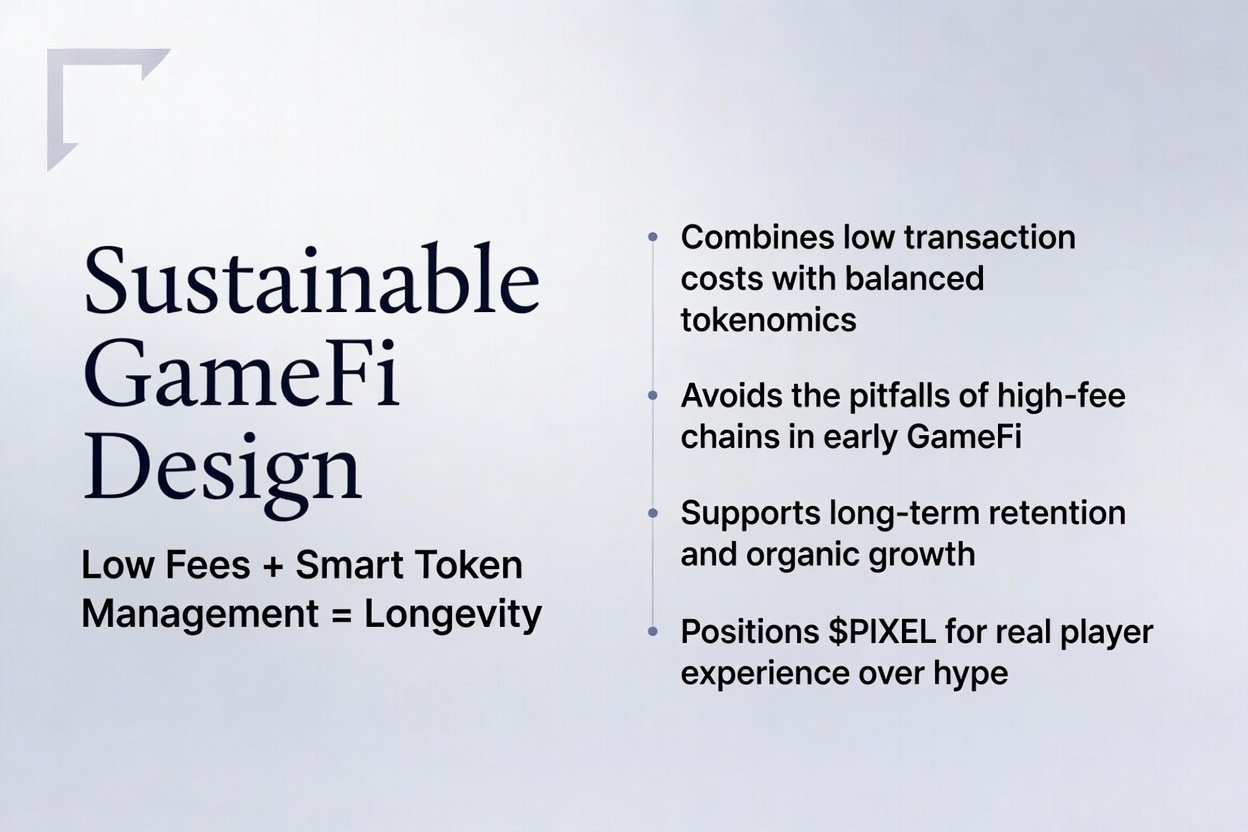
Look in most GameFi projects everyone obsesses over tokenomics : emissions, staking whatever. But then you try to farm a plot, trade some seeds or upgrade your land and bam fees eat your lunch. Or the network lags during peak hours. Players get annoyed, start doing less and suddenly the whole economy slows down. Its like having a fancy car but the gas is so expensive you barely drive it.
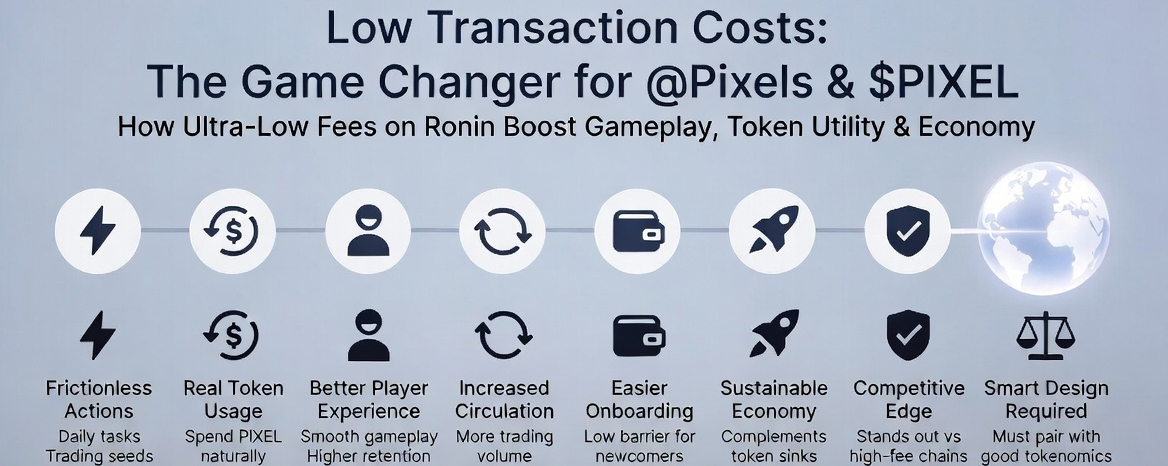
Thats where @Pixels on Ronin really shines. The fees are stupid low. You can click around, do your daily stuff, move assets, craft items without constantly checking your wallet like it is gonna bite you. I played games where even small actions felt painful during congestion. Not here. This low friction setup means PIXEL actually gets used instead of just sitting there as a speculative bet.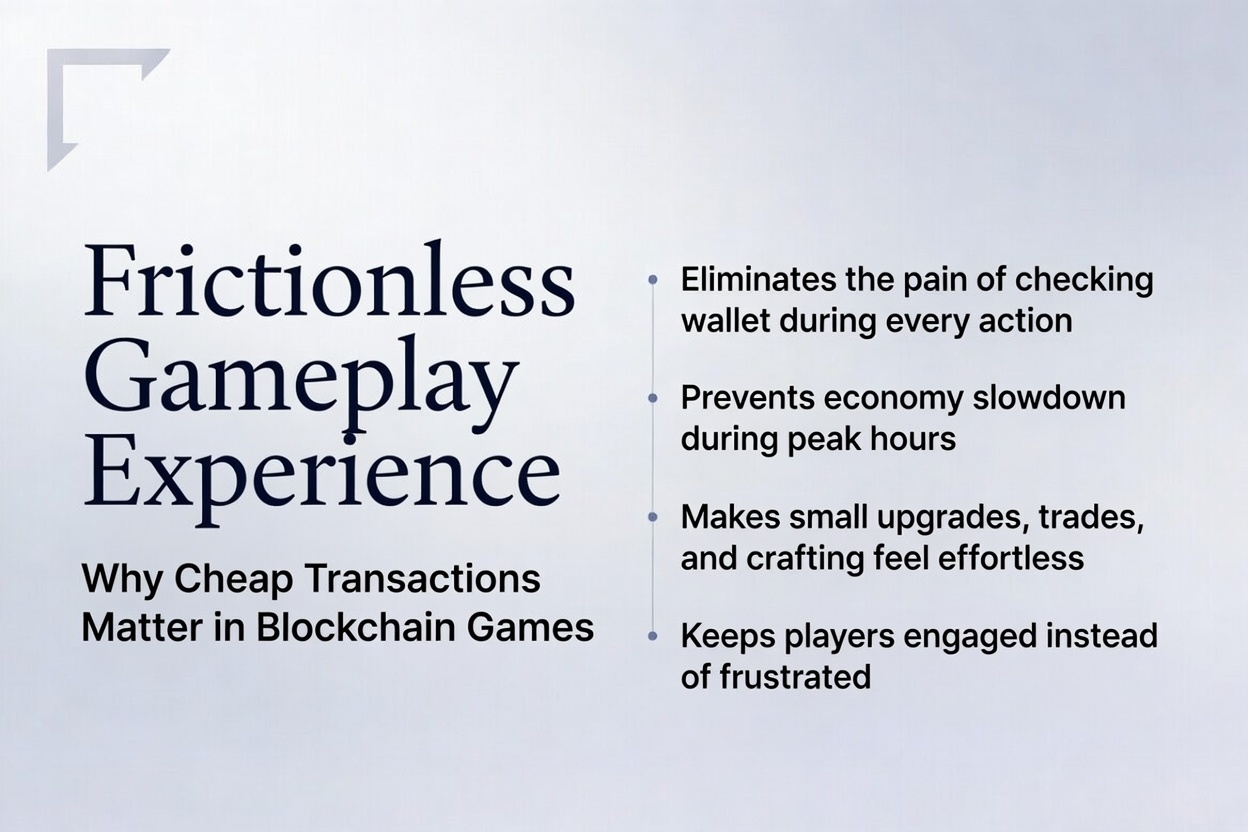
Think about it : when moving your stuff around does not cost an arm and a leg, you are way more likely to spend the token in the game. It stops being oh I will hold this and starts feeling like real ingame money. You buy, sell, trade upgrade more naturally. That keeps the economy flowing instead of everything grinding to a halt because everyone is batching actions to save gas.
Ive seen it in other projects high fees make people hoard, avoid small trades, or just log off. Liquidity dries up. But with cheap txns, players tweak their strategies on the fly, jump into new activities and the market feels alive. It is healthier. More organic.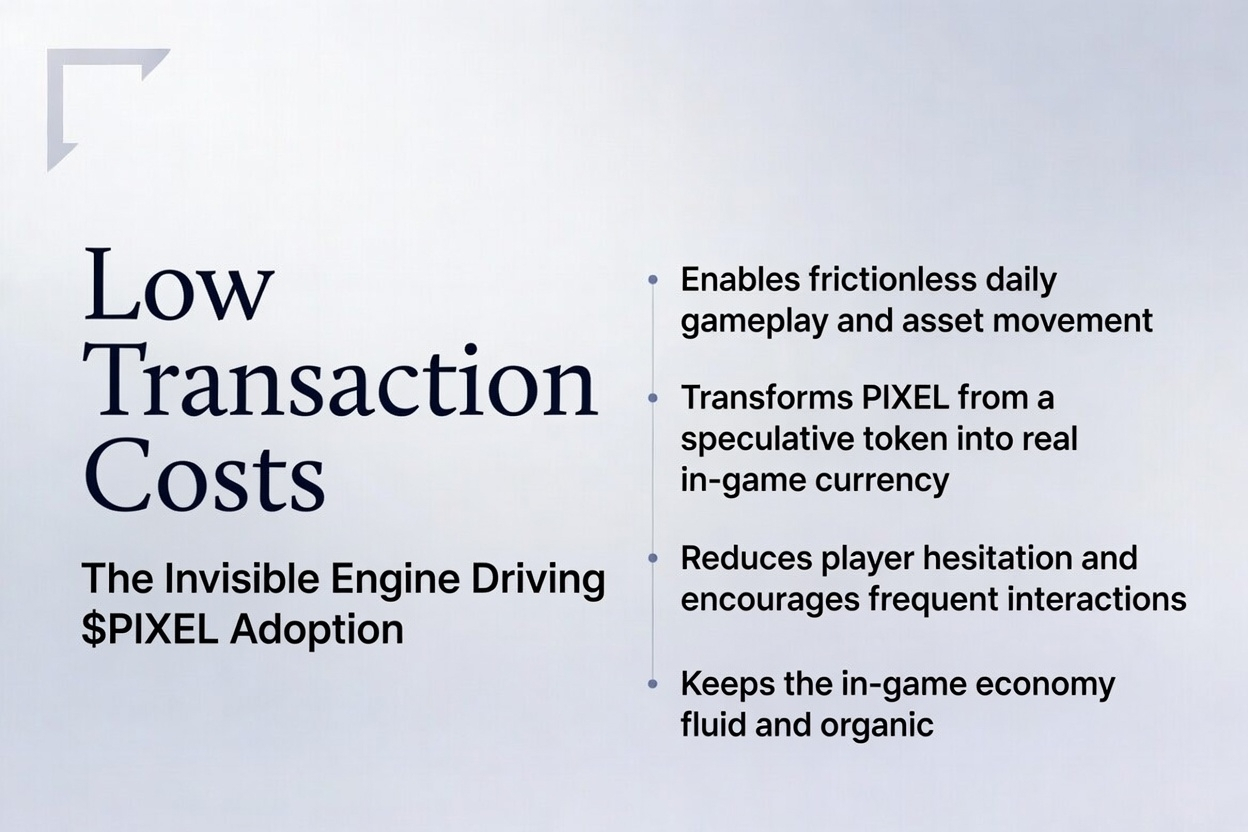
And honestly this stuff matters for new players too. A lot of folks dip their toes into Web3 gaming and bounce because the first wallet interaction costs $5 and takes forever. Pixels feels closer to normal games jump in, play, dont stress. That onboarding edge builds the player base, which in turn supports PIXEL demand over time.
Dont get me wrong though. Cheap transactions are not some magic fix. If the token emissions are out of control or there are not enough sinks you still get inflation problems. Sometimes too easy txns just help whales farm and dump faster. I have watched it happen. So this efficiency has to pair with smart overall design not replace it.
What I like about Pixels is they seem to get that. It is not treating low fees as just a tech checkbox it is baked into how the economy works. Compared to a lot of early GameFi stuff that launched with huge promises but clunky chains This feels more sustainable. They are thinking about the full loop: how tokens move, how often and how easily.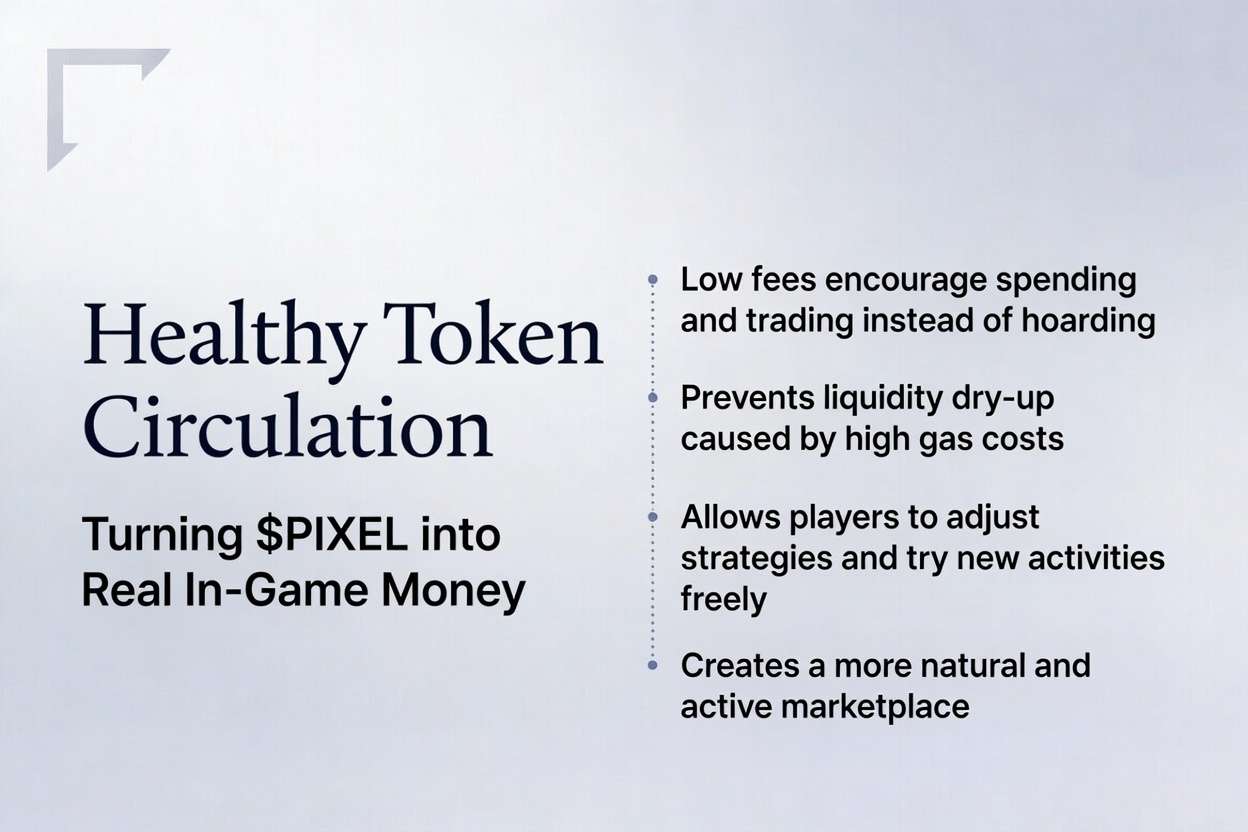
In a world where Web3 games now compete with regular mobile hits, usability is everything. If your game feels clunky or expensive to interact with, Retention tanks no matter how cool the pixels look. Players expect smooth these days. Pixels gets that edge.
Transaction cost efficiency might be one of those under the radar strengths for $PIXEL . It makes the token actually useful day to day, boosts circulation, helps liquidity and keeps people coming back without the usual friction headaches. It is not the sexiest topic but in a space full of broken economies, getting the basics right like this could be what helps Pixels last.
If they keep balancing this low friction infrastructure with solid token management it positions #pixel better than a lot of projects that chased hype and ignored the real player experience. In blockchain gaming sometimes the quiet technical wins end up being the ones that matter most long term.
